Updated 2026 Tax Numbers

The IRS has released the key tax numbers that are updated annually for inflation, including tax brackets, phaseouts, standard deduction, and contribution limits.  Due to rounding limitations, not all numbers have changed from last year, but tax bracket thresholds have increased by 2-3%.  The notices containing this information are available on the IRS website here and here.  Some notable callouts for those who don’t want to read all the way through the update:

  • Max contributions to 401k, 403b, and 457 retirement accounts will increase by $1000 to $24,500. The catch-up (which must be Roth starting in 2026 if you earn > $150k per year) max increases to $8,000, if you’re at least age 50.  If you’re age 60-63, your max catch-up contribution is increased by 50% to $11,250.  That means the maximums by age are:
    • Under 50: $24,500
    • 50-59: $32,500
    • 60-63: $35,750
    • Over 63: $32,500
  • Max contribution to a SIMPLE retirement account will increase by $500 to $17,000 (+$4,000 catch-up if you’re at least age 50 +$1250 additional catch-up if you’re 60-63).
  • Max total contribution to most employer retirement plans (employee + employer contributions) increases from $70,000 to $72,000 (plus catch-ups noted above).
  • Max contribution to an IRA increases from $7,000 to $7,500 (+$1,100 catch-up if you’re at least age 50).
  • The income phase out for being able to make a Roth IRA contribution is $252k (married) and $168k (single). Phase out begins at $242k (married) and $153k (single).
  • The standard deduction increases to $32,200 (married) and $16,100 (single) +$2050 if you’re at least age 65 and single or $1650 each if you’re married. The new OBBB “senior deduction” kicks in in 2026 as well, adding a $6k deduction per taxpayer who is at least 65, if income is less than $150k (married) or $75k (single). The new auto loan interest deduction, “no tax on tips” deduction, and “no tax on overtime” deduction also begin in 2026. They don’t require you to itemize, so they can be thought of as adding to the standard deduction. See our OBBB post for more detail.
  • The personal exemption remains $0 (the Tax Cuts & Jobs Act eliminated the personal exemption in favor of a higher standard deduction and child tax credits).
  • The child tax credit increases to $2,200 per child per OBBB, phasing out between $400-440k (married) and $200-220k (single).
  • The maximum contribution to a Health Savings Account (HSA) will increase to $7,550 (married) and $4,400 (single).
  • The annual gift tax exemption remains at $19,000 per giver per receiver.
  • The lifetime gift / estate tax exemption increases to $15,000,000 per OBBB.
  • Social Security benefits will rise 2.8% in 2026.  The wage base for Social Security taxes will rise to $184,500 in 2025 from $176,100.
  • Updated mileage rates for 2026 are due out later this year.

You can find all of the key tax numbers, updated upon release, on the PWA website, under Resources.

End-of-year Tax Planning w/ OBBB

The One Big Beautiful Bill (OBBB), passed earlier in 2025, creates some new end-of-year tax planning opportunities for some taxpayers. In this post, I’ll cover the likely situations where taxpayers should take action. Note that many of these situations only impact a relatively small percentage of taxpayers. Many individuals / families won’t need to take any action at all, though everyone should be aware of the situations where action makes sense.

The OBBB extended the 2025 tax brackets, meaning that with the exception of inflation adjustments, tax rates and income ranges will be the same in 2026 as they are in 2025. The general rule of thumb in years where that is the case is that one should try to defer income and accelerate expenses (i.e. reduce your 2025 taxes, even if it means paying proportionally more in 2026), unless you’re having a high income year, or expenses would otherwise be worth more next year than they are in 2025. There are, however, some OBBB-related exceptions as well as even more reason to defer income / accelerate expenses:

  • SALT Deduction – Because of the OBBB, starting in 2025 the cap on State And Local Tax (SALT) paid that can be deducted is $40k instead of $10k. However, if your income is more than $500k, that extra limit starts to phase out and is fully phased out at $600k, meaning that if you make more than $600k, your deduction is limited to the original $10k. This means that if your income will be below $600k in 2025 and above in 2026, you should make sure you’re getting the most of any state and local tax deductions you can take in 2025. Conversely, if your income is above $600k in 2025 but will be below in 2026, you want to delay any state and local tax deductions until 2026 wherever possible. The most likely state and local tax deductions you can shift from year to year are: 1) Property taxes that are not escrowed and where the bill is published in one year, but you have the option to at least partially pay in that calendar year or the next, 2) your Q4 state estimated tax payment (if you make such payments), or 3) sales taxes on major purchases like cars or boats, but only if you live in a state where you don’t have a state income tax. Note: If you don’t itemize, none of this is relevant to you.
  • Charitable Contribution Deduction – There are numerous ways to try to maximize the tax benefit of charitable contributions.
    • For those who wouldn’t have enough deductions to itemize without charitable contributions, some or all of the tax benefit of your contributions is lost each year just getting up to the standard deduction amount so that you can itemize. In this case, a bunching strategy where you lump contributions into one year in an attempt to get more to count toward your itemized deductions in that year, and then plan to make minimal / no contributions in the next year or next few years and take the standard deduction in those years. One of the best ways to do this is to donate to a Donor Advised Fund (DAF). See this previous post for more info on that.
    • Starting in 2026, non-itemizers can take up to a $1k single / $2k joint deduction for cash charitable contributions. If that means contributions will benefit you in 2026, but not benefit you in 2025 because you don’t itemize, delay end-of-year 2025 cash donations to early 2026 so you get a benefit.
    • Starting in 2026, itemizers will face a 0.5% of AGI threshold on charitable contributions. That means that the first 0.5% of AGI of contributions will not benefit you. For example, if you earn $100k and you donate $1500, you would only get a potential deduction of $1000 because 0.5% of AGI is $500 and therefore only contributions above that amount would count. This means that if you itemize, making your 2026 planned contributions in 2025 will benefit you because you won’t be subject to the 0.5% of AGI threshold.
    • All itemized deductions will be reduced starting in 2026 for those in the highest (37%) Federal tax bracket. The reduction makes it such that deductions for those in that tax bracket only provide a benefit of 35%, rather than 37%. If you’ll be in the 37% tax bracket in 2026, then accelerating 2026’s charitable contributions into 2025 will benefit you.
  • Energy Credit Expiration – two key credits will be expiring on 12/31/2025 per OBBB (one already did… there’s no more credit for purchasing an electric vehicle as of 9/30/2025):
    • The Energy-Efficient Home Improvement Credit – this credit allowed varying amounts for the installation of highly efficient heat pumps, exterior doors and windows, boilers, central air-conditioning systems, etc. Since it expires 12/31/2025, if you have to purchase any of those things and your purchase will qualify for a credit, make sure it gets done and installed in 2025.
    • The Residential Clean Energy Credit – mostly used on solar panels but also available for other types of clean energy, this credit is 30% of the cost of the improvement. Since it expires in 12/31/2025, if you are installing solar panels or other clean energy systems, make sure they are completed by 12/31/2025.
  • New “Below The Line” Deductions – Several of the new deduction for non-itemizers phase out at various levels of AGI. These include the deduction for seniors, the auto loan interest deduction, the “no tax on tips” deduction, and the “no tax on overtime” deduction. See our OBBB summary for details on these deductions and phase-outs. If you may qualify for one of these deduction, but have income near the AGI threshold, you may want to more aggressively attempt to delay income or increase adjustments to AGI. Note that itemized deductions don’t reduce AGI, but “adjustments” (as found on 1040 Schedule 1, Page 2) do. These include Traditional IRA deductions, SEP contributions for the self-employed, and HSA contributions. Additionally, Traditional 401k/403b retirement plan contributions and FSA contributions do reduce AGI by reducing the amount reported in Box 1 of an employee’s W-2.

Q3 2025 Returns By Asset Class

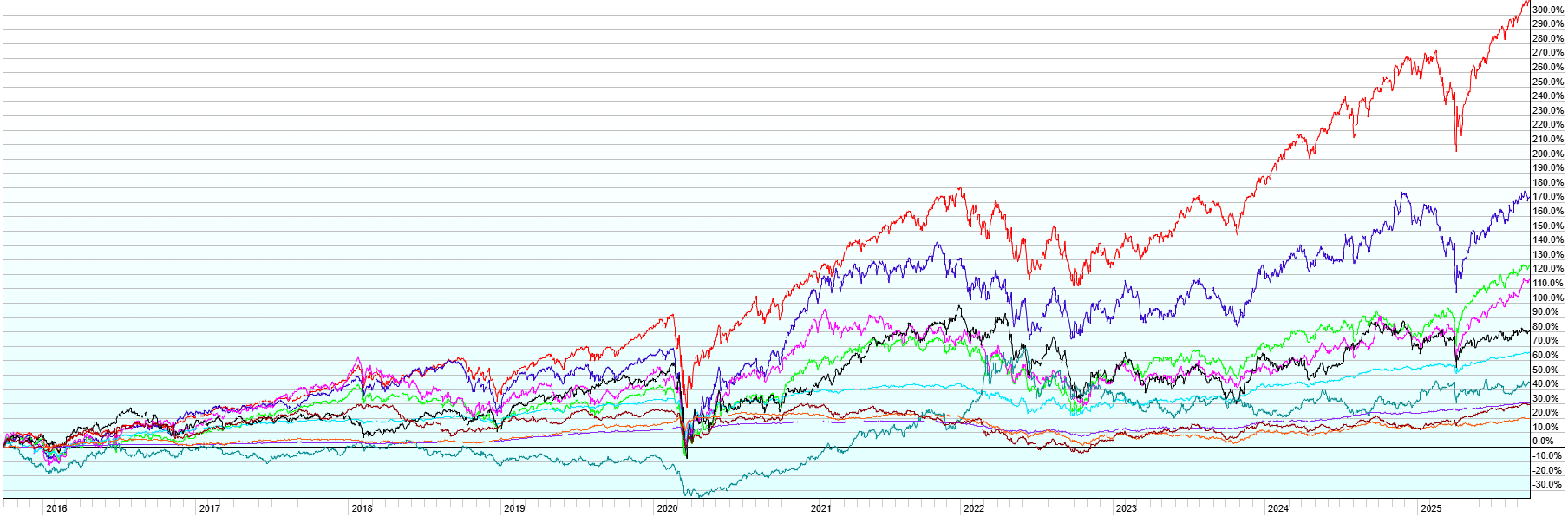
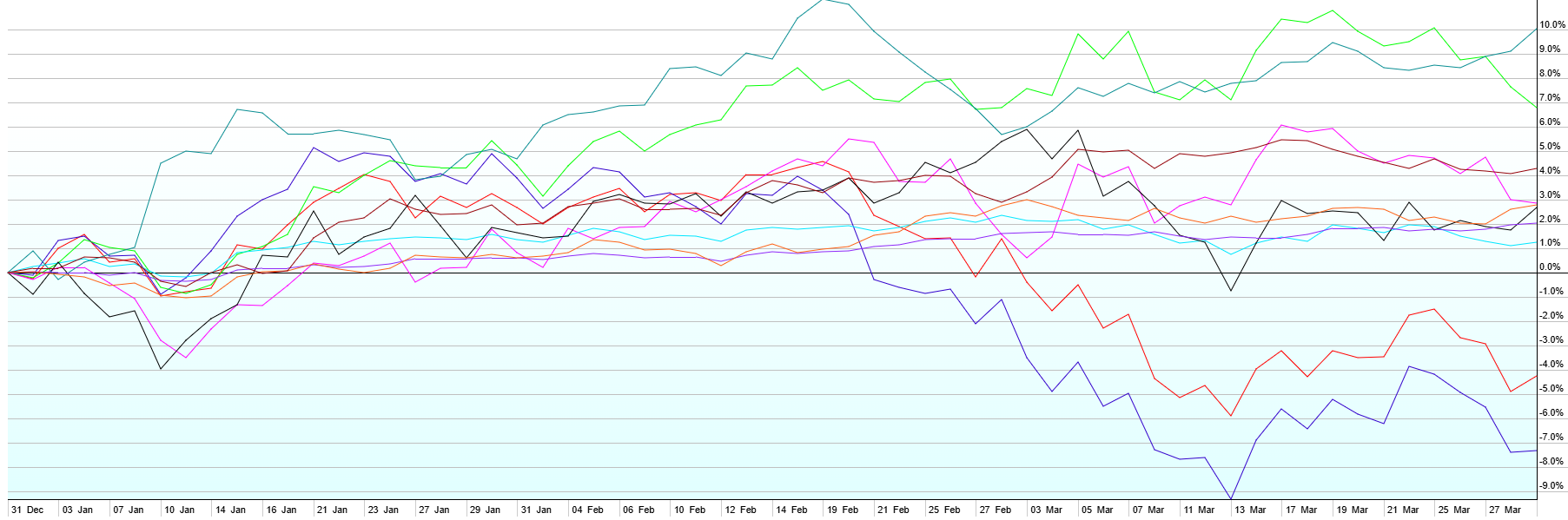
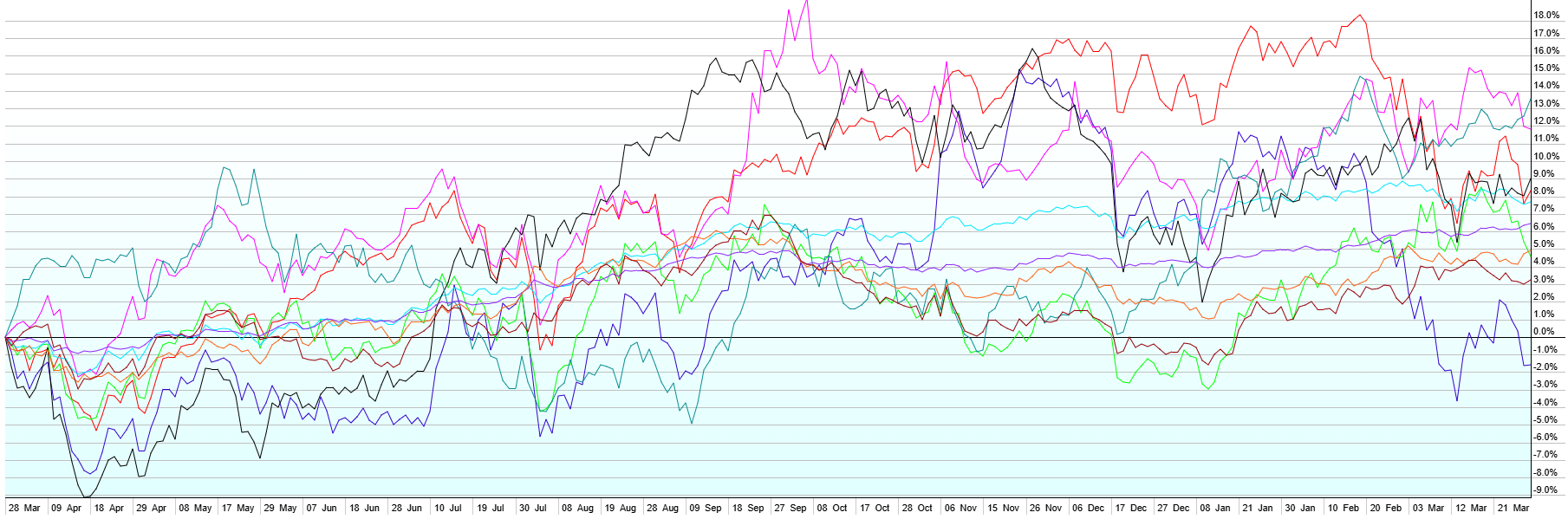
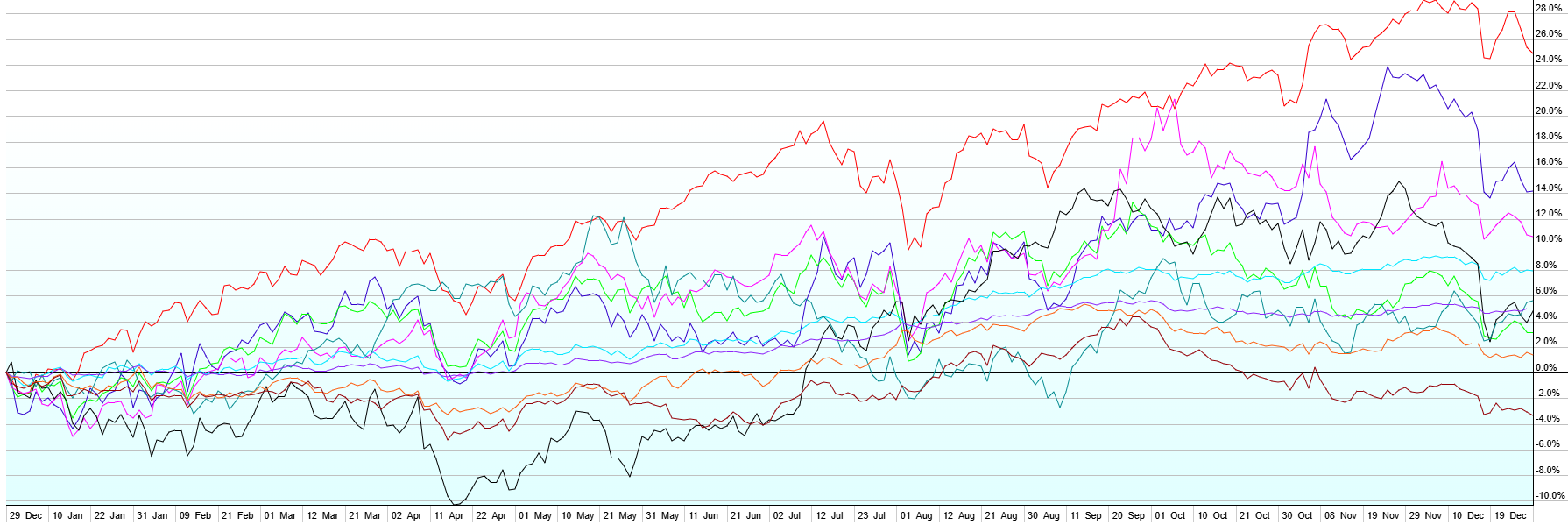
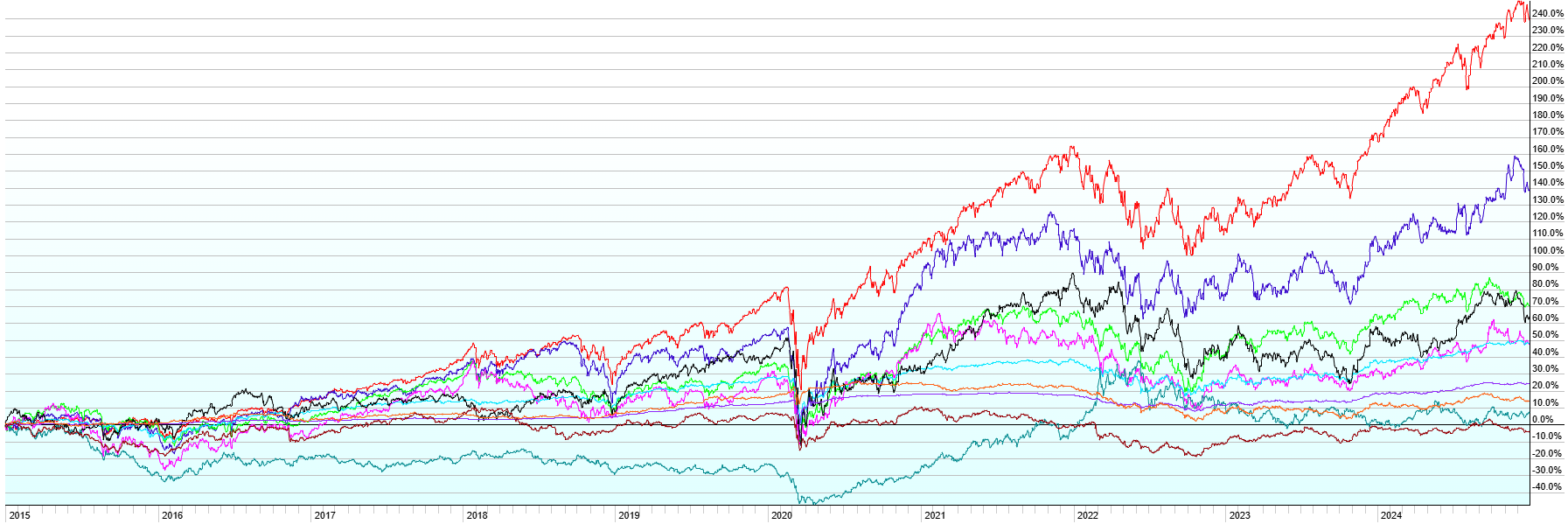
This post contains the usual returns by asset class for this past quarter (by representative ETF), year-to-date, last 12 months, last five years, and last ten years. While there is still no predictive power in this data, I’ll continue to post this quarterly for those of you that are interested. 

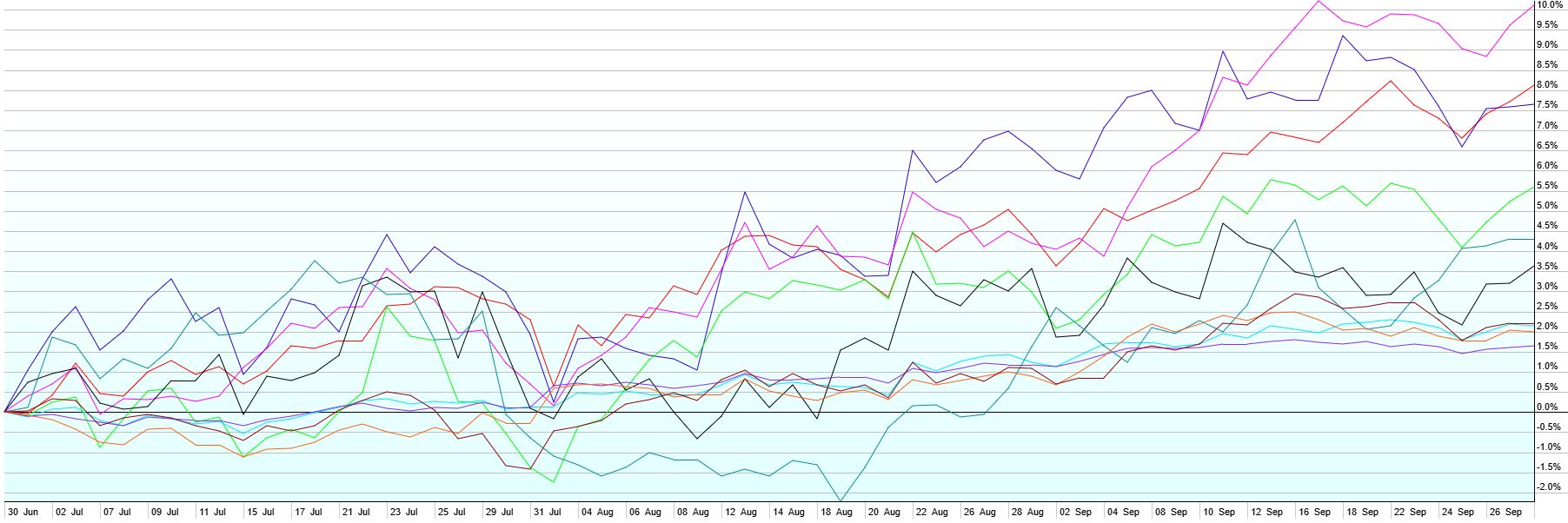
Last Quarter (7/1/2025 – 9/30/2025)
Year-To-Date (1/1/2025 – 9/30/2025)
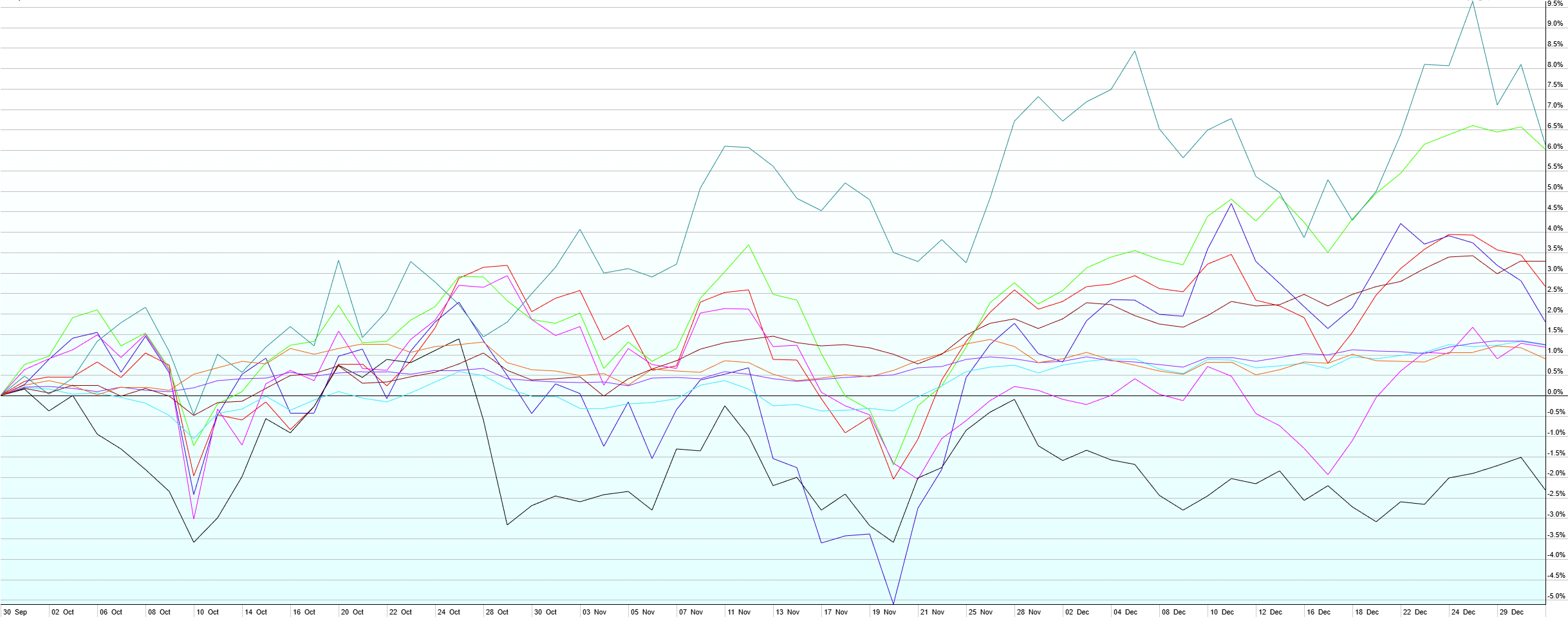
Last 12 months (10/1/2024 – 9/30/2025)
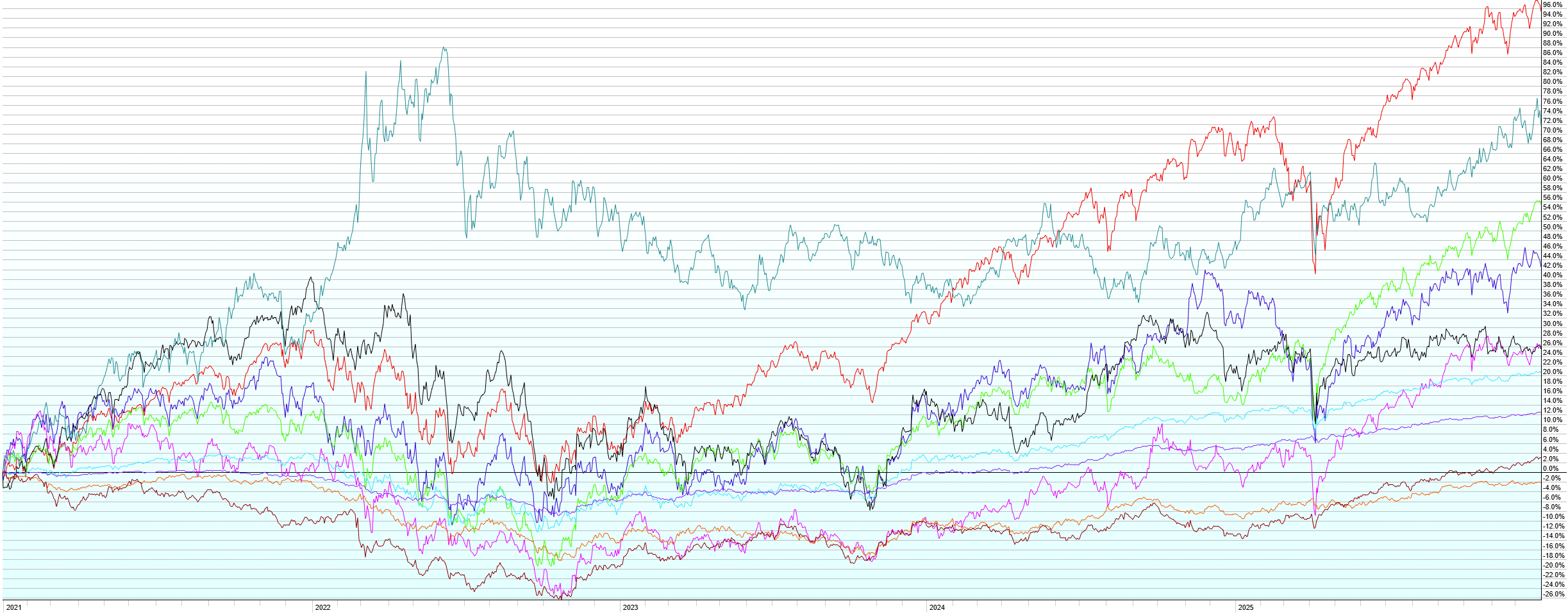
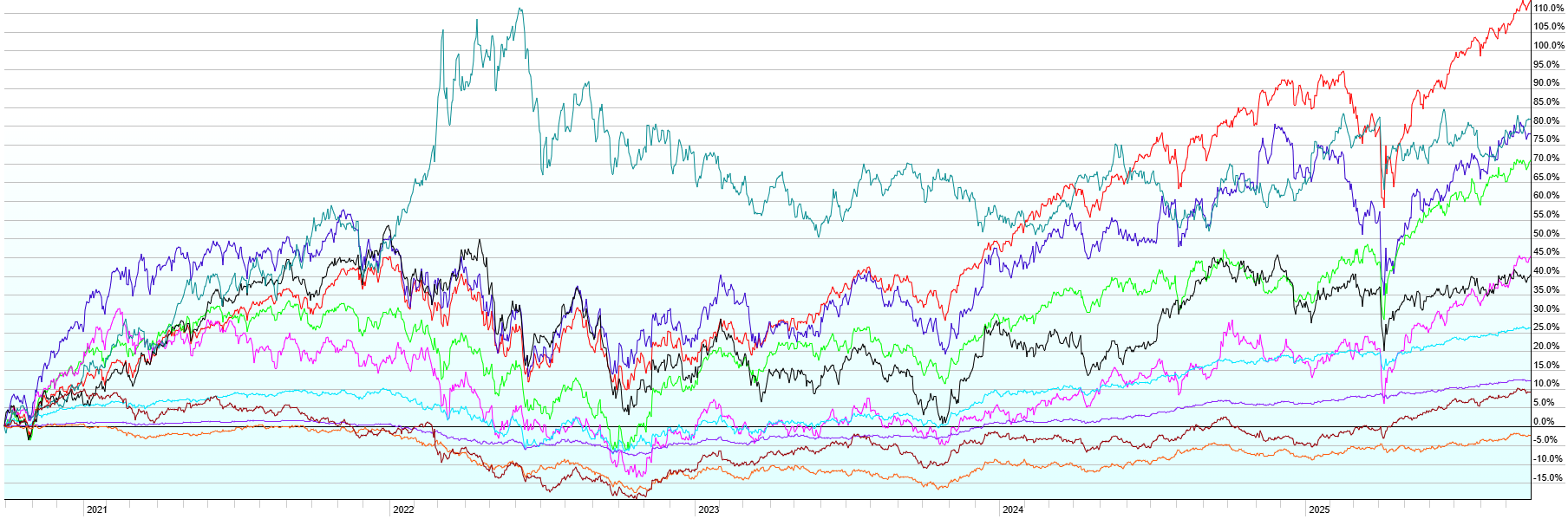
Last 5 Years (10/1/2020 – 9/30/2025)
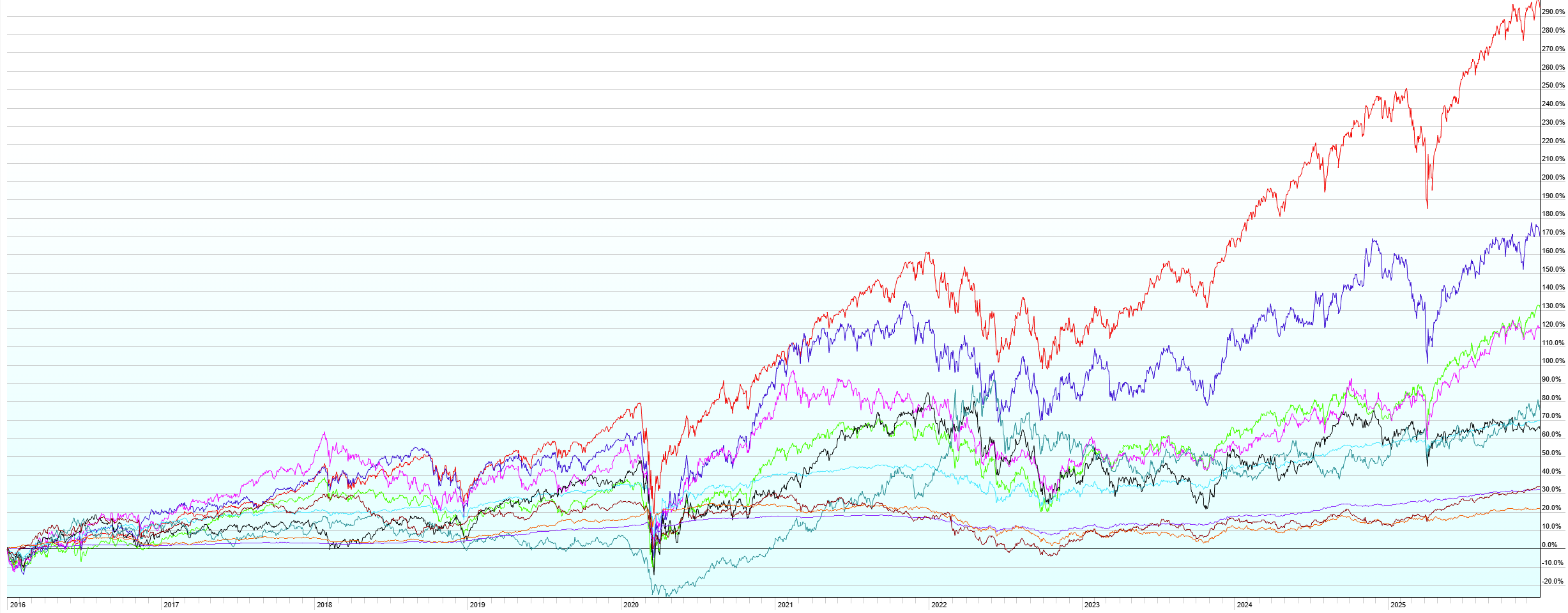
Last 10 Years (10/1/2015 – 9/30/2025)

A few notes:

Q3 2025 was another solid quarter for investment returns, with all major asset classes finishing in the green. The quarter was led by Emerging Market Stocks (+10.1%), followed by US Large Caps (+8.1%), US Small Caps (+7.6%), Foreign Developed (+5.6%), Commodities (+4% after a mid-quarter dip), US Real Estate Investment Trusts (REITs) (+3.6%), Emerging Market Bonds (+2.2%), US High-Yield Bonds (+2.1%), US Aggregate Bonds (+2%), and US Short Term Corporate Bonds (+1.7%). During Q3, Congress passed and the president signed the One Big Beautiful Bill (OBBB) Act. More on that here. The Fed also started a new rate cutting cycle with a quarter point cut to 4-4.25% as inflation has eased while the job market has softened a bit. They insist this isn’t a sign of bad things to come, but is instead moving rates back toward neutral from their current, somewhat restrictive level. Markets expect another two quarter-point cuts before the end of the year.

One Big “Beautiful” Bill

This post contains a non-exhaustive summary of the most impactful (to my clients) tax and personal finance-related provisions of the One Big Beautiful Bill (OBBB) that was passed into law on 7/4/2025. That’s the actual name of the Bill / Law, by the way, not an editorial on the Bill’s beauty. In fact, I put “Beautiful” in quotes in the title to give just the opposite impression. To be fair though, this Bill is to beauty about as the Inflation Reduction Act of the previous administration was to reducing inflation. Names of Laws don’t imply meaning, intention, or effectiveness of those Laws. That’s as far as I’m going to get into politics on this one. I’m also not going to get into the budget portions, appropriations, cuts to programs like Medicaid, etc. While the importance of those parts of the Bill probably surpasses the importance of tax changes to many Americans, this post is only about taxes and personal finance, where I can contribute most. I leave it to you to dive into the rest of the Bill as you feel is appropriate, using the sources you feel are appropriate. Better yet, give the 870-page OBBB a read yourself.

Many of the provisions are retroactive to the start of 2025 and so they impact taxes this year. Some begin later in 2025, some in 2026, a few even after that. Some provisions are permanent (meaning it would take a new law to change them). Some are temporary (meaning they will revert back to old law at a future date unless a new law is passed to extend them). I tried my best below to include the effective dates for each change. Please keep in mind that this is my personal interpretation of the OBBB after skimming it and cross referencing various other summaries that have been published. It is not guaranteed to be 100% accurate. Lastly, it will take some time to update tax projection software and really get into the details of what, if any, actions clients should take, given their current situation. Unlike other recent tax bills, which were passed in the final days of the tax year, this one gives time to interpret, project, and act. There will be more to come on those actions in the coming months.

Key tax and personal finance provisions of OBBB:

  • Current tax brackets made permanent (would have reverted back to pre-TCJA in 2026).  That includes the 10%, 12%, 22%, 32%, 35%, and 37% rates, as well as their income ranges for Single, Head-Of-Household (HoH), Married Filing Jointly (MFJ), and Married Filing Separately (MFS).  Those income ranges are adjusted upward annually for inflation.  The OBBB adds one additional year of inflation adjustments to the 10% and 12% brackets by setting their “base year” back to 2016 from 2017 starting in 2026. This effectively increases the 10% and 12% brackets for inflation twice in 2026 only, making those brackets higher, and reducing taxes slightly for everyone that pays any Federal tax.
  • Standard deduction made permanent (would have reverted back to pre-TCJA in 2026).  Increased slightly for 2025 to $31,500 for couples, $23,625 for head of household and $15,750 for individuals.  Inflation-adjusted going forward. 
  • New $6,000 personal exemption for those age 65+ (remains $0 for everyone else).  Acts like another standard deduction and phases out by 6% of the amount that MAGI (adjusted gross income plus excluded foreign income in most cases) exceeds $75k single / $150k MFJEffective 2025-2028, only.  This new deduction was Congress’s way of trying to implement President Trump’s “no tax on social security” campaign promise.  Since the Budget Reconciliation process (requires majority vote in the Senate to pass instead of 60 votes) can’t make changes to Social Security, this new deduction is the best they could do.  Social Security taxation rules have not changed at all.  Contrary to the message the administration is putting out there, there is still tax on Social Security income if overall income is above certain thresholds.
  • New phaseout of deductions for those in the top (37%) tax bracket so that their deductions only reduce tax by 35%.
  • Child tax credit raised to $2200 / child + inflation and made permanent (would have reverted back to $1k in 2026).  Still phases out starting at AGI of $200k single / $400k MFJ.
  • $500 Other Dependent Credit made permanent.
  • Gift/Estate tax exemption increases to $15M per person / $30M per couple in 2026 + inflation in future years ($14k now + inflation, so not a huge change, but would have reverted back to pre-TCJA in 2026) and permanent.
  • QBI deduction (this is better known as the 20% “small business deduction” created by TCJA) made permanent (would have ended for 2026).  Phase-in ranges for the §199A limitations increase to $75,000 for non-joint returns and $150,000 for joint returns (from previous $50k/100k).  Other enhancements in the initial House version did not make the final bill.
  • SALT deduction limit (which would have ended in 2026) increases to $40k for 2025 (from $10k) +1% per year.  This higher deduction limit will be in effect for 5 years (ends after 2029).  Applies to single or MFJ (so increases the marriage penalty), but MFS is only $20k (so increases the penalty for married filing separately, which already rarely makes sense).  Reverts back to $10k in 2030Phased out by 30% of the amount that AGI is > $500k (so fully phased out at $600k), but can’t go below $10k.  That $500k phase applies to both single and MFJ too (MFS = $250k). The cap is also indexed +1% per year.  A ban on certain state-level workarounds for businesses that were included in the House version of the Bill were NOT included in the final version.
  • Current AMT exemption made permanent but AMT exemption phaseouts reset to 2018 levels ($500k single / $1M MFJ) which backed out a few years of inflation.  Also cuts exemption phaseout to $1 for every $2 of AMTI over the threshold (vs prior $1 for every $4 of AMTI).
  • Mortgage interest deduction limited to $750k of debt made permanent.  Grandfathering of pre-TCJA mortgages at $1M still applies.
  • Mortgage insurance premiums deductible (as they were pre-2022) permanently.
  • Casualty loss deduction limited to Federally declared disaster area made permanent.
  • Elimination of the moving expenses deduction made permanent
  • Elimination of miscellaneous itemized deductions by TCJA (e.g. unreimbursed employee expenses, business mileage, home office deduction) made permanent (i.e. you cannot deduction business mileage, home office, etc. as an employee).
  • Charitable Deduction changes (starting 2026):
    • For non-itemizers a new, permanent deduction of up to $1k single / $2k MFJ.  No income phaseouts. Only direct cash contributions qualify (no property, no DAF, etc.)
    • For itemizers, a new, permanent floor of 0.5% of AGI for deductibility (e.g. if you earn $200k per year, the first $1000 of charitable contributions would not count toward an itemized deduction)
  • Deduction for gambling losses (already limited to gambling gains) limited so that only 90% of losses could be considered.  Means even those with net losses in a year could be taxed on gambling “income”.
  • Dependent Care Credit enhanced to 20-50% of up to $3k/child (max 2) of expenses (from 20-35%).  Permanent.
  • Dependent Care FSA limit increased to $7500 from $5k.  Permanent, but not inflation-adjusted.
  • Tax exclusion for employer-paid student loan assistance permanent
  • “No tax on tips”New deduction (separate from itemized deductions, but after the calculation of adjusted gross income) for up to $25k (all filing statuses except MFS, which gets $0!) of tips included in income.  Effective 2025-2028.  Tips must be voluntarily paid in customary tipping occupations.  All SSTB (specified service trades or businesses) are excluded.  Deduction phases out at 10% of income over a threshold of MAGI starting at MAGI of $150k single / $300k MFJ.
  • “No tax on overtime”New deduction (separate from itemized deductions, but after the calculation of adjusted gross income) for up to 12.5k single / $25k MFJ / $0 MFS of overtime pay included in income (shown on W-2).  Effective 2025-2028.  Deduction phases out at 10% of income over a threshold of MAGI starting at MAGI of $150k single / $300k MFJ.
  • Auto Loan Deduction – up to $10k of interest per year would be deductible on auto loans from 2025-2028New vehicles purchases only (no leases or used cars), with final assembly in the US. Deduction phases out at 20% of income over a threshold of MAGI starting at MAGI of $100k single / $200k MFJ.
  • Enhanced Affordable Care Act (“Obamacare”) Premium Tax Credits were not extended.  These increased the tax credit for (“the subsidy”) for ACA purchased health insurance and implemented a new, slower phaseout to the credit for those earning more than 4x the federal poverty level in income.  They were increased for 2021 and 2022 and then extended by the Inflation Reduction Act, but have now been allowed to revert back to the original ACA level with a hard cliff at 4x the federal poverty level.  This means that if you purchase your health insurance through a state ACA exchange and you currently receive a subsidy to offset the cost of your insurance, starting in 2026 that subsidy may be reduced and / or you may have to pay part of it back when you file your taxes.
  • HSA Enhancements -the broad HSA enhancements that were part of the initial House version of the OBBB, including doubling the max HSA contribution, were not included in the final Bill.  These changes were included:
    • Telehealth visits with deductible waived, won’t disqualify plans from being HSA eligible.  Starts 2025 when the old laws that allowed this during COVID expired.
    • All ACA Bronze and Catastrophic health plans will be HSA eligible, regardless of whether they would otherwise qualify.  Starts in 2026.
    • Direct Primary Care arrangements with subscription costs not exceeding $150/mo individual / $300/mo family can be HSA-eligible.  Additionally, HSAs can be used to pay those subscription fees.  Starts in 2026.
  • Credit for the purchase of new and used electric cars ends 9/30/2025 instead of 12/31/2032.
  • Credit for energy efficient home improvements ends 12/31/2025 instead of 12/31/2032.  This was the up to $1200/yr for energy efficient doors, windows, HVAC, water heaters, etc.
  • Credit for installing certain residential renewable energy systems such as solar, wind, geothermal, batteries, etc. ends 12/31/2025 instead of 12/31/2032.  This includes the 30% credit for solar installations.
  • 100% Bonus Depreciation restored for business assets purchased on or after 1/20/2025Permanent.
  • Section 179 expensing permanently increased from $1.16M to $2.5M, with phase-out starting at $4M.
  • Business loss limitation provision from the TCJA made permanent.
  • Employer credit for paid family and medical leave permanent.
  • Opportunity Zones permanent with several changes including the definition of a low-income community.  Effective 1/1/2027.  More guidance will be necessary on this one as Opportunity Zones were already a very complicated portion of the TCJA.
  • New 100% credit for donations up to $1700/yr to state-approved Scholarship Granting Organizations (SGOs).  Scholarships received from those organizations for qualified elementary or secondary education would be tax-free.
  • Expands the allowable uses of 529 accounts to include K-12 education expenses (previously just tuition, with a cap, now more broad) and allows 529s to be used for “qualified postsecondary credentialing expenses” (seemingly certificate programs).
  • New 1% excise tax starting in 2026 on certain money transfers funded from cash, money orders, cashier’s check, or similar, rather than bank account, credit card, or debit card, sent from the US to an international destination.  A new tax credit is available to offset the excise tax if it is paid by a US citizen or US resident.
  • Many changes to student loan annual and lifetime maximums as well as repayment plan options.
  • “Trump Accounts”IRAs established for minors that will follow most Traditional IRA rules.  Contributions can start 7/4/2026$1k granted per child born between 2025 and 2028 by the Feds.  Additional contributions of up to $5k / yr allowed until child turns 18No deduction.  Tax-deferred (not tax-free) growth, with distributions taxed at ordinary income rates.  With few exceptions, can’t be accessed prior to age 18.  Seems to follow the IRA rules for access prior to age 59.5 with penalties unless due to death, disability, home purchase, etc.  Must be invested in a low-cost US mutual fund or ETFEmployers can contribute up to $2500 pre-tax for the employee.  Withdrawals after age 18 taxed pro-rata (gains and untaxed employer contributions taxed as income, after-tax contributions returned tax-free). 
  • 1099 Reporting changes
    • The minimum threshold to report payments to individuals engaged in a trade or business (1099-MISC / 1099-NEC) increases to $2000, from $600.  Inflation-adjusted starting in 2026.
    • The minimum threshold to report third-party network transaction via 1099-K (e.g. Venmo, Paypal, etc.) reverts back to $20k or greater than 200 transactions.  That was scheduled to be reduced to $600 starting in 2026.
  • Qualified Small Business Stock (QSBS) – increases the max gain exclusion from $10M to $15M and creates new partial gain exclusions for stock acquired after 7/4/2025 where 50% of the gain can be excluded if held for 3-4 years or 75% if held between 4-5 years. 100% exclusion still occurs at 5 years.

Q2 2025 Returns By Asset Class

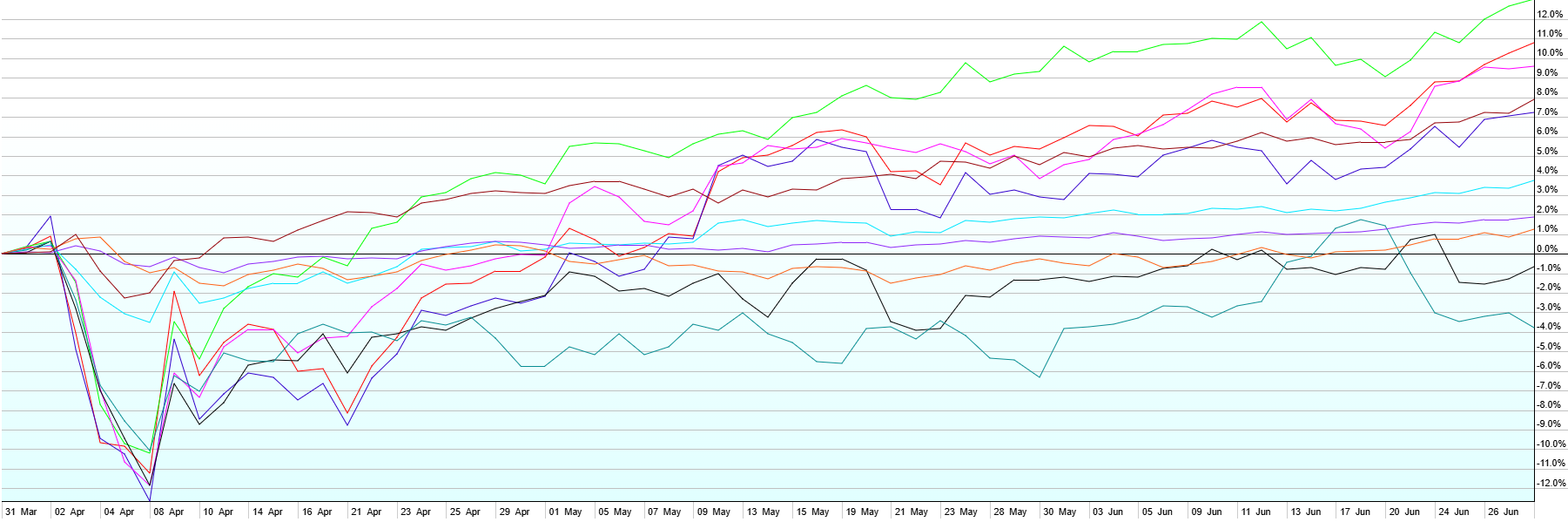
This post contains the usual returns by asset class for this past quarter (by representative ETF), year-to-date, last 12 months, last five years, and last ten years. While there is still no predictive power in this data, I’ll continue to post this quarterly for those of you that are interested. 

Last Quarter (4/1/2025 – 6/30/2025)
Year-To-Date (1/1/2025 – 6/30/2025)
Last 12 Months (7/1/2024 – 6/30/2025)
Last 5 Years (7/1/2020 – 6/30/2025)
Last 10 Years (7/1/2015 – 6/30/2025)

A few notes:

Q2 2025 experienced a lot of volatility on its way to solid overall returns. The quarter started with President Trump announcing “reciprocal tariffs” on virtually all countries on “Liberation Day”, April 2nd. Markets reacted very poorly, especially US Stocks. My thoughts from early April are here and here. Markets (US Stocks down 11-13% over that first week of April and lots of stress in the US Treasury market) seemed to force the administration’s hand toward de-escalation. A new openness toward negotiation of new trade deals sent markets into recovery mode. Foreign Stocks maintained the outperformance they showed in Q1, but all asset classes rallied, at least somewhat, for the last 12 weeks of the quarter. From best to worst: Foreign Developed Stocks (+13%) as the dollar plunged to a 3+ year low, US Large Caps (+11%), Emerging Market Stocks (+10%), Emerging Market Bonds (+8%), US Small Caps (+7%), High-Yield Bonds (+4%), Short-term Corporate Bonds (+2%), Aggregate US Bonds (+1%), Real Estate Investment Trusts (REITs) (-1%), and Commodities (-4%). REITs struggled toward the end of the quarter on concerns over office REITs in NYC after a self-proclaimed Socialist won the Democratic Primary for mayor. Commodities struggled after a cease-fire between Israel & Iran erased the premium that had settled into energy prices over the previous few weeks. These lower commodity prices, though, helped other assets to rally into the end of the quarter given possibly lower future inflation as a result. Lower inflation gives the Federal Reserve more cover to cut interest rates, which would provide a tailwind for asset prices. Markets are now pricing in about 2 1/2 quarter point cuts (63 basis points) between now and December, which would take Fed Funds down to ~3.75% and savings interest rates down to the low 3% range. Unfortunately for the housing market, this may not translate into lower long-term rates (a requirement for lower mortgage rates) if the Fed follows the forecasted path for the short-term. Q3 will be interesting as we could get our first Fed rate cut of the year and need to follow the progress of the One Big Beautiful Bill through Congress. If it passes, higher deficits are a near certainty and with that will come pressure on long-term interest rates to move higher. There will be lots of tax implications as well, some retroactively effective in 2025. I will post a summary of the key tax provisions if/when the Bill nears passage.

My Take On Tariffs

Just because tariffs aren’t another reason to panic doesn’t mean they aren’t going to cause angst. To be clear, I think they are a policy error and the way they have been implemented is a huge (trying hard not to do Trump voice in my head as I type that) policy error. I try to stay out of discussing politics, esp. in large audiences, because no seems to have an open mind and 50% of that audience will almost certainly hate whatever I’m saying (probably more like 90% since I consider myself politically homeless… not aligned with either of our two choices in political party). I will preface this post by stating that if you believe Trump is the United States’s savior and that he can do no wrong, you should probably not read the rest of this post. If you believe everything Trump has ever said or done or will ever say or do is wrong, evil, etc. you should probably not read the rest of this post. If you’re somewhere in the middle, and have an open mind, this post is for you! There won’t be any facts, figures, and charts in this one. I’m just going to try to explain what’s going from my point of view, because more than one client has recently asked my opinion. I suspect that means more of you are wondering what I think. If you’re not, feel free to skip past this one. There isn’t any financial advice here… just some plain English ‘splaining. I’ll try to stop before it turns into a pure ramble.

Last week, the administration announced “reciprocal” tariffs on just about every country in the world. (Aside: I don’t really care that they included an uninhabited island… it’s dumb, who cares, it has no impact on anything). They call the tariffs reciprocal because they believe those countries have unfair practices in place that disadvantage the US on trade. It’s hard to argue against that point en masse. At least in some cases, some countries have disadvantaged some vendor, product, or sector of the US. A common large scale example is the intellectual property theft in which China has engaged for decades. A more specific one might be the very high tariffs (as high as 110%) that India imposes on foreign made autos. It would be hard work to research each and every unfair trade practice from the bottom up and quantify how to reciprocate in a fair way. So, the administration has chosen a different approach. They’ve decided not to target unfair trade practices, but instead to define unfair as running a trade deficit with the US. That is, if a country exports more goods to the US than it imports from us, there must be something fundamentally unfair there! To “fix” the unfairness, we’re going to impose a tariff equal to the other country’s trade surplus with us divided by their exports to us, minimum 10%. That is, (exports – imports) / exports… in their view it’s the unfairness ratio. To be nice (/sarcasm), we’ll actually only make the tariff rate half this amount.

Calculations aside, I think the president and his team have a fundamental misunderstanding of the economic order of the world. If you were to rank all the countries in the world In terms of wealth and opportunity for wealth, it seems to me that the US would be pretty high in those rankings. To threaten the world economy with extreme “reciprocal tariffs” as a way of equalizing trade imbalances just makes no sense to me. Have the third world nations where the average person lives on the equivalent of a few dollars per day really stolen our wealth and opportunity? Trade imbalances imply specialization and the movement of resources to their optimal locations to make production efficient. I have a trade imbalance with my grocery store because I’m not good at farming and they are good at stocking their shelves with food. They can specialize in running a grocery store and get things cheaper and more efficiently than if I had to do it myself. I’m happy to pay them for that and free up my time for more productive things which I can do better when I’m not hungry. Allowing specialization and removing trade barriers makes things more efficient. We should be working with other countries to eliminate all tariffs (slowly, over time, so as to not shock any particular portion of the global market) and other trade barriers to establish free and fair trade around the globe. All economies will benefit from that and the global economy will grow as a result.

Targeted tariffs or subsidies, esp. as part of negotiation for fair trade deals makes sense to me. Even the threat of escalating tariffs for countries that refuse to negotiate or be more fair on their end could have a place. Financial markets seemed mostly ok with this as well. Life could go on with a few tariff snipers taking aim at unfair practices and the threat of a tariff bomb if those unfair practices continued. Thinking that we could, or that we’d even want to, eliminate all trade deficits, is not a solution. To make matters worse, massive tariffs imposed all at once, will shock global trade. While the importer pays the tariff, it’s likely that some of it gets passed on to the American consumer, some of it is eaten by the importer, and some of it is negotiated through to the exporter in a lower price on their end. All three components feel some pain there. That’s fine with surgically applied specific/strategic tariffs. With globally applied tariffs at high rates, there will be demand destruction on top of the pain. That is, fewer goods are going to be sold pretty much everywhere in the world because of dramatically higher prices. Strategic sourcing or product substitution isn’t available if the tariffs are everywhere and on almost everything. Fewer goods sold means lower profits, on top of the squeeze that tariffs already put on profits. Lower profits means less global employment. It would be hard to envision massive job creation in the US if global jobs are shrinking. In other words, we’re trying to make our slice of the pie bigger at the expense of the size of the pie. Now multiply all of that by an unknown amount of retaliatory tariffs from other countries, which Trump has already said will be met with more reciprocal tariffs from the US.

If all of the above sounds unstable, imagine how it sounds to a CEO trying to plan where to build a new factory that will be completed in 5 years time. Not only does forecasting demand and pricing become more difficult, but they know that these newly announced policies are unsustainable. A trade war isn’t going to last forever. Where does the world land in terms of trade deals? What’s the impact on currencies? What happens after the next election cycle around the world? What will be the terms of imports and exports if they build a new factory in location A vs. location B? Can they even really afford to build a factory in such uncertainty? It sure does sound hard for all the manufacturing jobs to come back to the US in that scenario.

That brings me to my last issue with all of this. Do we really have an appetite for massive increases in factory work in the US? Where will the people come from to do these jobs, even if they are fairly paid? We won’t even let people come in from Mexico on a seasonal basis to pick fruit. And if they are fairly paid, are we ready to pay 5x and 10x the price for goods? It seems we’d be better off focusing on advancing technology (robotics, manufacturing processes, etc.) than trying to force clothes and electronics to be made domestically. Highly educated engineers using robotics to make something better than an iphone in a way that is even cheaper than offshore labor could built… that sounds like a better way to drive some manufacturing back to the US. Or maybe the manufacturing should never come back. Unemployment is 4%. Almost everyone who wants a job has a job. We buy other countries’ goods with our dollars and they take those dollars and invest them back in our companies and our treasuries. As Bloomberg’s Matt Levine recently wrote: “… a world in which the US gives people finance and gets back inexpensive goods strikes me as good for the US. We give them entries in computer databases, they give us back food and clothing: That is a magical deal for us!” Maybe, just maybe, our goal shouldn’t be to emulate the third world economies to try make our slice bigger, but rather to let goods, services, and capital flow freely so that it can continue to expand the pie.

The current policy is so egregiously bad that it just can’t stay put. I don’t think it’s malicious. I think it’s dumb and lazy. Either the Trump administration will shift to negotiating and ultimately say this was a negotiating tactic all along but they couldn’t tell other countries that… art of the deal sort of stuff OR Congress will take back the power to impose tariffs from the President and reverse this (they gave it to the President after all) OR Trump will throw someone under the bus, blame them for poor implementation, say “you’re fired” a la The Apprentice, and modify the approach to “what I really wanted to do from the beginning”. Trump has been talking for decades about the trade imbalance and now has set out to fix the problem. The problem though, isn’t the trade imbalance. It’s his understanding of economics.

In the short-term, financial markets price assets and liabilities on emotions, running through the fear and greed cycle, which determines current supply and demand for the assets. In the long-term, they price assets and liabilities based on future cash flows. If poor economic policy disturbs global trade for a few weeks or even months, it will eventually get back to normal. I mean, it did with covid when almost the entire world shut down for a few months. People are still going to fly in airplanes. We’re still going to eat. We’re still going to buy clothing. We’ll still need cars. Kids will be born and raised. And all the while the smart folks will be inventing new things and moving the world forward so it can be more productive. I’m confident that the terrible, horrible, no good, very bad, tariff policy isn’t going to end the economic world. In fact, the worse financial markets get, the more pressure builds on the administration, the closer we are to de-escalation. It didn’t have to be this way, but the good news is that it won’t always be this way.
Another Reason To Panic?

I’ve written a number of these notes over the last 18 years (sheesh… time flies) as an advisor. Banks Teetering (Silicon Valley Bank Goes Under) 2023, Inflation Spike of 2022, Covid 2020, Q4 2018 Meltdown, European Debt Crisis 2014, Fiscal Cliff 2012, Great Financial Crisis 2008/9. Every one of those situations felt terrible. Every one was a crisis at the time, some worse than others, but all resulting in stocks selling off and anxiety rising. Every one of them ultimately resulted in the all-time highs we had on most stock markets just a few months ago. Every one was not reason to panic. Here’s a little secret… this one isn’t a reason to panic either.

Why not panic? Most importantly, when times are not stressful and anxiety is not running high (i.e. when rational thinking prevails), we help our clients set a financial plan, an asset allocation, and a level of risk that they’re comfortable taking. We remind them that risk is what allows risky assets to generate long-term returns that exceed those of risk-free assets. We tell them that in a bad financial situation like the Great Financial Crisis, they are likely to lose 50% of the assets that they have in stocks. We all but guarantee that at some point, something financially bad is going to happen and that 50% loss will occur. It’s actually happened 3 times in the last 25 years! And yet we all agree that the average long-term returns are worth the short-term risk, or almost guarantee, of loss. Why would the occurrence of something that we agreed would almost definitely happen cause anyone to panic? It shouldn’t. Keep in mind that we’re not telling near-retirees to keep 100% of their money in the stock market and simply accept they might (will) lose 50% of it at some point. If you’re nearing retirement and you have all or near all of your money in risky assets like stocks, you’re not a PWA client and you’re doing something very wrong!

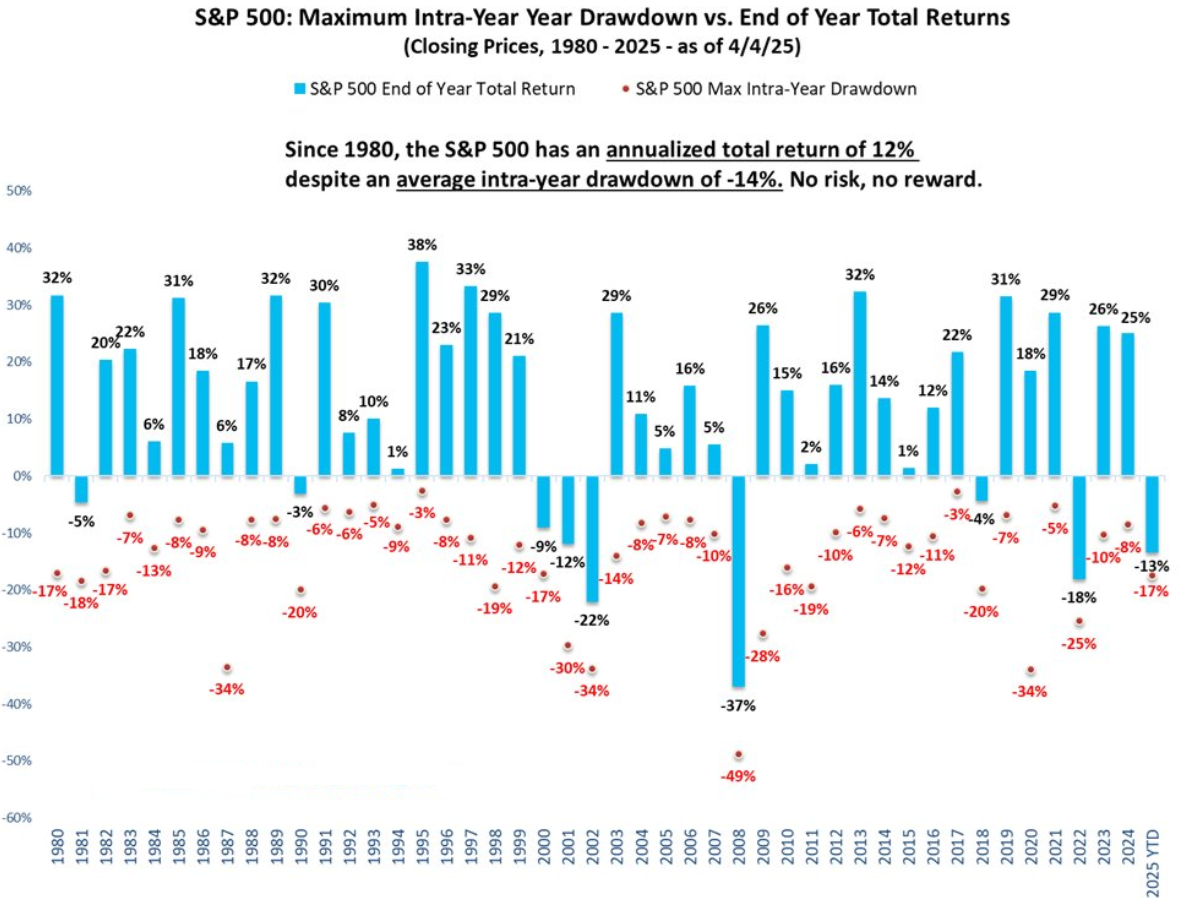
While we can’t see the future, we can look to the past for guidance. Stock market volatility is routine. Charlie Billelo, chief market strategist at Creative Planning, recently updated a JP Morgan chart showing S&P 500 returns by year (avg 12% since 1980) vs. the maximum drawdown in each year (avg 14% since 1980). As of Friday’s close, the S&P500 was down 17% from the high and 13% year-to-date (substantially more on small caps, less on international stocks and bonds have been up). Far from out of the norm. In 2020, we were down 34% from the highs and ended the year up 18% from where we started.

We’ve had a terrible last two days in the stock market, but if you look at previous terrible two days in the stock market, returns have been quite quite good from there in the future.

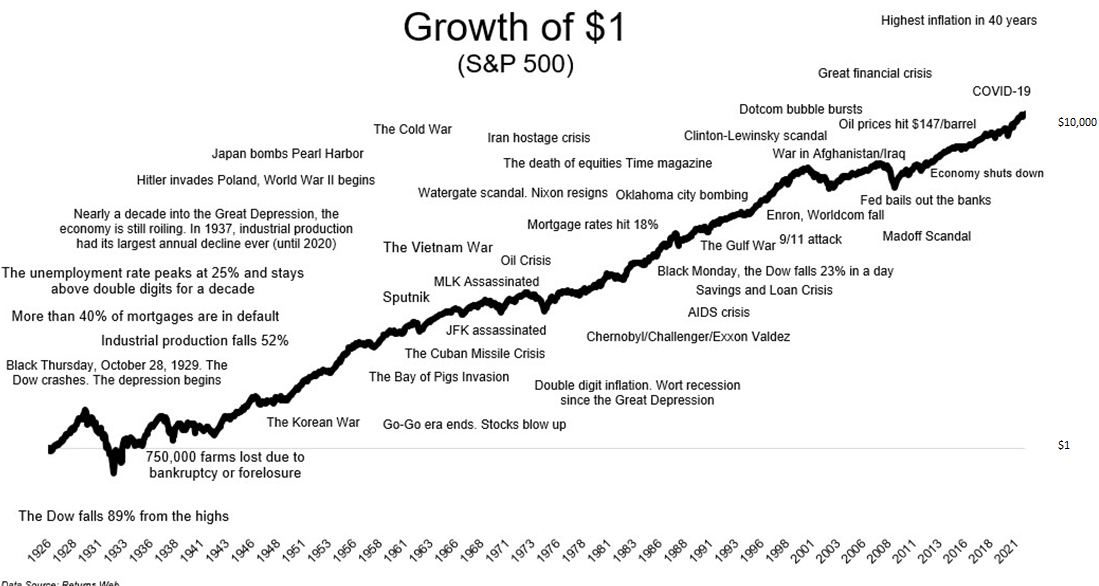
History is filled with potential economic crises (small sampling on the chart below).

The future will also be filled with them. Our debt-laden society makes them worse because even small changes in asset prices cause those that invest on leverage (borrowed money intended to amplify returns) to take large losses. Margin calls then cause forced selling which further magnifies losses. This tends to continue until the overly aggressive investors looking to get rich quick are wiped out, and those patient long-term investors with the ability to rebalance and “buy low” step in. As I type this, futures point to another day of sharp losses tomorrow. Maybe justified by economic policy (a clear policy error in my view… another post on that coming shortly), or maybe just some of that forced selling that tends to follow sharp moves lower in stocks. There’s no way to know. What we do know is that falling stocks are an opportunity to rebalance and “buy low” by selling bonds and buying stocks the same way as rising stocks are an opportunity to rebalance and “sell high” by selling stocks and buying bonds. Volatility, exploited this way, is opportunity. It’s certainly NOT another reason to panic.

Q1 2025 Returns By Asset Class

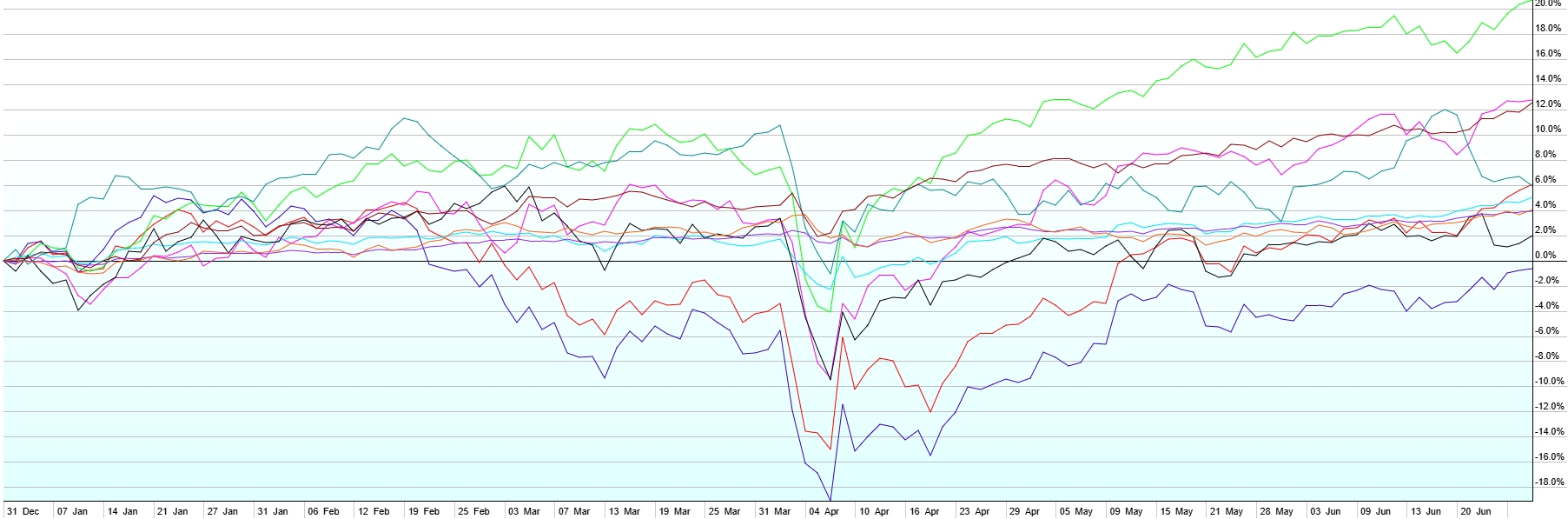
This post contains the usual returns by asset class for this past quarter (by representative ETF), last 12 months, last five years, and last ten years. While there is still no predictive power in this data, I’ll continue to post this quarterly for those of you that are interested. 

Last Qtr (1/1/2025 – 3/31/2025)
Last 12 Months (4/1/2024 – 3/31/2025)
Last 5 Years (4/1/2020 – 3/31/2025)
Last 10 Years (4/1/2015 – 3/31/2025

A few notes:

Q1 2025 was a flat-to-slightly-up quarter for most diversified portfolios despite all the news of a slowing US economy and the unknown (but almost definitely negative short-term) impact of tariffs. Diversification really paid off for the US investor. US stocks suffered over the quarter (Large Caps -4.3%, Small Caps -7.3%), but Foreign Stocks, Bonds, and Commodities performed well, offsetting those losses. Commodities (+10%) led the asset classes that we track in this quarterly message, with Foreign Developed Stocks (+6.8%) not far behind. Emerging Markets faired well too, with Emerging Market Local Currency Bonds up 4.3% and Emerging Market Stocks up 2.8%. The Federal Reserve held the Fed Funds rate steady at 4.25-4.5% during Q1, but long-term rates fell on fears of a coming recession and lower rates mean relatively strong performance for bonds. US Aggregate Bonds were up 2.8%, with Short-Term Corporate Bonds up 2% and US High Yield Bonds up 1.2%.

Q4 2024 Returns By Asset Class

This post contains the usual returns by asset class for this past quarter (by representative ETF), total 2024, last five years, last ten years, and since the covid low (3/23/2020).  While there is still no predictive power in this data, I’ll continue to post this quarterly for those of you that are interested. 

Last Quarter (10/1/24-12/31/24)
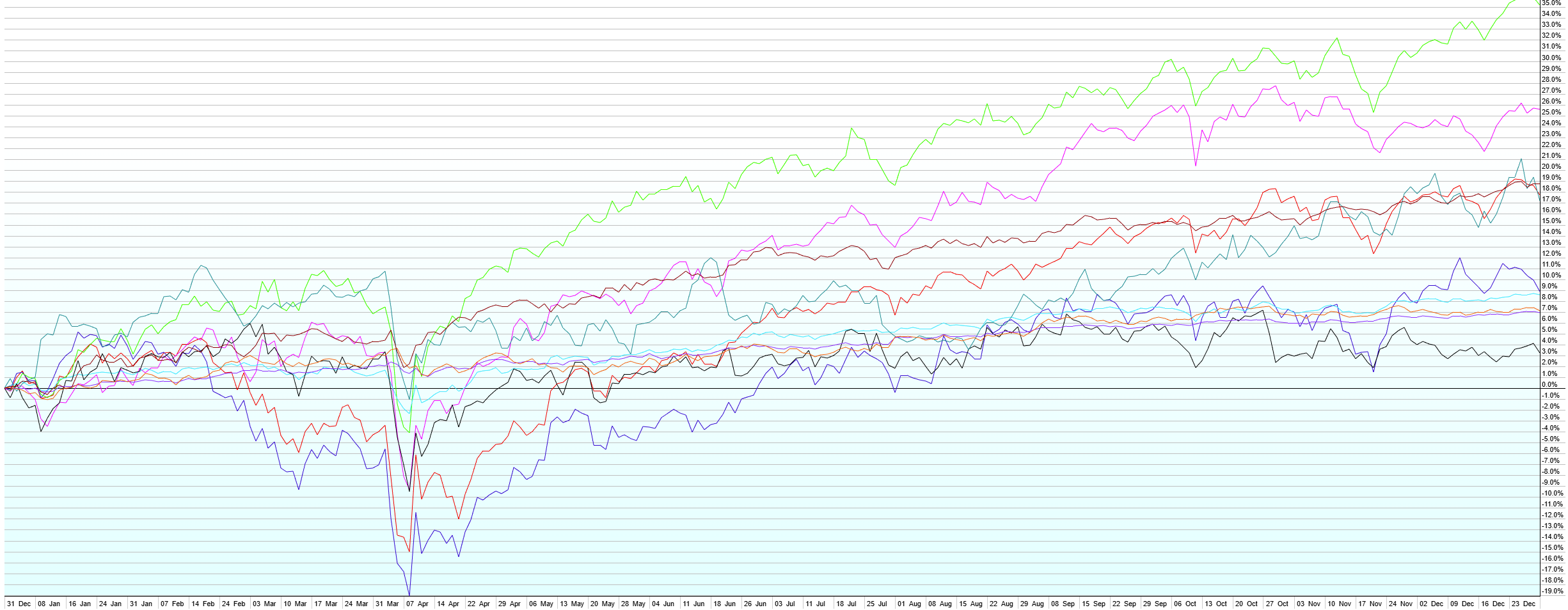
Last year (1/1/24-12/31/24)
Since Covid Low (3/23/20-12/31/24)
Last 5 Years (1/1/20-12/31/24)
Last 10 Years (1/1/15-12/31/24)

A few notes:

Q4 2024 was an overall down quarter for most diversified portfolios as international markets struggled post-US election, the US Dollar rallied, and long-term interest rates spiked as the inflation stagnated and the Fed continued to cut overnight rates. US stocks had a solid quarter with Large Caps up 2.5% and Small Caps up 1.7%. All other asset classes that we track for this ongoing post were down though including High-Yield Bonds (-0.1%), Short-Term Corporate Bonds (-0.4%), Commodities (-0.5%), US Aggregate Bonds (-3.1%), Emerging Market Stocks (-5.7%), Emerging Market Bonds (-7.1%), US Real Estate Investment Trusts (-7.7%), and International Developed Stocks (-8.1%).

Reporting Requirements For Beneficial Ownership Information

If you own or manage a business in the United States, you may need to comply with new Beneficial Ownership Information (BOI) reporting requirements issued by the Financial Crimes Enforcement Network (FinCEN). These rules, mandated by the Corporate Transparency Act (CTA), are designed to combat financial crimes and improve transparency in business ownership.

Q: What is BOI Reporting?

A: BOI reporting requires certain entities to disclose details about their beneficial owners. Beneficial owners are individuals who directly or indirectly own or control at least 25% of the company or exercise substantial control over it. The information will be maintained by FinCEN in a secure database and used for law enforcement and regulatory purposes.

Q: Who has to file a report?

A: The reporting requirement applies to “reporting companies,” which generally include:

  • U.S. Corporations, limited liability companies (LLCs), and similar entities typically formed by filing with a US. State’s Secretary of State.
  • Foreign companies registered to do business in the US.

Q: Are any U.S. companies exempt from the need to file?

A: Some entities are exempt from BOI reporting. These include:

  • Publicaly traded companies
  • Large companies with more than 20 full-time employees and $5+ million in gross receipts.
  • Banks, credit unions, insurance companies, and certain other regulated entities (which generally have already provided beneficial ownership information elsewhere).

For a full list of exemptions, visit FinCEN’s exemptions page.

Q: What information must be reported?

A: The reporting company must provide each beneficial owner’s:

  • Full legal name
  • Date of birth
  • Residential or business address
  • Unique identifying number (e.g. passport number, driver’s license number) and an image of the corresponding document

Q: What’s the point of this? Isn’t that information required when starting a company and filing with the Secretary of State?

A: In many jurisdictions, a company can be owned by another company, which can be owned by another company, etc., thereby hiding the identity of the true beneficial owners. FinCEN wants a way of knowing what individuals have ultimate ownership of a company.

Q: What is the deadline to report beneficial ownership information?

A: Entities created before January 1, 2024 must submit reports by January 1, 2025. Entities created on or after January 1, 2024 must submit reports within 30 days of creation.

Q: How do I file my BOI report?

A: BOI reports must be submitted through FinCEN’s Beneficial Ownership Secure System (BOSS), which provides step-by-step instructions for filing. Step-by-step instructions for reporting are available here: FinCEN BOI Reporting Guide.

Q: Does this include side-hustles, small businesses, and entities I own but haven’t really used in years?

A: Yes, if your business is registered as an entity with the Secretary of State (e.g. LLC, S-Corp, etc.), unless an exemption applies (see above). Sole-proprietors that do business under their own name without a registered entity do not have a reporting obligation.

Q: If I don’t own or manage a business, is there anything I need to do?

A: No, this is only relevant for those that own or manage a business with an obligation to report.

Q: Are there penalties for not reporting BOI information?

A: Failure to file a BOI report, or submitting false information, can result in significant penalties, including:

  • Civil fines of up to $500 per day of non-compliance.
  • Criminal penalties of up to $10,000 and/or imprisonment for up to two years.

Q: Wasn’t there a court case that declared this whole BOI reporting thing unconstitutional?

A: Yes. In March 2024, a federal district court ruled that the Corporate Transparency Act (CTA), which mandates BOI reporting, was unconstitutional. However, the U.S. Department of Justice appealed this ruling, and the appeal is currently pending. As it currently stands, the court’s injunction applies only to the named plaintiffs. Therefore, unless your business was a member of the National Small Business Association (NSBA) as of March 1, 2024, the BOI reporting requirements remain in effect for you.

For more information about the BOI reporting requirements, exemptions, and deadlines, visit FinCEN’s official BOI resource page.