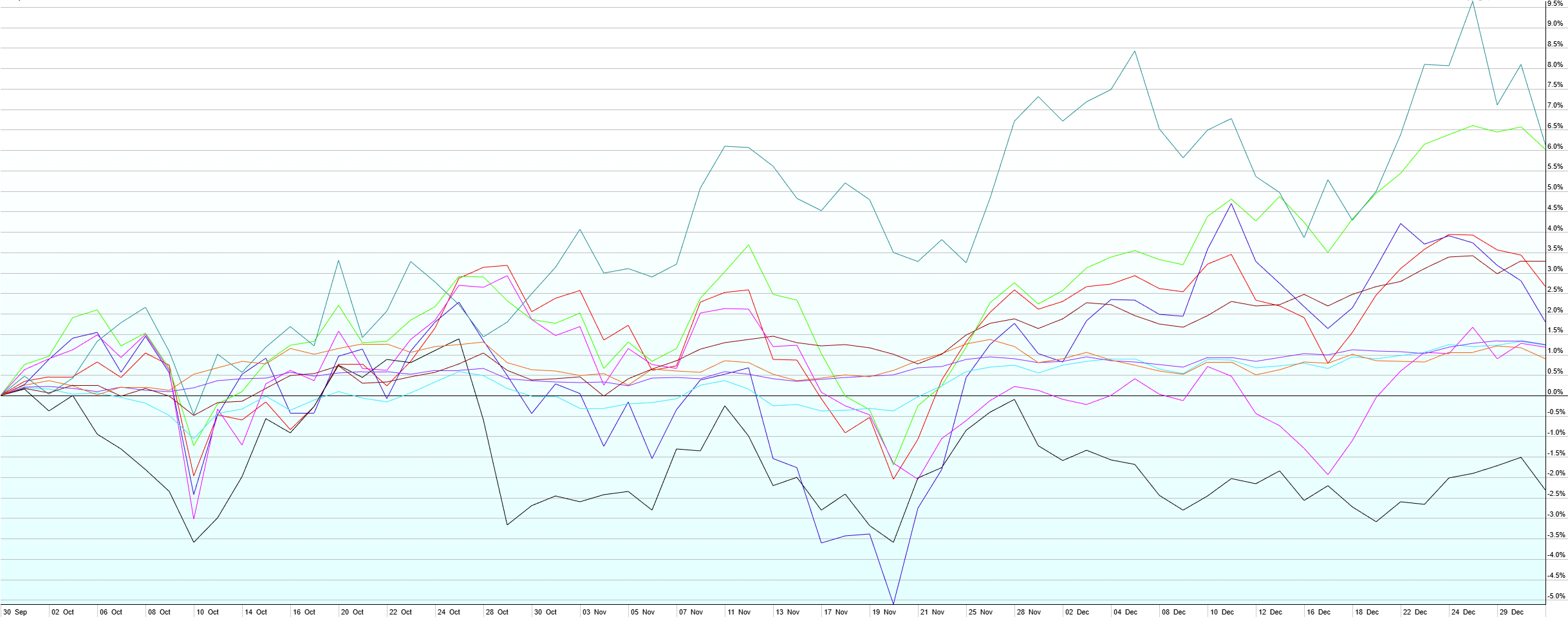
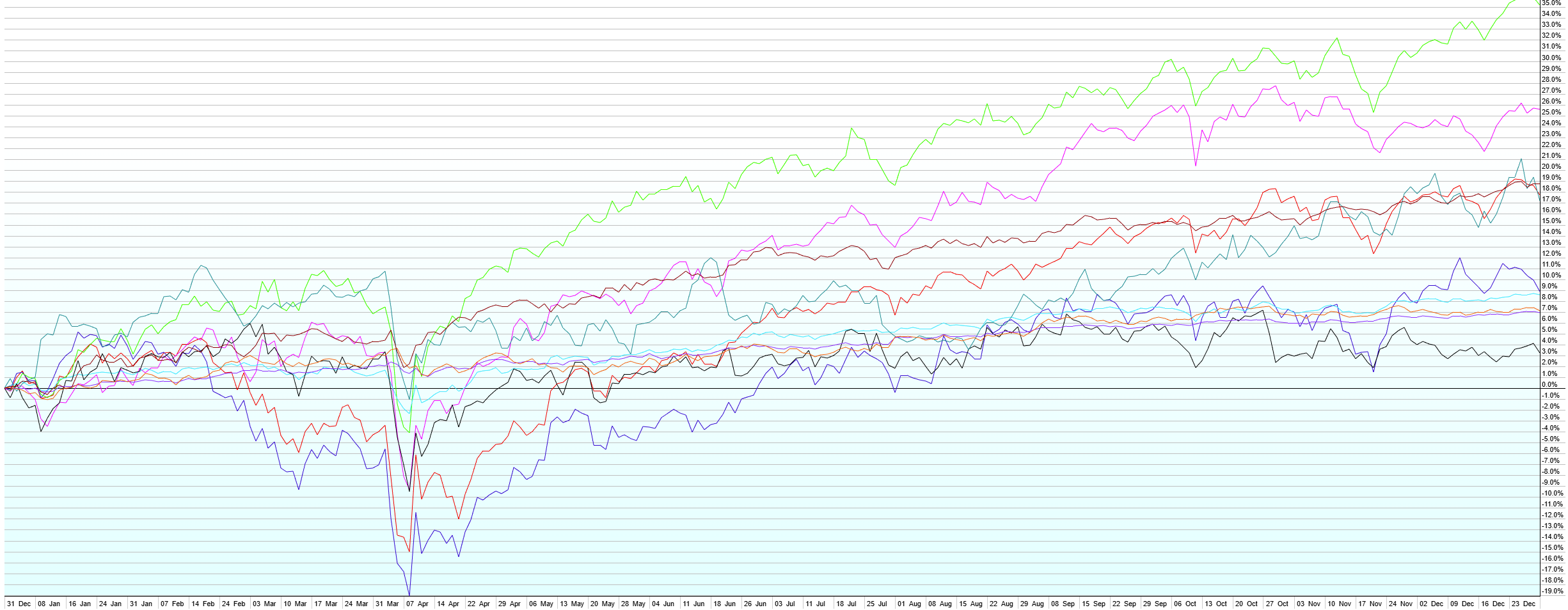
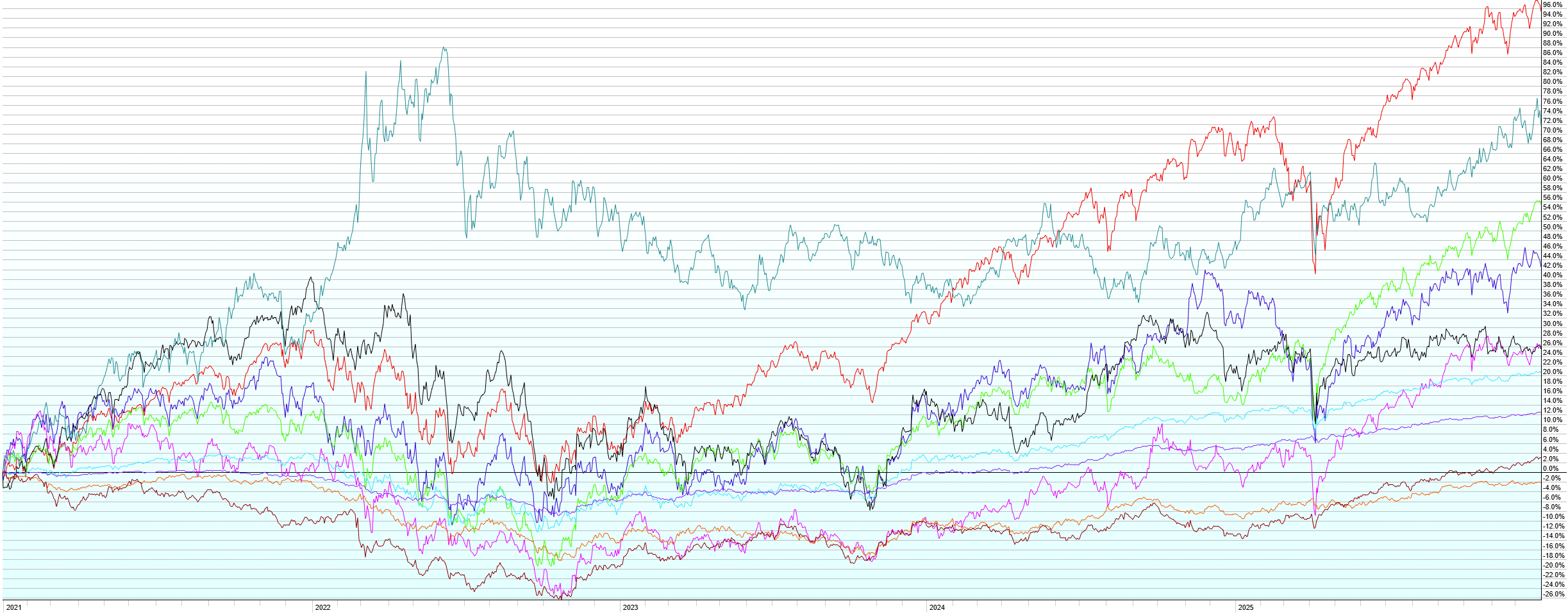
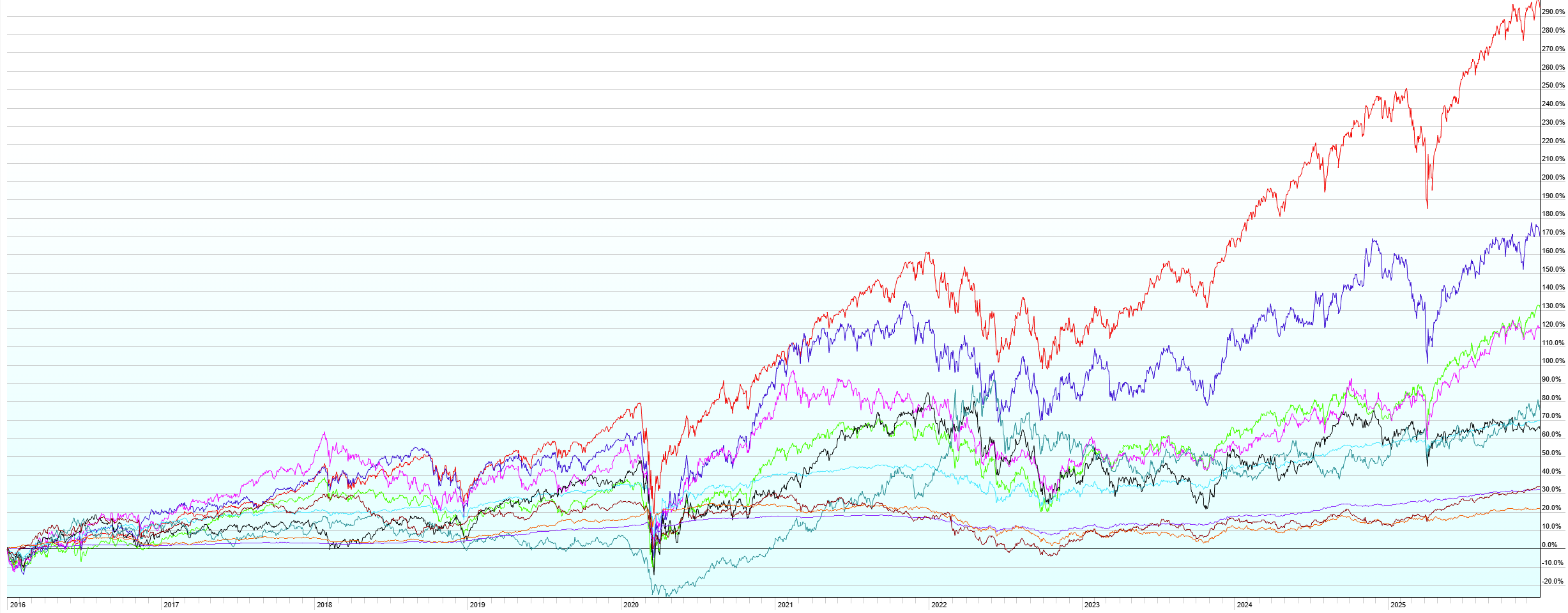
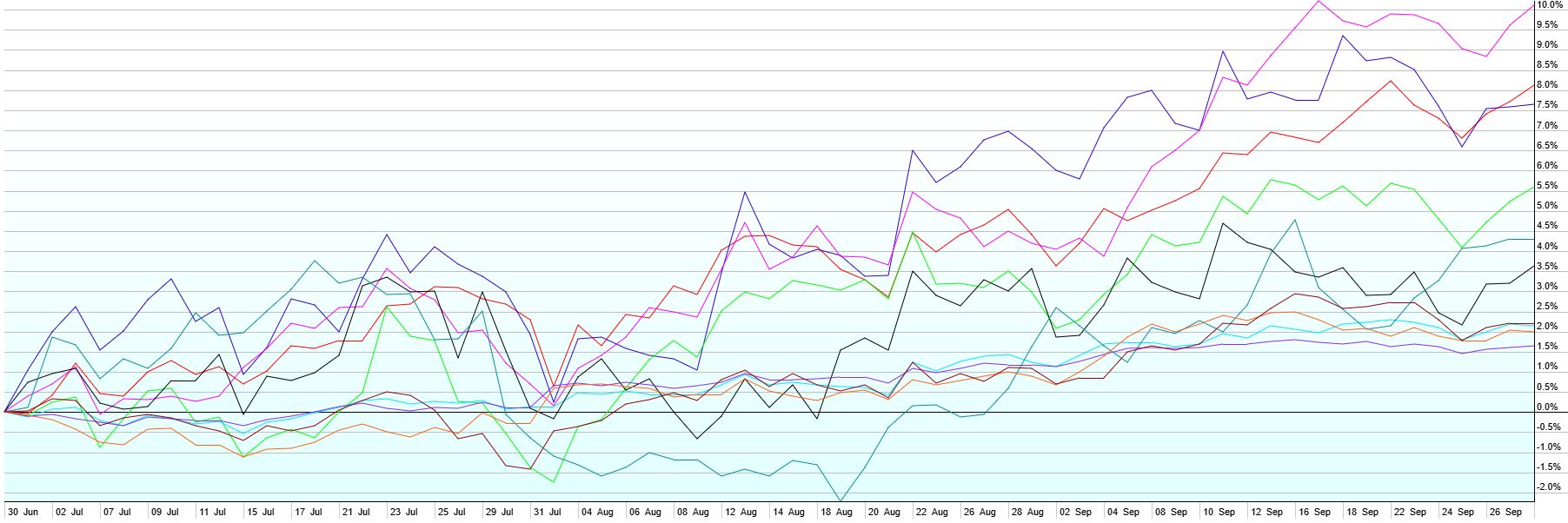
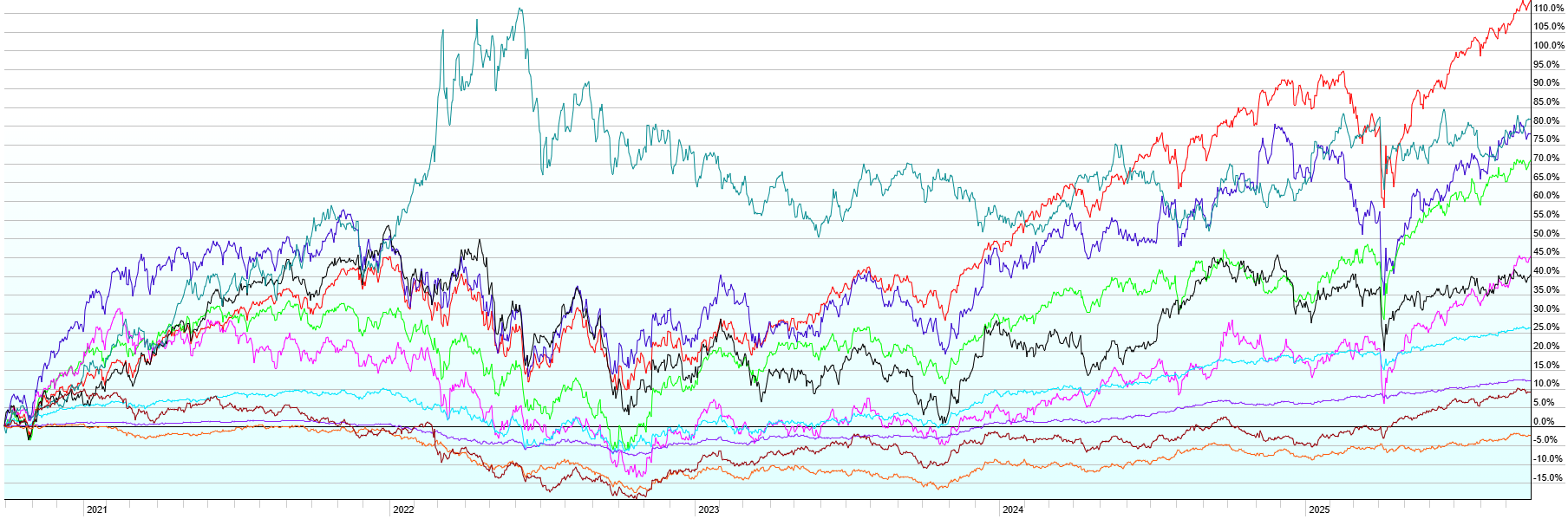
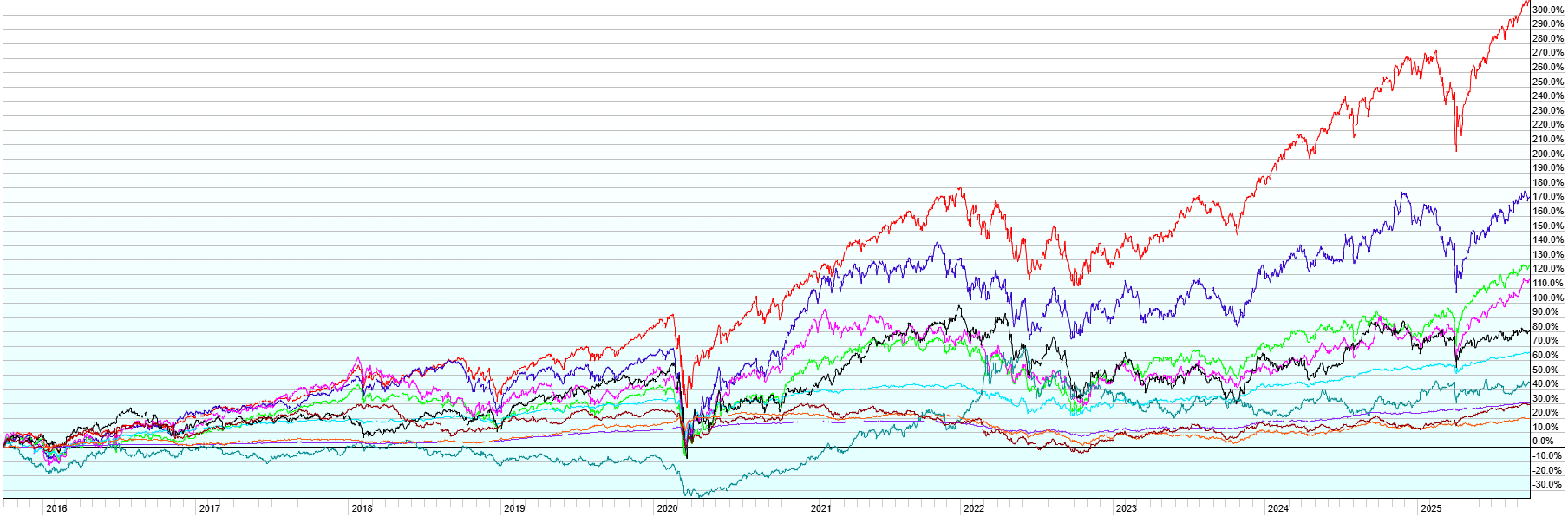
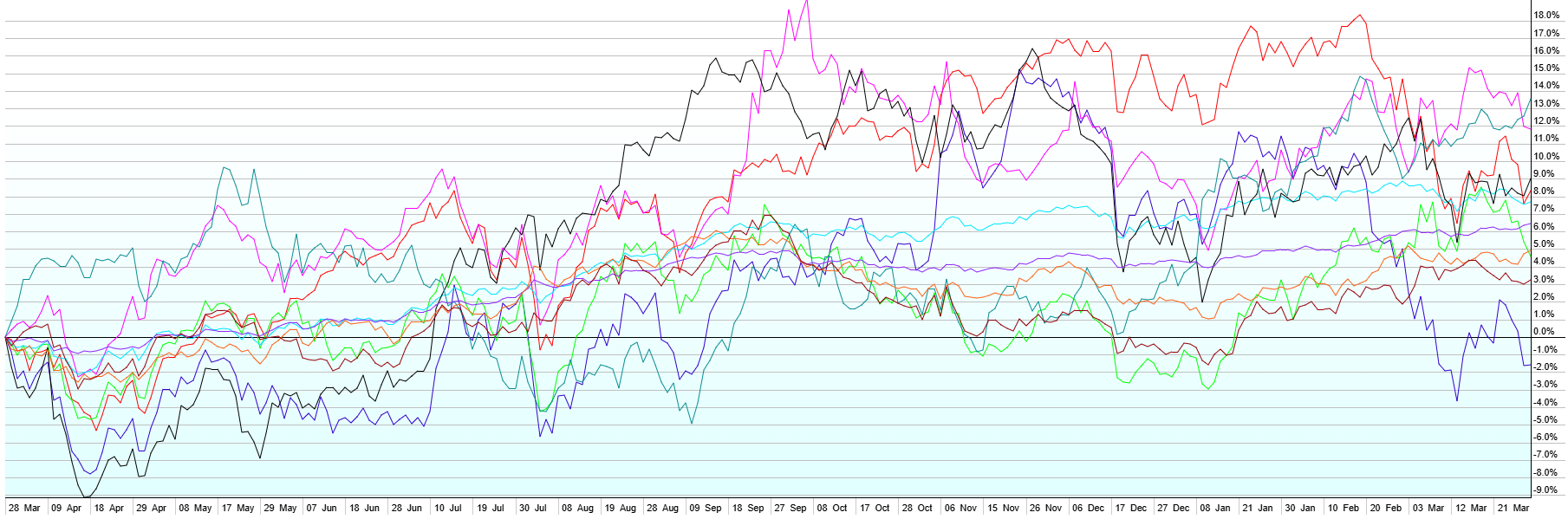
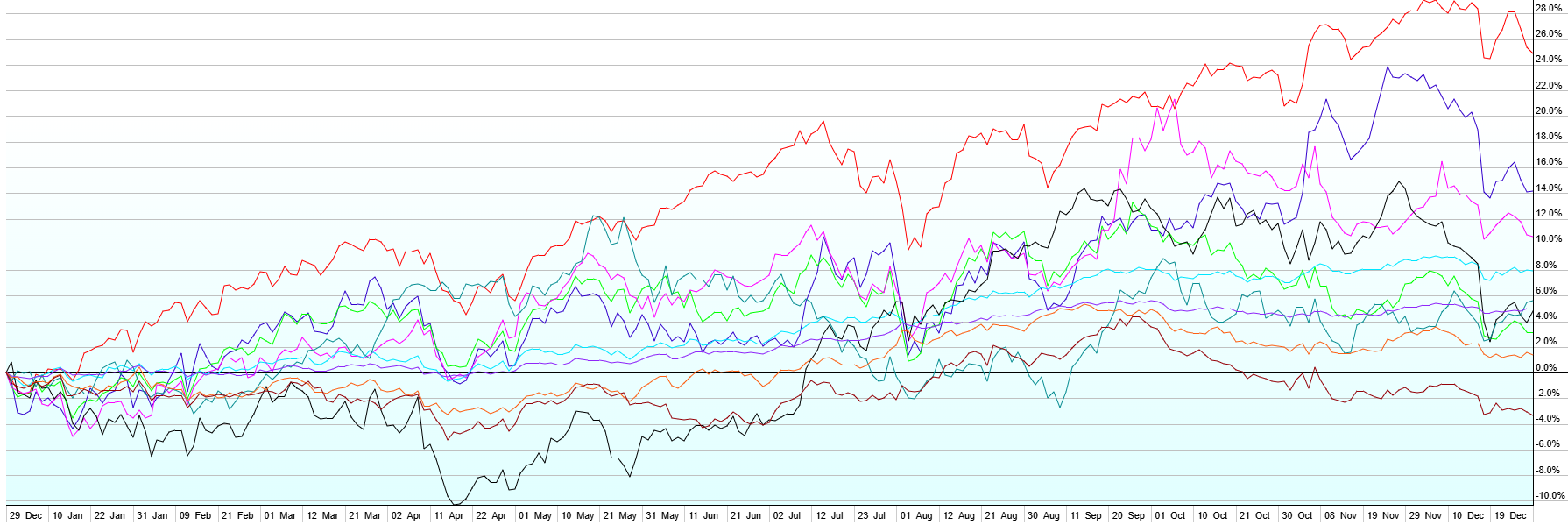
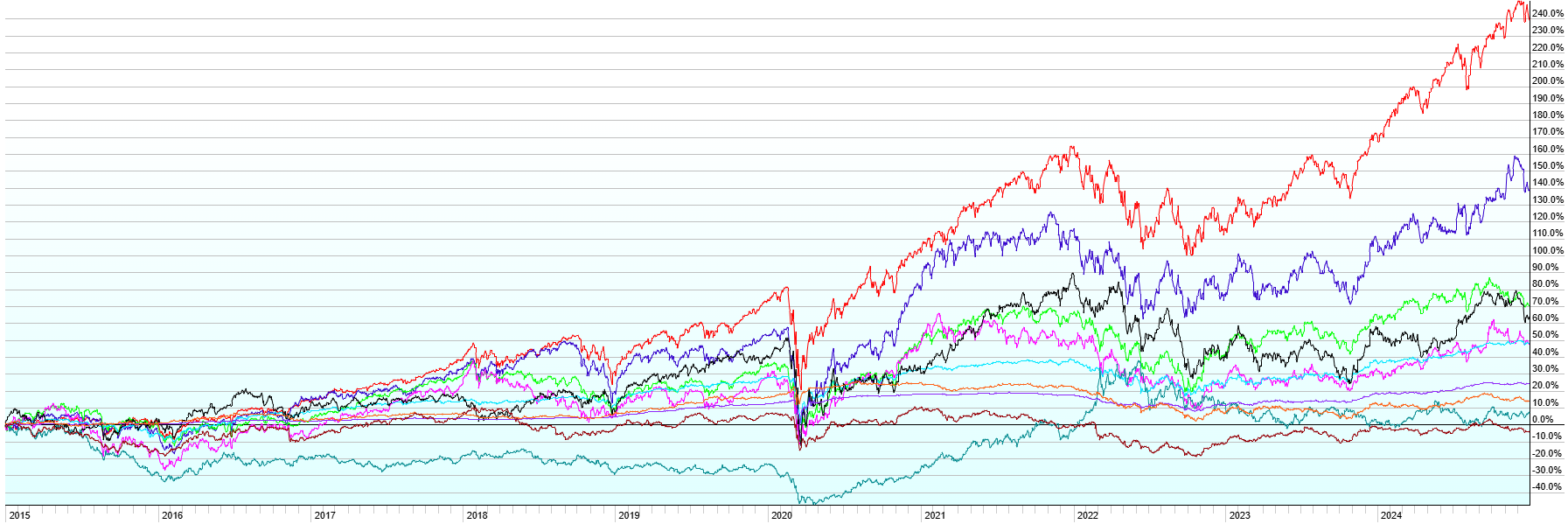
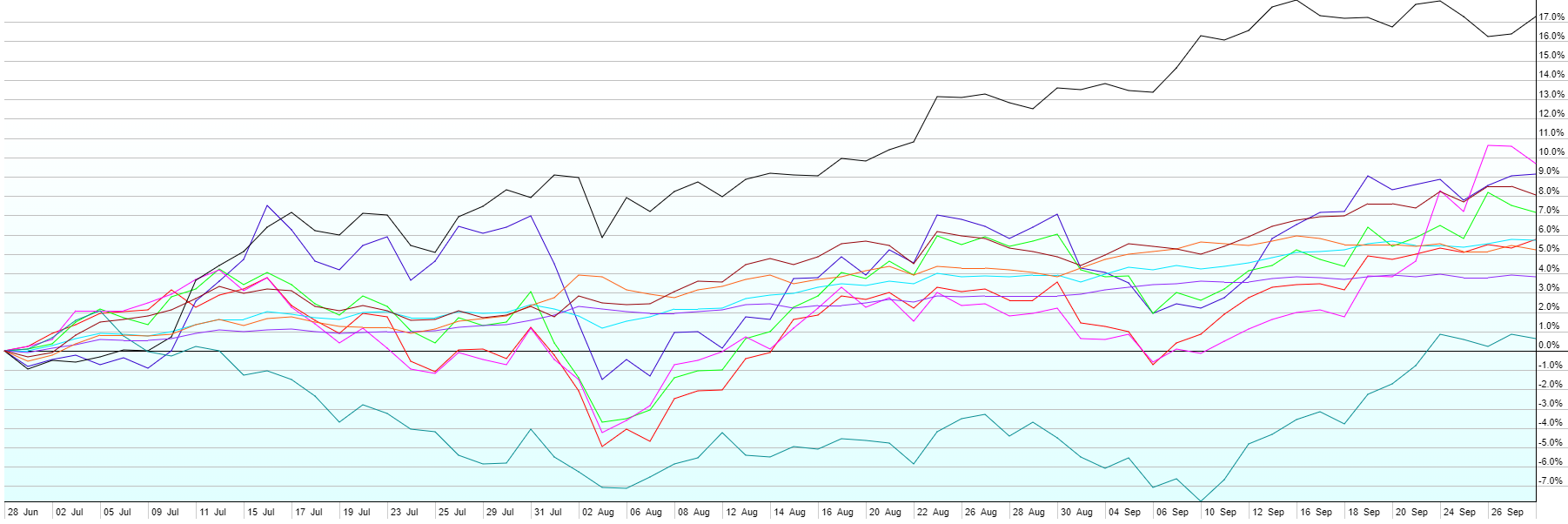
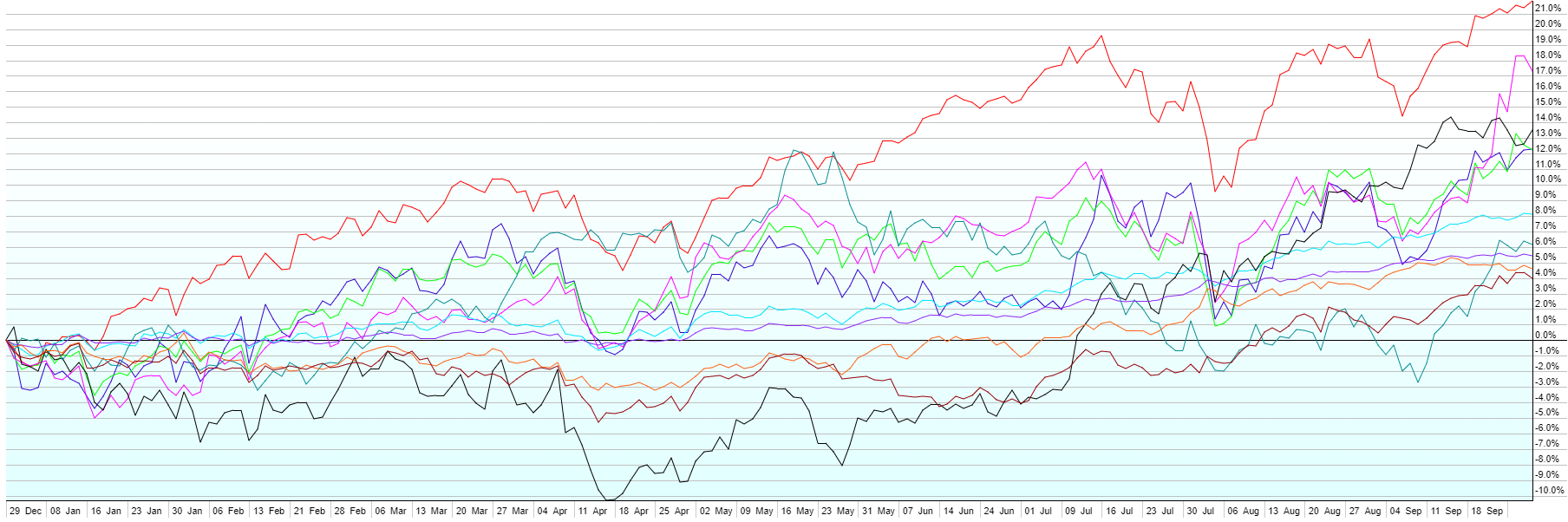
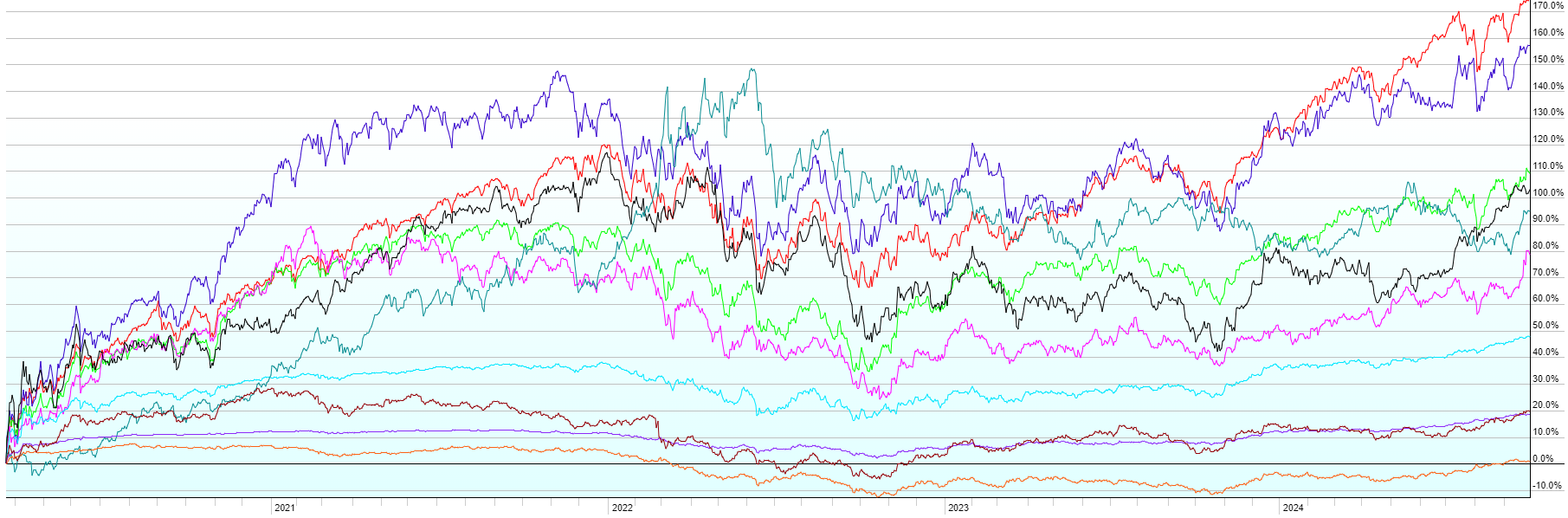
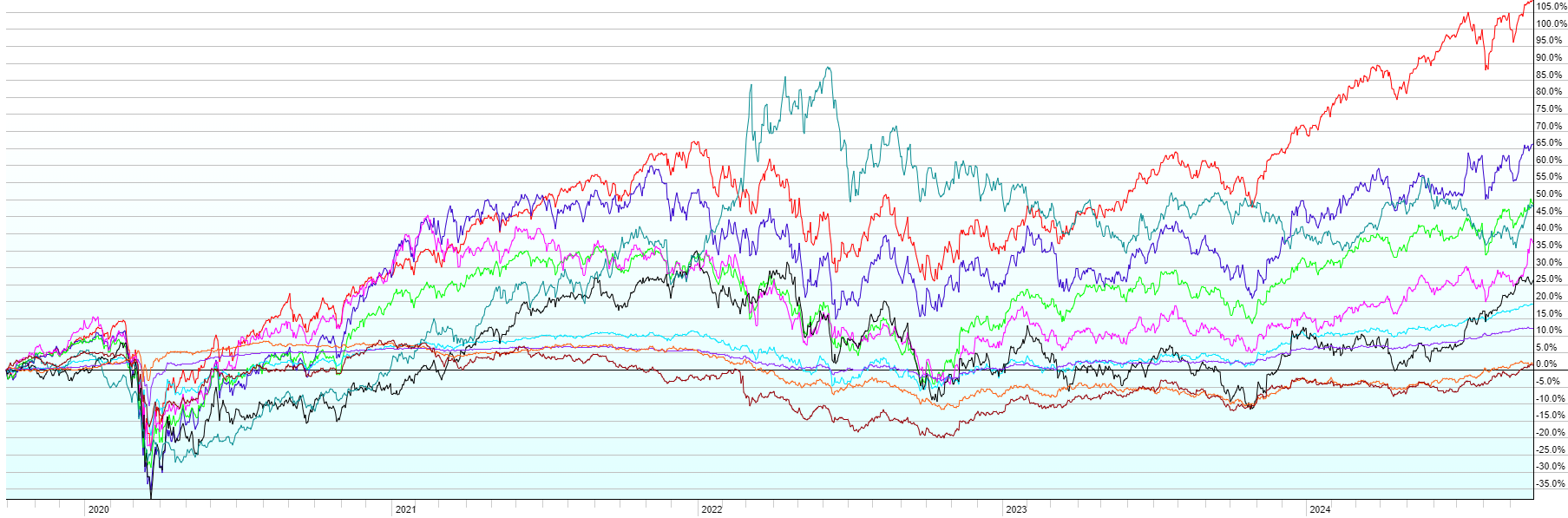
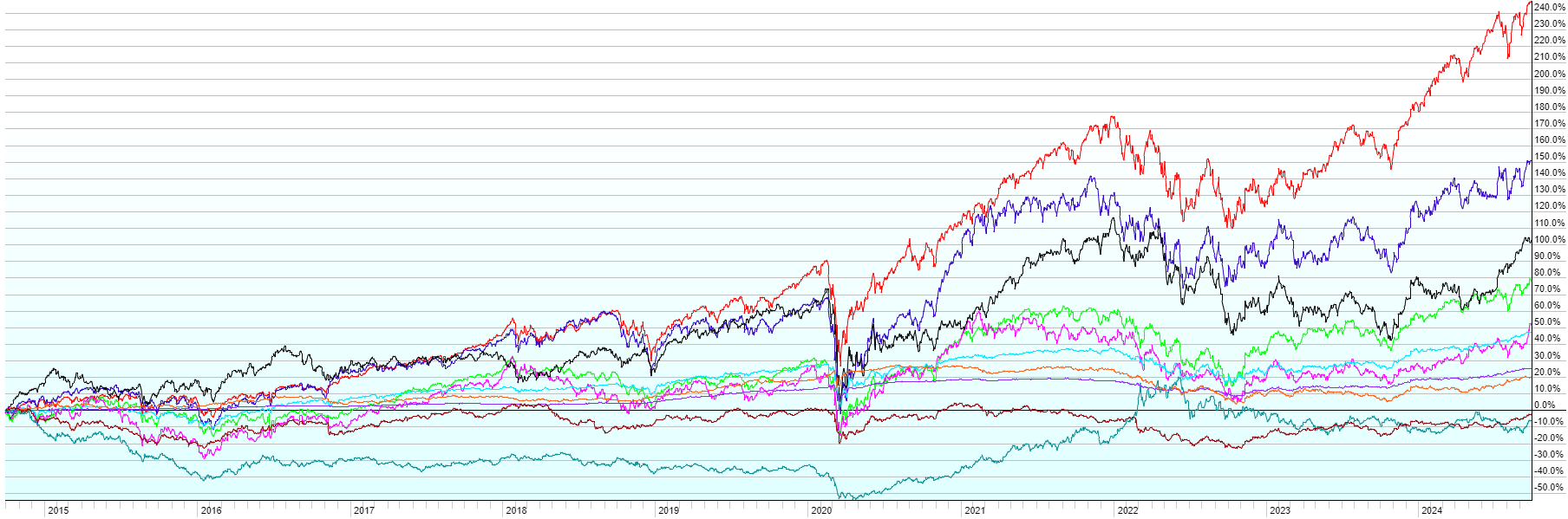
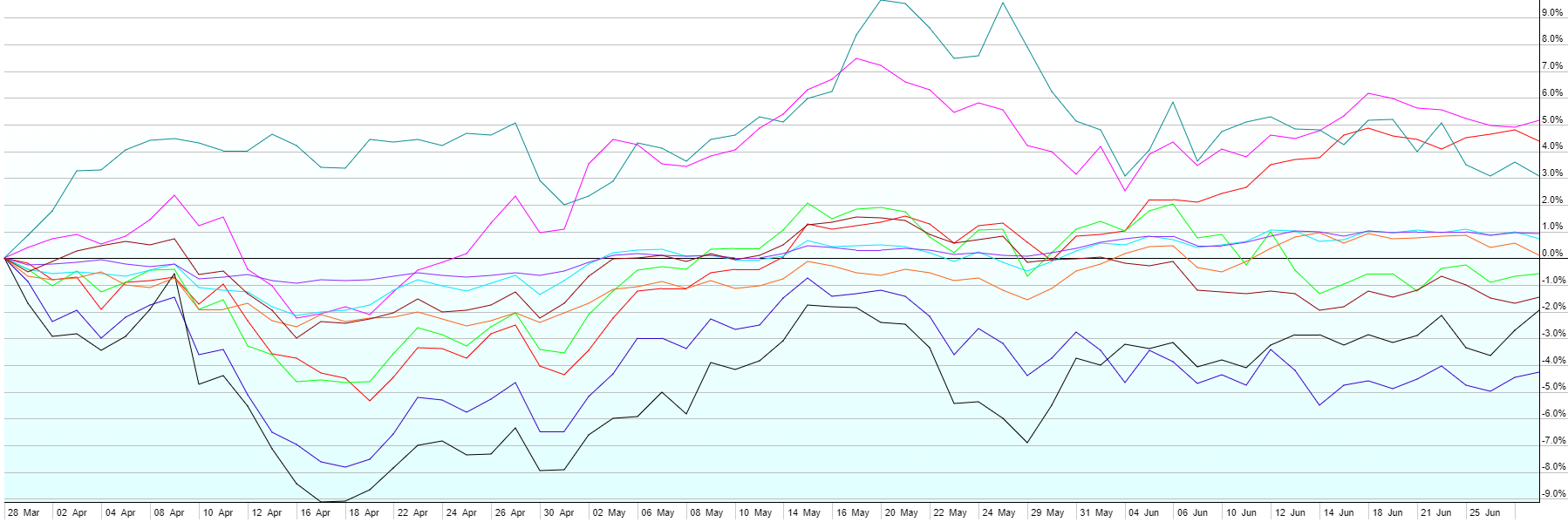
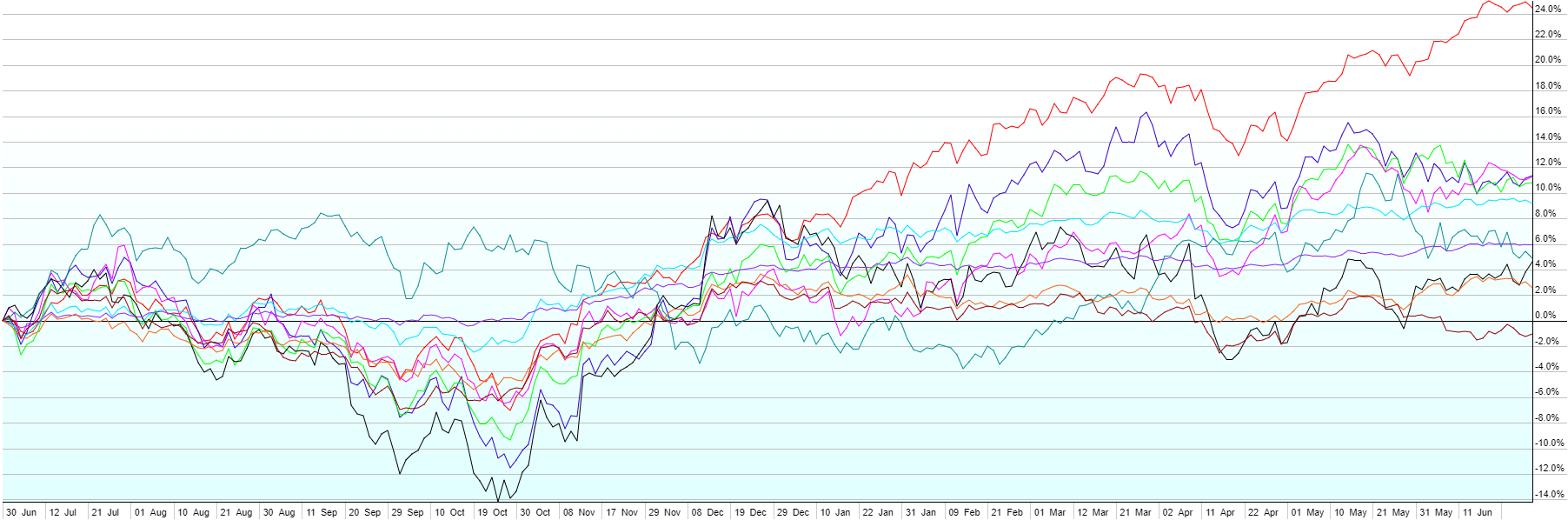
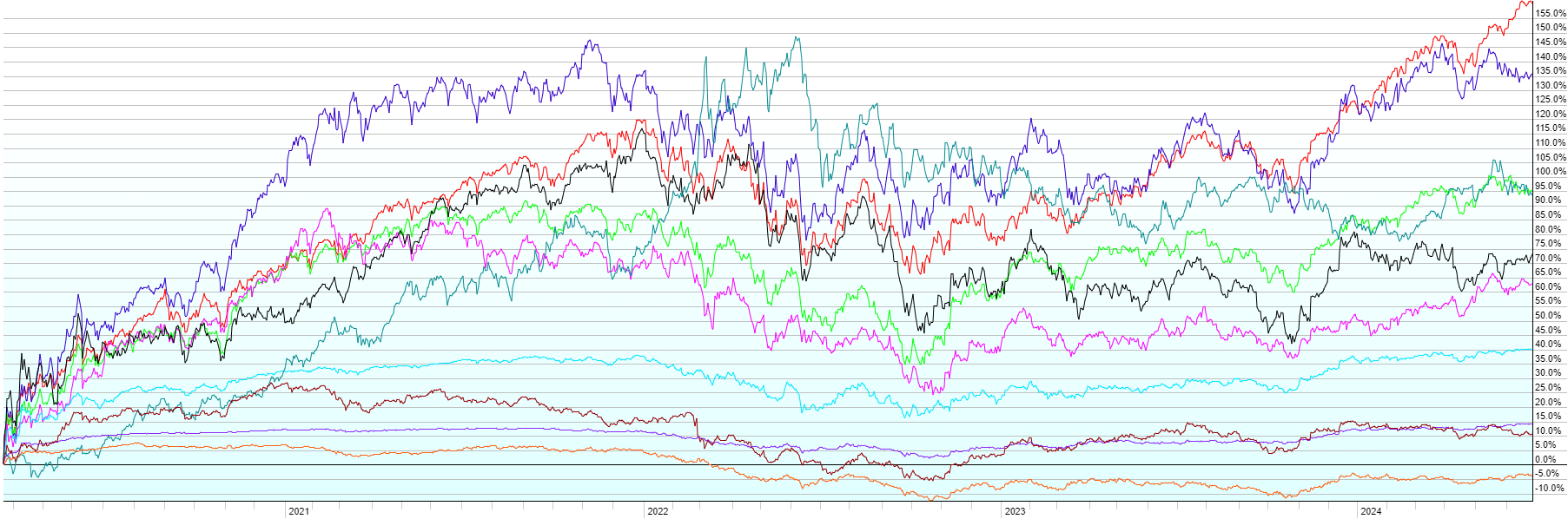
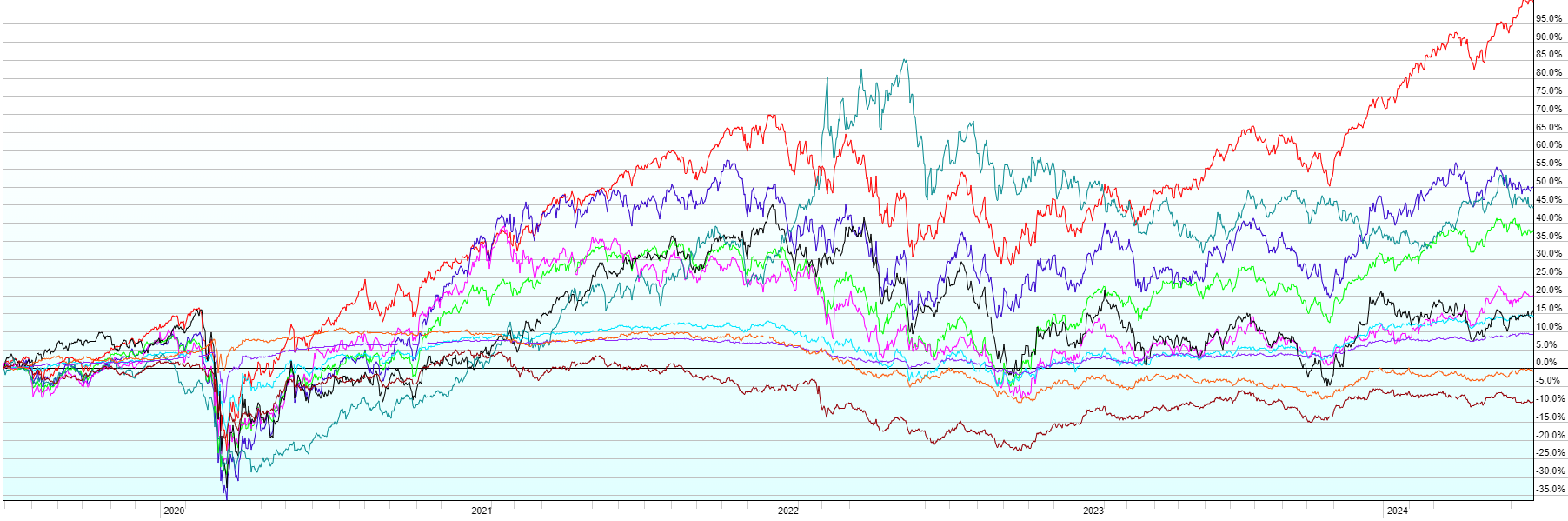
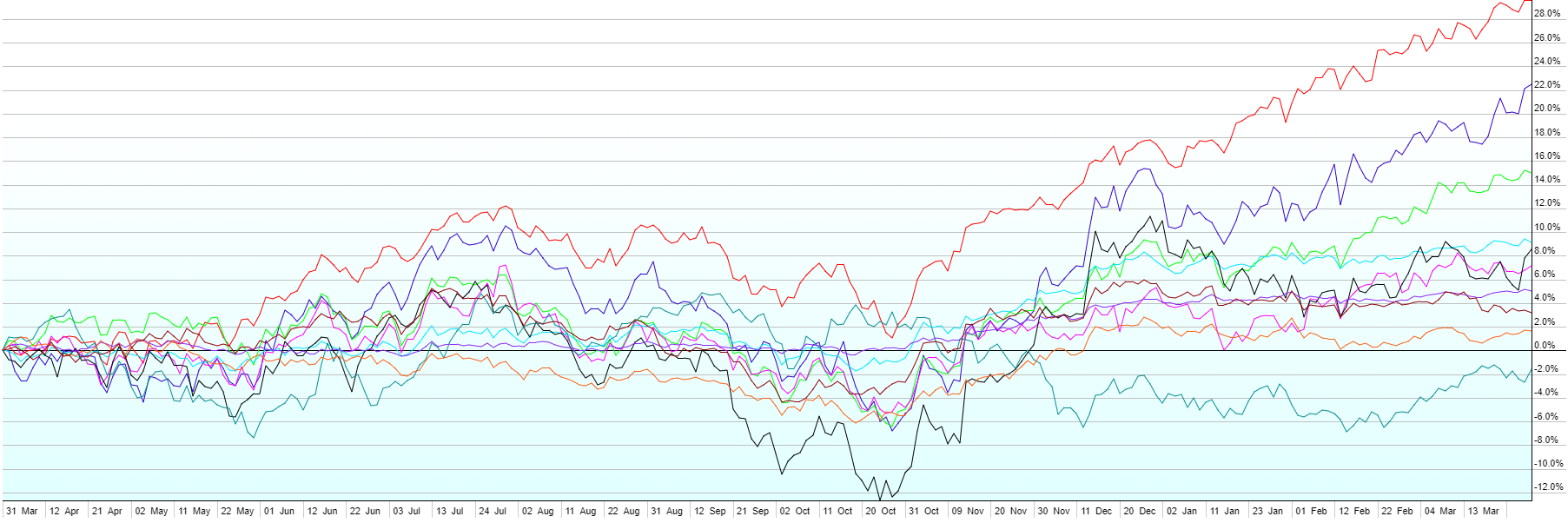
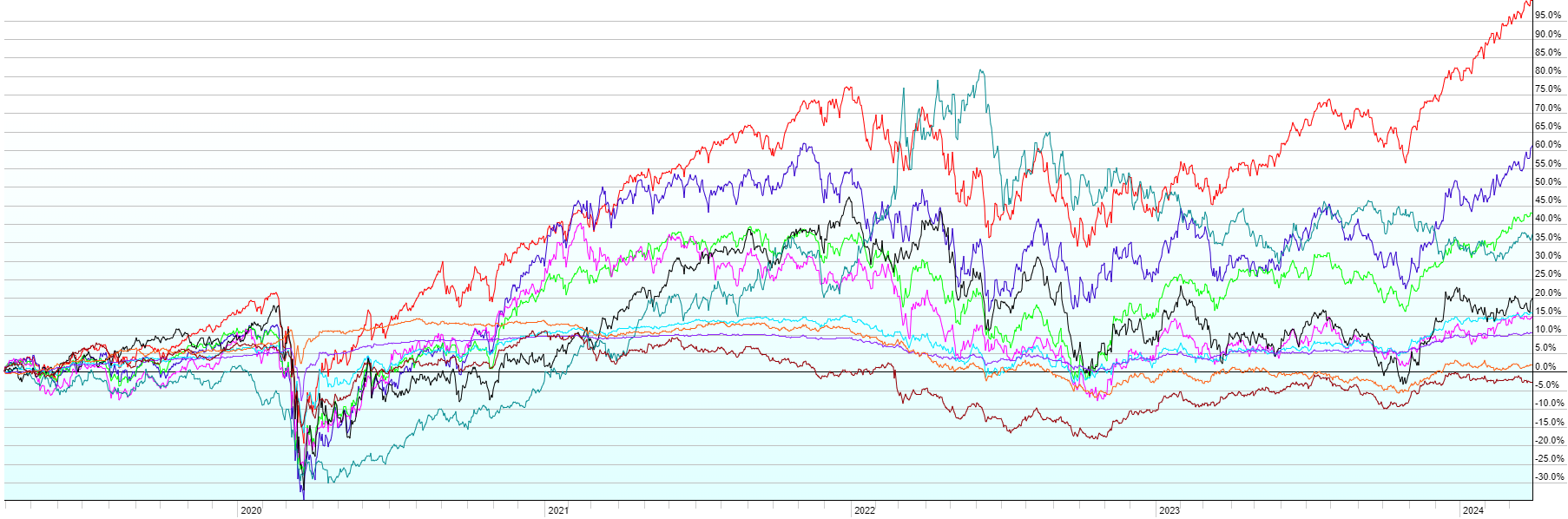
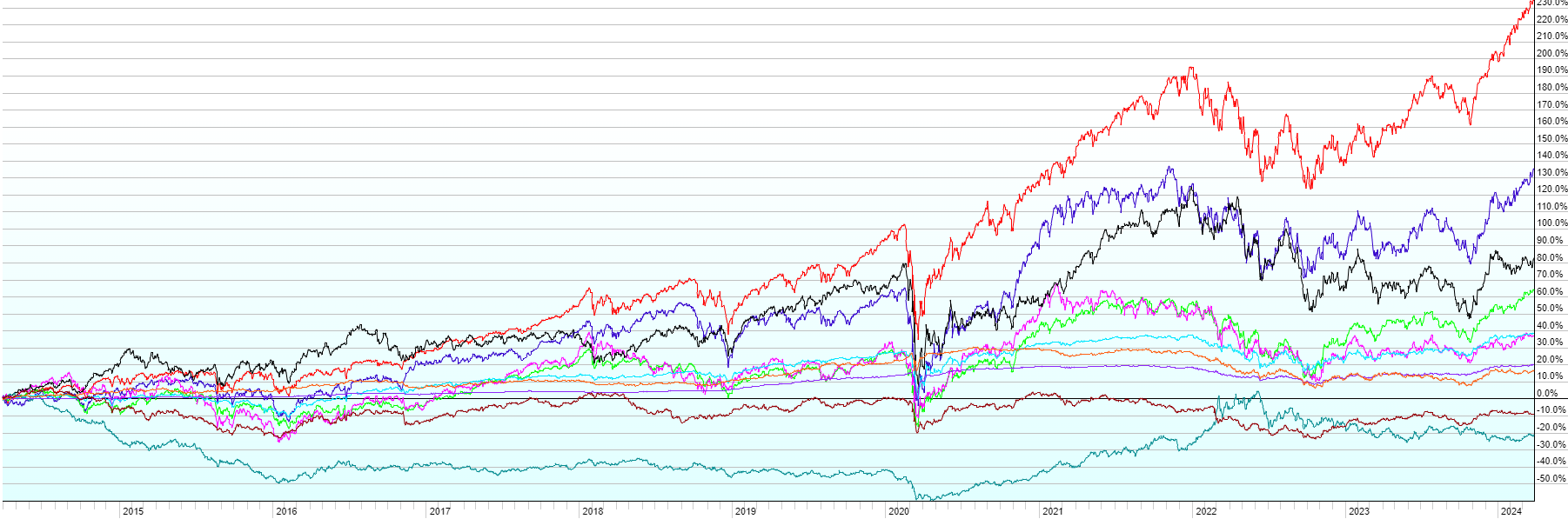
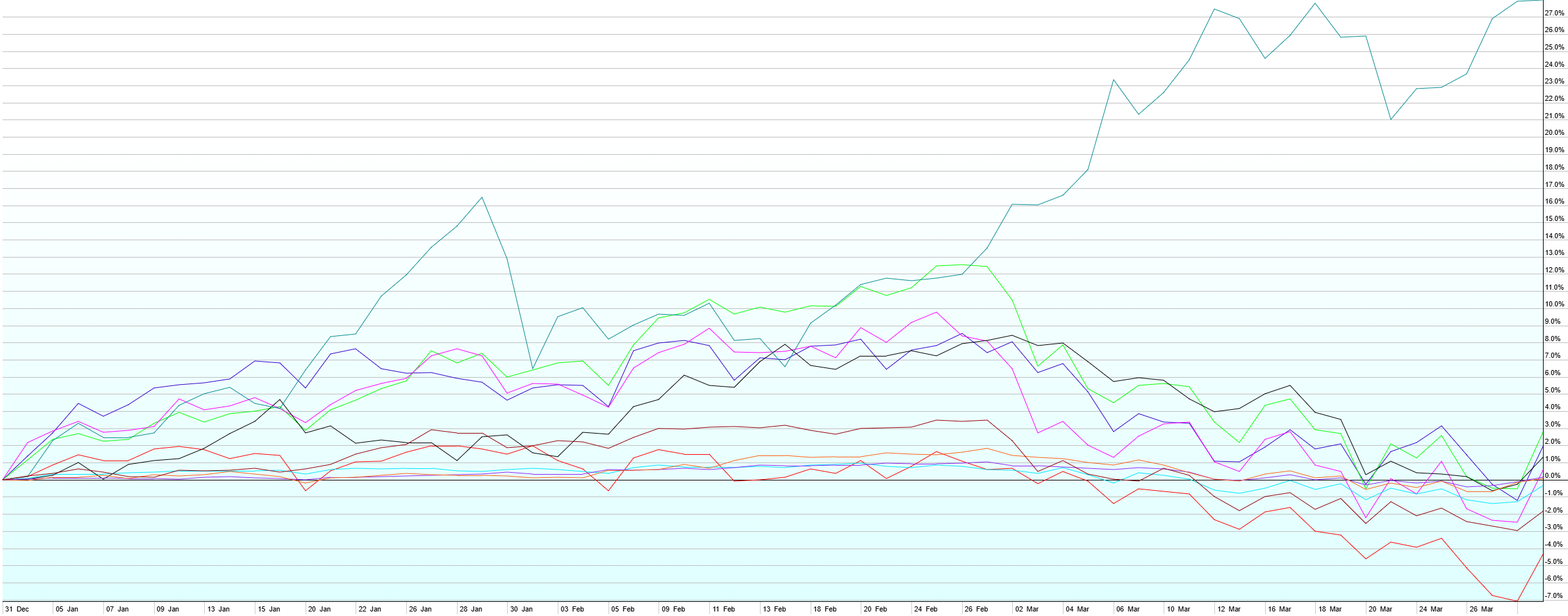
This post contains the usual returns by asset class for this past quarter (by representative ETF), year-to-date, last 12 months, last five years, and last ten years. While there is still no predictive power in this data, I’ll continue to post this quarterly for those of you that are interested.
Last Quarter (7/1/2025 – 9/30/2025)Year-To-Date (1/1/2025 – 9/30/2025)Last 12 months (10/1/2024 – 9/30/2025)Last 5 Years (10/1/2020 – 9/30/2025)Last 10 Years (10/1/2015 – 9/30/2025)
A few notes:
Q3 2025 was another solid quarter for investment returns, with all major asset classes finishing in the green. The quarter was led by Emerging Market Stocks (+10.1%), followed by US Large Caps (+8.1%), US Small Caps (+7.6%), Foreign Developed (+5.6%), Commodities (+4% after a mid-quarter dip), US Real Estate Investment Trusts (REITs) (+3.6%), Emerging Market Bonds (+2.2%), US High-Yield Bonds (+2.1%), US Aggregate Bonds (+2%), and US Short Term Corporate Bonds (+1.7%). During Q3, Congress passed and the president signed the One Big Beautiful Bill (OBBB) Act. More on that here. The Fed also started a new rate cutting cycle with a quarter point cut to 4-4.25% as inflation has eased while the job market has softened a bit. They insist this isn’t a sign of bad things to come, but is instead moving rates back toward neutral from their current, somewhat restrictive level. Markets expect another two quarter-point cuts before the end of the year.
This post contains the usual returns by asset class for this past quarter (by representative ETF), year-to-date, last 12 months, last five years, and last ten years. While there is still no predictive power in this data, I’ll continue to post this quarterly for those of you that are interested.
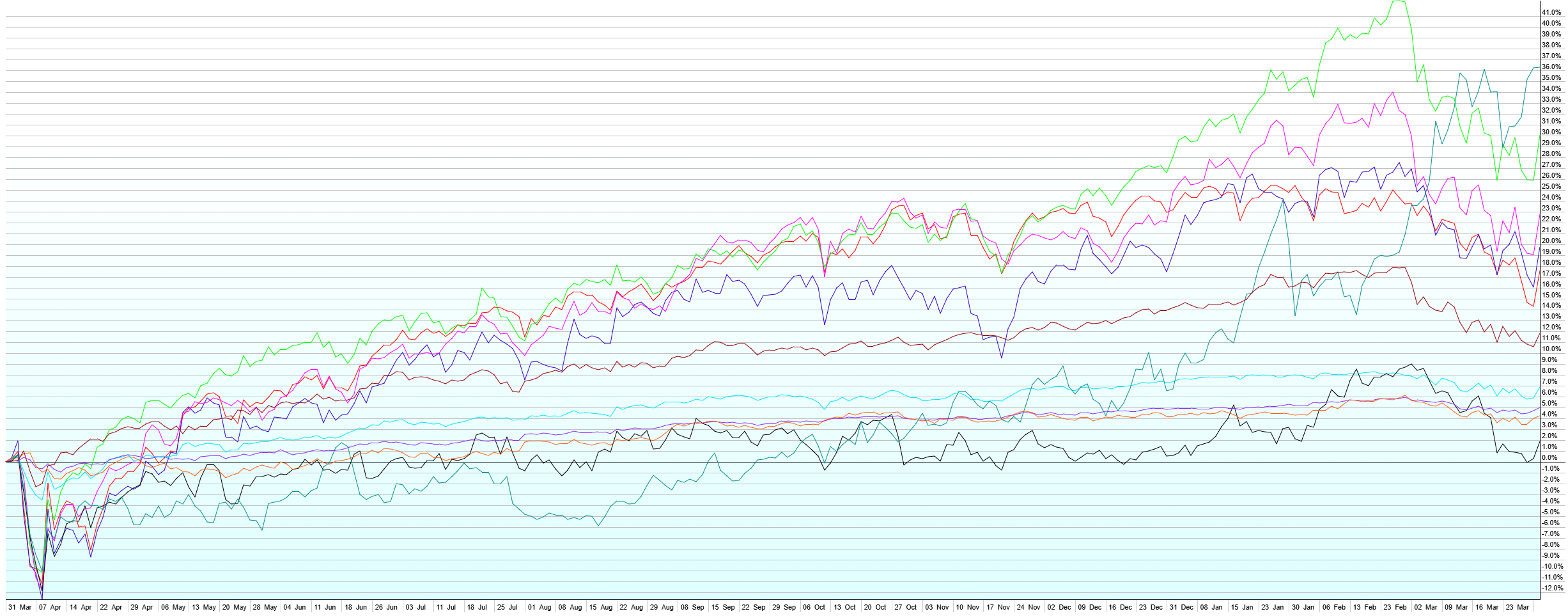
Last Quarter (4/1/2025 – 6/30/2025)Year-To-Date (1/1/2025 – 6/30/2025)Last 12 Months (7/1/2024 – 6/30/2025)Last 5 Years (7/1/2020 – 6/30/2025)Last 10 Years (7/1/2015 – 6/30/2025)
A few notes:
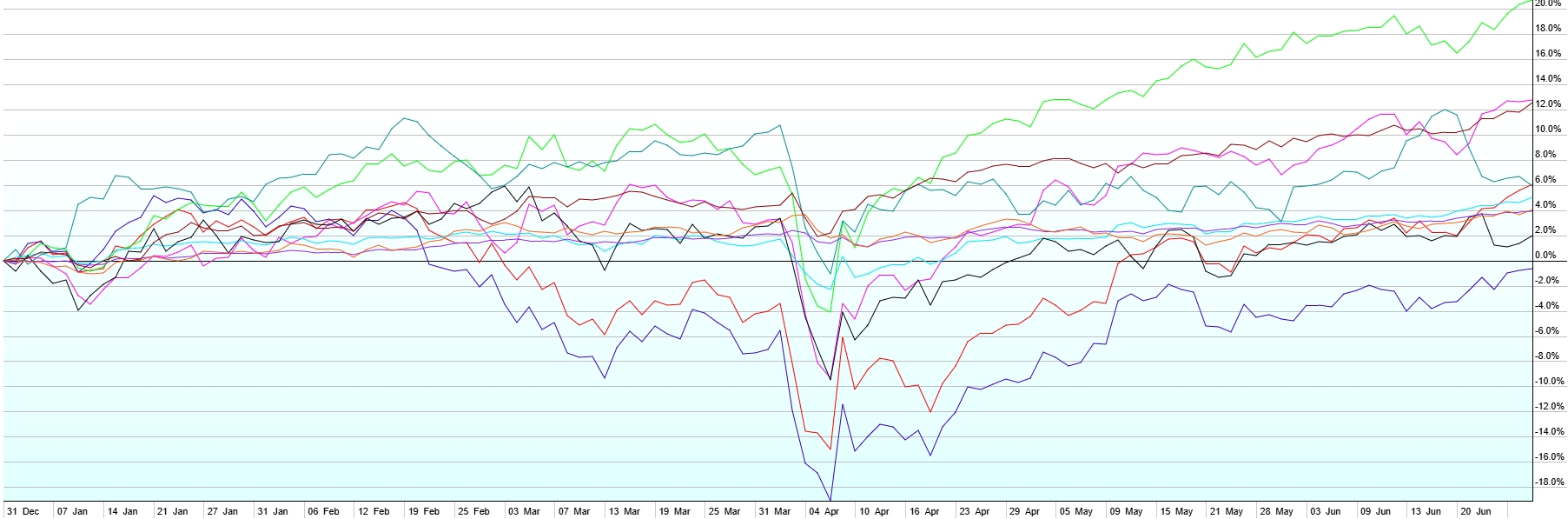
Q2 2025 experienced a lot of volatility on its way to solid overall returns. The quarter started with President Trump announcing “reciprocal tariffs” on virtually all countries on “Liberation Day”, April 2nd. Markets reacted very poorly, especially US Stocks. My thoughts from early April are here and here. Markets (US Stocks down 11-13% over that first week of April and lots of stress in the US Treasury market) seemed to force the administration’s hand toward de-escalation. A new openness toward negotiation of new trade deals sent markets into recovery mode. Foreign Stocks maintained the outperformance they showed in Q1, but all asset classes rallied, at least somewhat, for the last 12 weeks of the quarter. From best to worst: Foreign Developed Stocks (+13%) as the dollar plunged to a 3+ year low, US Large Caps (+11%), Emerging Market Stocks (+10%), Emerging Market Bonds (+8%), US Small Caps (+7%), High-Yield Bonds (+4%), Short-term Corporate Bonds (+2%), Aggregate US Bonds (+1%), Real Estate Investment Trusts (REITs) (-1%), and Commodities (-4%). REITs struggled toward the end of the quarter on concerns over office REITs in NYC after a self-proclaimed Socialist won the Democratic Primary for mayor. Commodities struggled after a cease-fire between Israel & Iran erased the premium that had settled into energy prices over the previous few weeks. These lower commodity prices, though, helped other assets to rally into the end of the quarter given possibly lower future inflation as a result. Lower inflation gives the Federal Reserve more cover to cut interest rates, which would provide a tailwind for asset prices. Markets are now pricing in about 2 1/2 quarter point cuts (63 basis points) between now and December, which would take Fed Funds down to ~3.75% and savings interest rates down to the low 3% range. Unfortunately for the housing market, this may not translate into lower long-term rates (a requirement for lower mortgage rates) if the Fed follows the forecasted path for the short-term. Q3 will be interesting as we could get our first Fed rate cut of the year and need to follow the progress of the One Big Beautiful Bill through Congress. If it passes, higher deficits are a near certainty and with that will come pressure on long-term interest rates to move higher. There will be lots of tax implications as well, some retroactively effective in 2025. I will post a summary of the key tax provisions if/when the Bill nears passage.
I’ve written a number of these notes over the last 18 years (sheesh… time flies) as an advisor. Banks Teetering (Silicon Valley Bank Goes Under) 2023, Inflation Spike of 2022, Covid 2020, Q4 2018 Meltdown, European Debt Crisis 2014, Fiscal Cliff 2012, Great Financial Crisis 2008/9. Every one of those situations felt terrible. Every one was a crisis at the time, some worse than others, but all resulting in stocks selling off and anxiety rising. Every one of them ultimately resulted in the all-time highs we had on most stock markets just a few months ago. Every one was not reason to panic. Here’s a little secret… this one isn’t a reason to panic either.
Why not panic? Most importantly, when times are not stressful and anxiety is not running high (i.e. when rational thinking prevails), we help our clients set a financial plan, an asset allocation, and a level of risk that they’re comfortable taking. We remind them that risk is what allows risky assets to generate long-term returns that exceed those of risk-free assets. We tell them that in a bad financial situation like the Great Financial Crisis, they are likely to lose 50% of the assets that they have in stocks. We all but guarantee that at some point, something financially bad is going to happen and that 50% loss will occur. It’s actually happened 3 times in the last 25 years! And yet we all agree that the average long-term returns are worth the short-term risk, or almost guarantee, of loss. Why would the occurrence of something that we agreed would almost definitely happen cause anyone to panic? It shouldn’t. Keep in mind that we’re not telling near-retirees to keep 100% of their money in the stock market and simply accept they might (will) lose 50% of it at some point. If you’re nearing retirement and you have all or near all of your money in risky assets like stocks, you’re not a PWA client and you’re doing something very wrong!
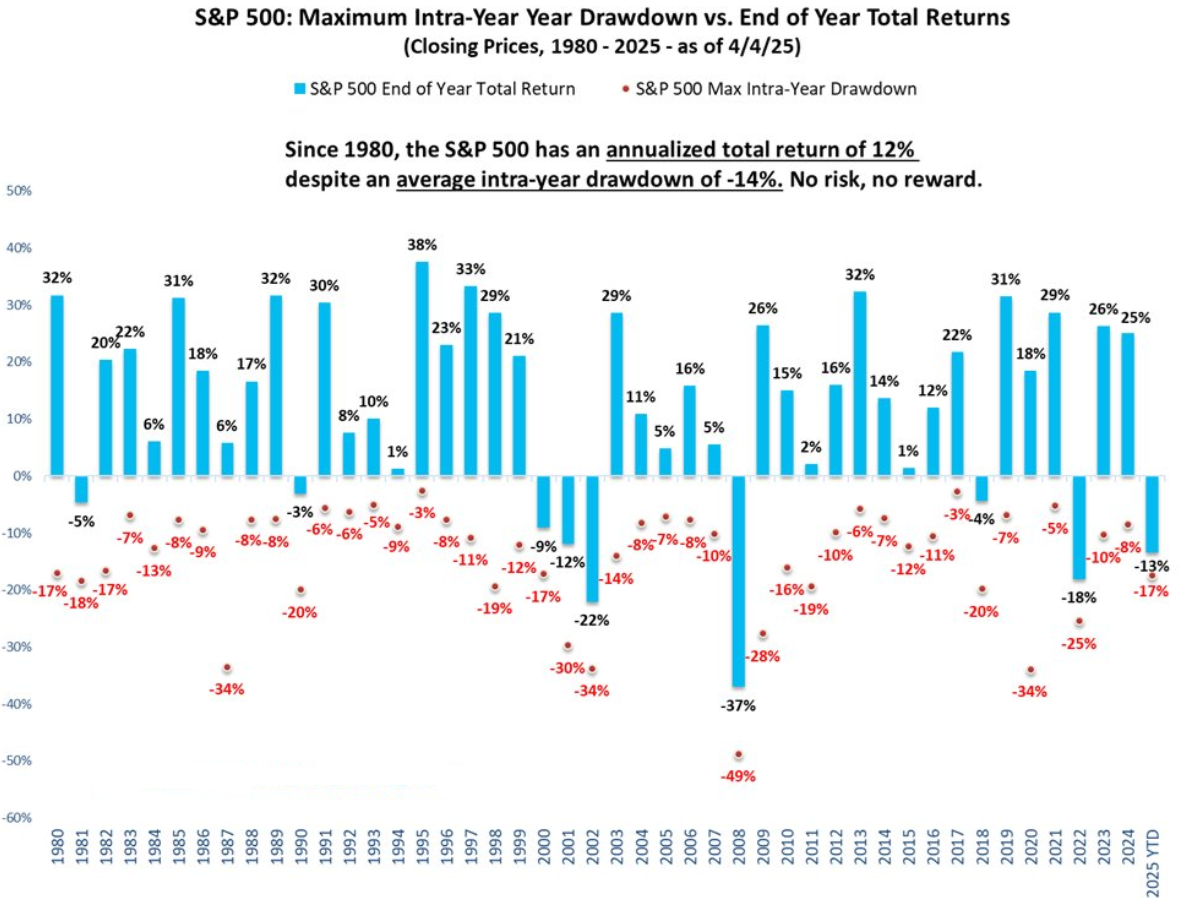
While we can’t see the future, we can look to the past for guidance. Stock market volatility is routine. Charlie Billelo, chief market strategist at Creative Planning, recently updated a JP Morgan chart showing S&P 500 returns by year (avg 12% since 1980) vs. the maximum drawdown in each year (avg 14% since 1980). As of Friday’s close, the S&P500 was down 17% from the high and 13% year-to-date (substantially more on small caps, less on international stocks and bonds have been up). Far from out of the norm. In 2020, we were down 34% from the highs and ended the year up 18% from where we started.
We’ve had a terrible last two days in the stock market, but if you look at previous terrible two days in the stock market, returns have been quite quite good from there in the future.
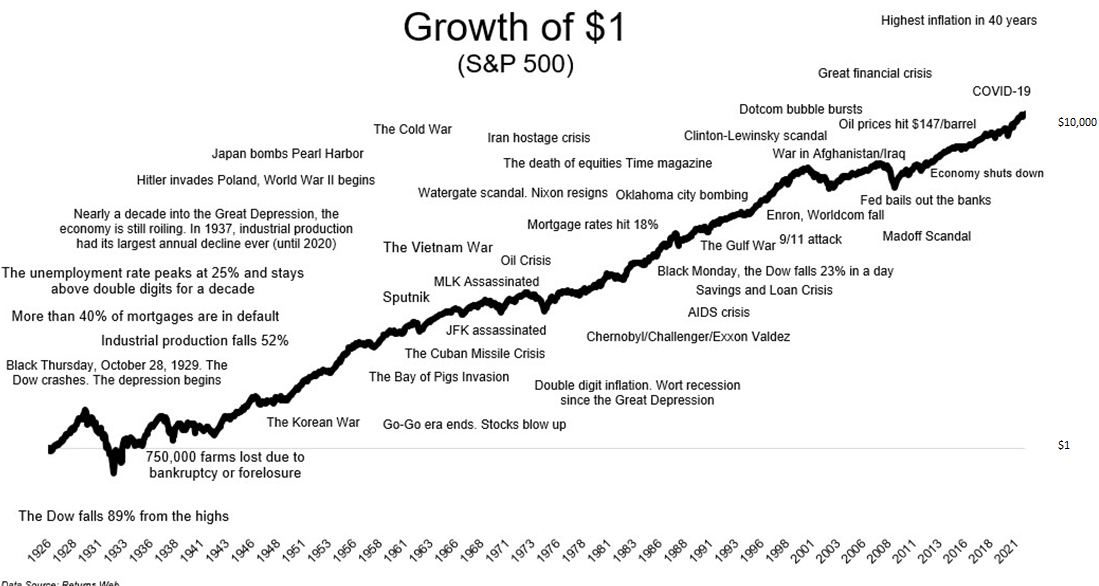
History is filled with potential economic crises (small sampling on the chart below).
The future will also be filled with them. Our debt-laden society makes them worse because even small changes in asset prices cause those that invest on leverage (borrowed money intended to amplify returns) to take large losses. Margin calls then cause forced selling which further magnifies losses. This tends to continue until the overly aggressive investors looking to get rich quick are wiped out, and those patient long-term investors with the ability to rebalance and “buy low” step in. As I type this, futures point to another day of sharp losses tomorrow. Maybe justified by economic policy (a clear policy error in my view… another post on that coming shortly), or maybe just some of that forced selling that tends to follow sharp moves lower in stocks. There’s no way to know. What we do know is that falling stocks are an opportunity to rebalance and “buy low” by selling bonds and buying stocks the same way as rising stocks are an opportunity to rebalance and “sell high” by selling stocks and buying bonds. Volatility, exploited this way, is opportunity. It’s certainly NOT another reason to panic.
This post contains the usual returns by asset class for this past quarter (by representative ETF), last 12 months, last five years, and last ten years. While there is still no predictive power in this data, I’ll continue to post this quarterly for those of you that are interested.
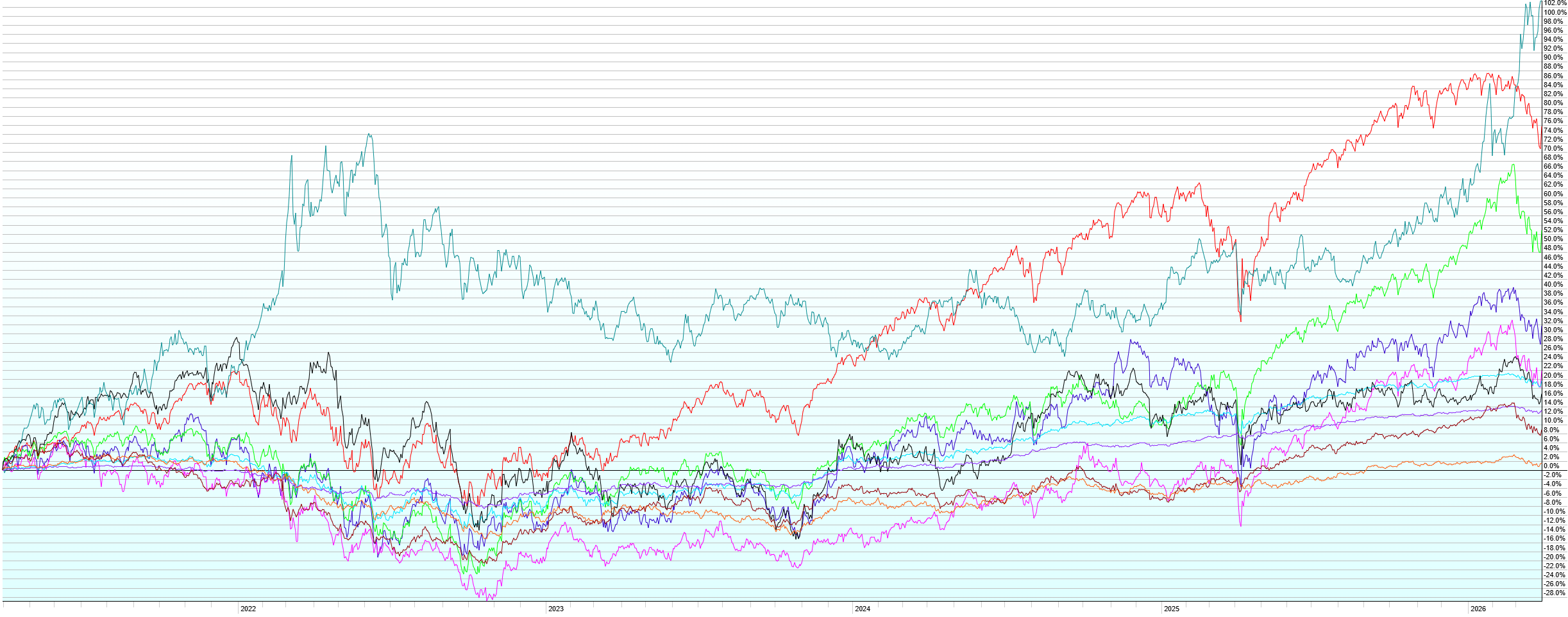
Last Qtr (1/1/2025 – 3/31/2025)Last 12 Months (4/1/2024 – 3/31/2025)Last 5 Years (4/1/2020 – 3/31/2025)Last 10 Years (4/1/2015 – 3/31/2025
A few notes:
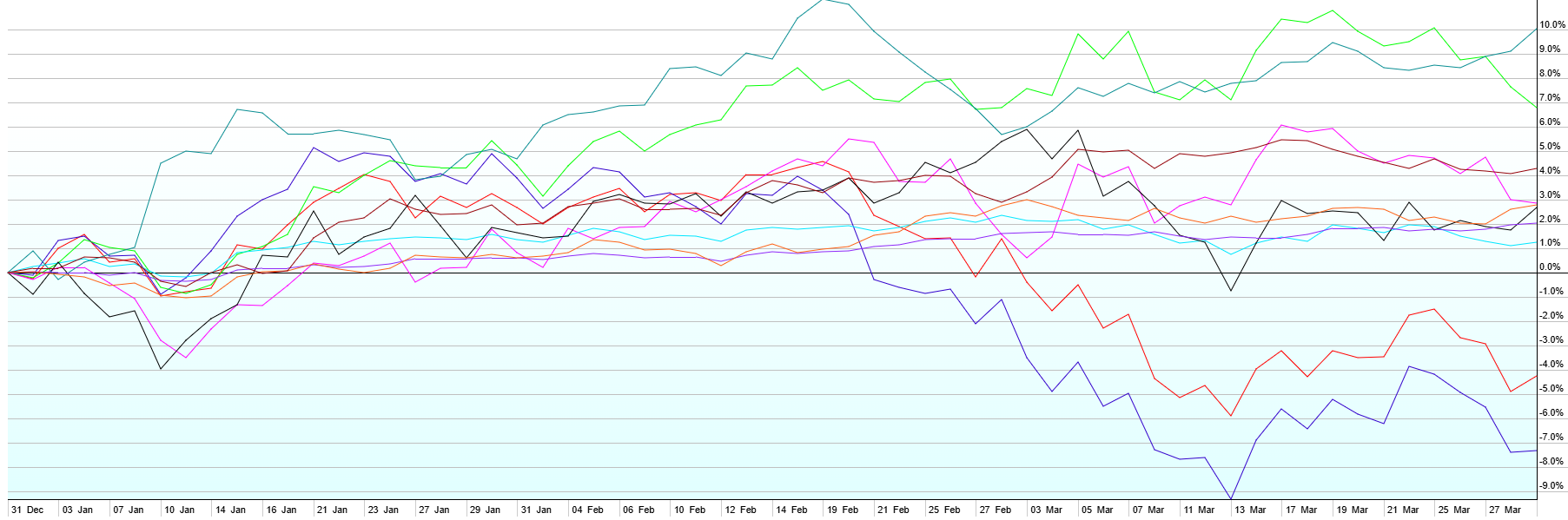
Q1 2025 was a flat-to-slightly-up quarter for most diversified portfolios despite all the news of a slowing US economy and the unknown (but almost definitely negative short-term) impact of tariffs. Diversification really paid off for the US investor. US stocks suffered over the quarter (Large Caps -4.3%, Small Caps -7.3%), but Foreign Stocks, Bonds, and Commodities performed well, offsetting those losses. Commodities (+10%) led the asset classes that we track in this quarterly message, with Foreign Developed Stocks (+6.8%) not far behind. Emerging Markets faired well too, with Emerging Market Local Currency Bonds up 4.3% and Emerging Market Stocks up 2.8%. The Federal Reserve held the Fed Funds rate steady at 4.25-4.5% during Q1, but long-term rates fell on fears of a coming recession and lower rates mean relatively strong performance for bonds. US Aggregate Bonds were up 2.8%, with Short-Term Corporate Bonds up 2% and US High Yield Bonds up 1.2%.
This post contains the usual returns by asset class for this past quarter (by representative ETF), total 2024, last five years, last ten years, and since the covid low (3/23/2020). While there is still no predictive power in this data, I’ll continue to post this quarterly for those of you that are interested.
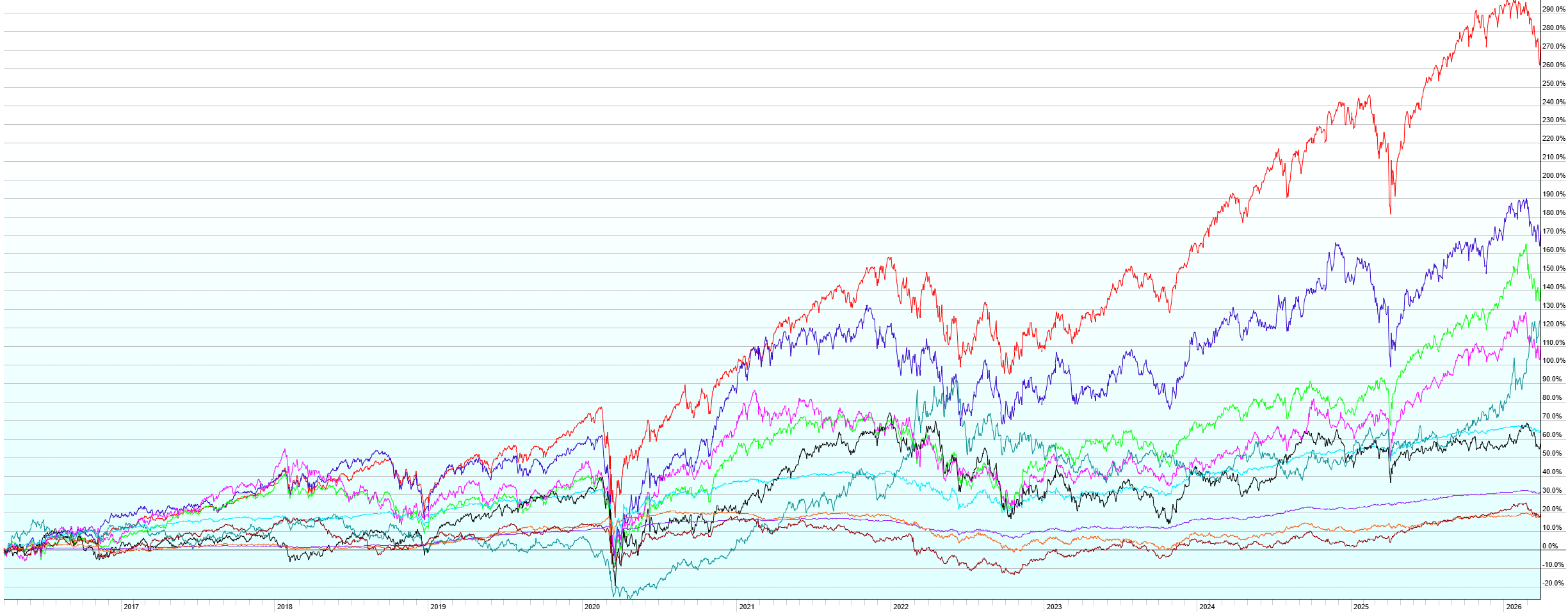
Last Quarter (10/1/24-12/31/24)Last year (1/1/24-12/31/24)Since Covid Low (3/23/20-12/31/24)Last 5 Years (1/1/20-12/31/24)Last 10 Years (1/1/15-12/31/24)
A few notes:
Q4 2024 was an overall down quarter for most diversified portfolios as international markets struggled post-US election, the US Dollar rallied, and long-term interest rates spiked as the inflation stagnated and the Fed continued to cut overnight rates. US stocks had a solid quarter with Large Caps up 2.5% and Small Caps up 1.7%. All other asset classes that we track for this ongoing post were down though including High-Yield Bonds (-0.1%), Short-Term Corporate Bonds (-0.4%), Commodities (-0.5%), US Aggregate Bonds (-3.1%), Emerging Market Stocks (-5.7%), Emerging Market Bonds (-7.1%), US Real Estate Investment Trusts (-7.7%), and International Developed Stocks (-8.1%).
This post contains the usual returns by asset class for this past quarter (by representative ETF), year-to-date, last 12 months, last five years, last ten years, and since the covid low (3/23/2020). While there is still no predictive power in this data, I’ll continue to post this quarterly for those of you that are interested.

Last Quarter (7/1/24-9/30/24)Year-To-Date (1/1/24-9/30/24)Last 12 Months (10/1/23-9/30/24)Since Covid Low (3/23/20-9/30/24)Last 5 Years (10/1/19-9/30/24)Last 10 Years (10/1/14-9/30/24)
A few notes:
Q3 2024 was a fantastic quarter for financial markets as the US economy chugged along, inflation continued to ease around the world, China launched new stimulus measures to strengthen it’s economy, and the Federal Reserved began a rate cutting cycle with a 50 basis point reduction in the Fed Funds rate. Rather than waiting for severe economic weakness to cut rates, as they have typically done in the past, the Fed decided to cut aggressively and begin to ease up on the brakes they’ve been applying to the economy as a way of fighting inflation. All asset classes that we follow in this quarterly message posted gains, led by Real Estate Investment Trusts (+17%). In the middle of the pack, but still with strong returns, were Emerging Market Stocks (+9.7%), US Small Caps (+9.1%), Emerging Market Bonds (+8.1%), Foreign Developed Stocks (+7.1%), US Large Cap Stocks (+5.8%), US High-Yield Bonds (+5.7%), US Aggregate Bonds (+5.2%), and Short-Term Corporate Bonds (+3.8%). Bringing up the rear were Commodities, still positive at 0.6% despite a pull-back in the energy sector.
This post contains the usual returns by asset class for this past quarter (by representative ETF), year-to-date, last 12 months, last five years, last ten years, and since the covid low (3/23/2020). While there is still no predictive power in this data, I’ll continue to post this quarterly for those of you that are interested.
Last quarter (4/1/24-6/28/24)Year-To-Date (1/1/24-6/28/24)Last 12 Months (7/1/23-6/28/24)Since Covid Low (3/23/20-6/28/24)Last 5 Years (7/1/19-6/28/24)Last 10 Years (7/1/14-6/28/24)
A few notes:
Mixed results across asset classes for Q2 kept most diversified portfolios relatively steady in Q2 2024. Emerging market stocks and US Large Cap (led especially by mega caps in tech/AI) outperformed with 5.2% and 4.4% returns respectively. On the flip side, US Small Caps were down 4.2% for the quarter with only ~38% of the stocks in the Russell 2000 closing higher than they started the quarter. In between the best and the worst were Commodities (+3.1%), US Short-term Corporate Bonds (+0.9%), US High Yield (+0.7%), US Aggregate Bonds (+0.1%), Foreign Developed Stocks (-0.6%), Emerging Market Bonds (-1.6%), and US Real Estate Investment Trusts (-1.9%).
This post contains the usual returns by asset class for this past quarter (by representative ETF), last 12 months, last five years, last ten years, and since the covid low (3/23/2020). While there is still no predictive power in this data, I’ll continue to post this quarterly for those of you that are interested.
Last quarter (1/1/24-3/28/24)Last 12 months (4/1/23-3/28/24)Since COVID Low (3/23/20-3/28/24)Last 5 years (4/1/19-3/28/24)Last 10 Years (4/1/14-3/28/24)
A few notes:
A steadying of inflation at a level higher than the Fed’s 2% target pushed back market expectations for interest rate cuts in the first half of 2024. This led to higher rates across the yield curve in Q1, putting some pressure on bonds. Stocks though, looked through higher interest rates and saw an economy that continues to chug along and defy 7% mortgage rates, higher than acceptable inflation, and a massive debt load. US Large Cap stocks (+10.4%) dominated once again, with seemingly relentless buying led by the big Artificial Intelligence (AI) names like Nvidia. US Small Caps weren’t far behind with a 7.5% gain. International stocks underperformed the US, but still saw good growth for the quarter with Developed countries up 5.4% and Emerging Markets up 1.7%. Commodities saw some strength as well, up 2.3%, and high-yield (junk) bonds were up 1.5% despite rising interest rates, due to their higher interest payments and spread compression vs. other, safer debt like Treasuries. Short-term Corporate Bonds were up 0.6%, fairing better than higher duration bonds as rates rose. Aggregate US Bonds lost 0.7%, Real Estate Investment Trusts were down 1.3% and Emerging Market Local Currency Bonds lost 2.4% for the quarter thanks to higher rates and a stronger dollar.
This post contains the usual returns by asset class for this past quarter (by representative ETF), full year 2023, last five years, last ten years, and since the covid low (3/23/2020). While there is still no predictive power in this data, I’ll continue to post this quarterly for those of you that are interested.
Last Quarter (10/1/23-12/31/23)Last 12 months (1/1/23-12/31/23)Since Covid Low (3/23/20-12/31/23)Last Five Years (1/1/19-12/31/23)Last Ten Years (1/1/14-12/31/23)
A few notes:
The rollercoaster continued in Q4, with fantastic returns across the board (excl. commodities, but that’s probably a good thing and it’s another indicator of disinflation), after an up Q2 and a down Q3. Long-term interest rates pulled back as the Federal Reserve appears to have started their pivot toward rate cutting sometime in 2024. They left the door open for further hikes if inflation roars back, but after consecutive soft monthly inflation reports, the Fed is now forecasting three rate cuts (to 4.5-4.75% Fed Funds) by end of 2024. The benign inflation reports and the pivoting Fed sent stocks and bonds off to the races. REITs ended the quarter up more than 18% as the top performer (though that just puts them into the middle of the pack for 2023 as a whole. US Small Caps were up 13.4% with the seemingly ever-raging Large Caps up 11.6%. Foreign Developed (+11%), Emerging Market Bonds (+8.4%), Emerging Market Stocks (+7.1%), and High-Yield Bonds (+7.1%) round out the aggressive side of portfolios. The conservative side also had great returns with US Aggregate Bonds up 6.6% and US Short-Term Corporate Bonds up 4.1%. Commodities (-5.4%), as mentioned above, were the only sore spot for the quarter, with energy prices dropping as the disinflation narrative took hold. It remains to be seen if the Fed can engineer a soft landing for the economy with inflation falling back toward their 2% goal, but without a spike in unemployment and a recession. High interest rates take their toll on economic growth and they work with the “long and variable lags”, about which, the Fed always reminds us. Stocks seem to believe the soft landing is a lock. Bonds seem to believe disinflation is a lock and the Fed is going to go into easing mode. If they’re both correct, 2024 will likely bring more gains with it. If not, it’s going to get interesting, especially for the more expensive areas of the market like US Large Cap stocks.
Given the market volatility around the 2016 election results and election day tomorrow, I thought it would be a good idea to do a Q&A-style post about the election and its potential impacts.
Q: Who’s going to win the presidential election?
A: There’s no way to know for sure at this point, and it’s pretty likely that we won’t know tomorrow night either. But, if you believe the polls and the work of statisticians such as Nate Silver (fivethirtyeight), Biden has about a 90% chance of winning. If you believe the betting markets, Biden has about a 60% chance of winning. These are two very different ways of analyzing the election probabilities. Analyzing the polls is essentially using the estimated margin of error in each poll and weighting the polls by their likely accuracy to determine the mathematical chance of the overall margin of error being big enough for Biden to lose and Trump to win despite the polling averages showing a lead for Biden on average. The betting markets on the other hand are showing the odds that a bettor on Biden would be willing to take (betting $3 for a chance to win $2 more) vs. what a Trump better would be willing to take (betting $2 for a chance to win $3 more). The betting is purely opinion-based and is an average of what all bettors think is going to happen in aggregate. It’s possible that both are somewhat skewed. I don’t really believe the hype around Trump supporters lying to polls, but it’s possible that they’re harder to reach to poll. It’s also well known that the betting markets are male-dominated and that Biden’s lead over Trump is much lower among men than women. Since people often bet in a way that favors what they’d like to see happen, that could skew the odds toward Trump’s side. If I had to guess, I would go somewhere in between and say that Trump has about a 30% chance of winning. That means I’d be willing to bet $3 to win at least $7 on him, or be willing to bet no more than $7 to win at least $3 on Biden. 30% is not zero. The favorite doesn’t always win, as we saw in 2016. A good baseball hitter gets a hit about 30% of the time. There are lots of hits in baseball. There are more outs though.
Q: What about the Senate?
A: 538 gives the Democrats about a 75% chance of taking control of the Senate (including a 50-50 split with a Democratic president), with the most likely scenario being 51-49. Betting markets. again, have the race closer with Democrats having a 60-65% chance of winning. The closest races are in GA (2), NC, IA, ME, and MT. Interestingly, the second GA senate seat is a special election to fill a vacant seat and has multiple candidates from both parties. If a majority isn’t reached, a runoff will take place on January 5, 2021. That could be the seat that decides control of the Senate and a runoff has a decent chance of happening at this point.
Q: What impact will the election results have on the stock market?
A: I don’t think that answer would be clear even if we knew today exactly how every race would turn out. That’s because there are so many potentially offsetting impacts. Here are some of the possible scenarios:
Biden wins, the Democrats take control of the Senate by several seats, and the Democrats keep decisive control of the House – corporate tax rates likely increase (clearly bad for stocks), taxes on higher income individuals likely increase (probably bad for stocks, at least short-term), higher regulation (probably bad for stocks, at least short-term), large stimulus package gets passed (probably good for stocks, at least short-term), more certainty (probably good for stocks), less pressure on global trade (probably good for stocks) less political angst (impeachment, oversight inquiries, etc… probably good for stocks).
Biden wins and the Democrats control the Senate and the House by a small margin – tax picture a little more blurry, regulation still likely to increase, still likely to get a large stimulus package, but allocation to state/local may be a bit smaller, still a boost to global trade, a little less certainty, still less political angst.
Biden wins and the Dems & Republicans each control one chamber – tax changes are unlikely (probably good for stocks as a relief to the alternative), smaller stimulus likely (probably bad or less good for stocks at least short-term), still a boost to global trade, more political angst.
Trump wins and the Dems control both chambers – tax changes very unlikely, large stimulus likely, much more political angst, and global trade challenges continue (worsen?).
Trump wins, the Republicans hold the Senate, and Democrats hold the House (status quo) – tax changes unlikely, stimulus likely smaller with less support for state/local and maybe a big battle to get it done at all, political angst steady, and global trade challenges continue (worsen?).
Longer-term, I really don’t think it matters who wins. Take a look at the chart below from Capital Group:
Sure, there are some dips in that chart, but for the most part it’s a steady upsloping line for 87 years regardless of party. By the way, I don’t think one can make any conclusions about which party is better for the market from that chart because the market prices in election results prior to the election and certainly prices in likely policy changes between election and inauguration. The takeaway should be that from a purely stock market perspective, if you zoom out far enough, it doesn’t really matter who wins a single presidential election.
Q: You said that we probably won’t know the result of the election tomorrow. Why not? When will we know?
A: Each state has their own method of counting ballots. The NY Times recently attempted to summarize those methods. The battleground states have some significant differences. Florida, for example, has already counted many ballots received by mail and will release those counts along with in-person early voting by 8:30pm eastern. Election Day ballots will be counted through the night, but no additional mail-in ballots are allowed after 11/3. So we’ll know who won FL by 11/4 morning barring a 2000-like “hanging-chad” incident. Ohio also plans to release pre-election day votes 11/3 evening (by 8pm) and will count election day votes through the night. But, in stark contrast to FL, they will allow ballots postmarked by 11/3 and received by 11/13 to count, and then won’t provide updated results as those ballots come in. As of 11/2, officials say that full statewide results may not be known until the election is certified by the state on 11/28. Since the state knows how many mail-in ballots were sent out, it will know the maximum that could be received, but if neither candidate leads by enough to make it statistically impossible for the mail-in ballots to swing the results, it sounds like Ohio can’t be called until 11/28! 538 recently published a graphic with their opinion of the state-by-state portion of the vote that should be counted on election night:
There is a chance that one of the candidates will have enough of a lead in battleground states, that that ballots received and counted after 11/3 won’t matter and the election results could be known on 11/3 or 11/4. Again, we can rely somewhat on betting markets to gauge opinion of the probability. PredictIt has a wager on when the election will be “called” by both CNN and Fox News. That wager shows the odds of being called on:
Election Day = ~23%
November 4th = ~31%
November 5th = ~7%
November 6th or 7th = ~6%
Later in November = ~18%
December or later = ~15%
Personally, if I were a betting man, I like the combination of after 11/4 for better than even odds. Maybe that’s more of an emotional hedge though. I certainly hope for a result by the 4th!
Q: What’s the market going to do if we don’t know who won or if the election is contested?
A: We know the stock market didn’t like the 2000 election result process (the FL “hanging chad” election), but it wasn’t exactly catastrophic, as the chart of the S&P 500 shows. It also wasn’t long-lasting.
A contested election that results in not only recounts, but lawsuits that potential swing a result from one candidate to another, etc., could be temporarily much worse. But it’s unlikely that an election with a large margin of victory would be contested and even lower chance that it would reverse the result. So, a very close election with no clear result, that leads to social unrest could certainly hurt financial markets temporarily. Some unrest is likely no matter what the result given current political polarization. The less clear the result is and the more it seems to change, the higher the risk of extreme volatility. I have a high degree of confidence that the next president will be inaugurated on January 20th, regardless of how the election goes. With all of that said, the stock market does a very good job of factoring-in event probabilities and their impacts (including support by the Federal Reserve if things really go off the rails). That means the market is likely to respond very positively, all else being equal, to a clear winner. There’s no way to game the system without a crystal ball or time machine.
Q: Give it to me straight, all-in-all is tomorrow night going to be a mess for the stock market?
A: If you define mess as volatile (bouncing sharply in either/both directions), I’d say that’s much more likely than on an average night. If you define mess as the market falling sharply, I don’t think anyone knows in advance. The better question though is whether what happens tomorrow night matters. I made this short post at about 11pm on election night 2016. Stock futures were down 4.5% at the time and got slightly worse as the result became clear. By 8am, futures were barely down. By the close on 11/9, stocks closed up a little over 1% from the election day close, completely reversing the overnight pullback. By the end of 2016, they were up almost 10% from the day of the election and even now, mid-pandemic, they’re still up over 50% (S&P500) from that election. People are on edge over the election for reasons that far outweigh finance. I get it. The moral of the story here is that there’s little/no reason to let predictions of, or even actual, stock market volatility add to your anxiety.
To summarize:
For the markets, the election is all about probabilities. While Biden is favored to win and the Democrats are favored to narrowly take the Senate, neither is anywhere near a sure thing.
There are dramatic, offsetting impacts to the economy and financial markets, at least short-term, in every possible scenario. Each is currently priced in, probability-weighted.
It may take a while for election results to unfold with certainty.
It may be chaotic in the markets for a while and that could include big down or up moves as a clearer picture of the future arrives.
Long-term, the 2020 election barely matters from a financial point of view. If you’re feeling anxious, try to zoom out for perspective. Stick to your plan. Things are going to be ok.
Note: Many of the links in this post are being updated periodically with new information as election information evolves (538, NY Times, etc.).