Q1 2026 Returns By Asset Class

This post contains the usual returns by asset class for this past quarter (by representative ETF), last 12 months, last five years, and last ten years. While there is still no predictive power in this data, I’ll continue to post this quarterly for those of you that are interested. 
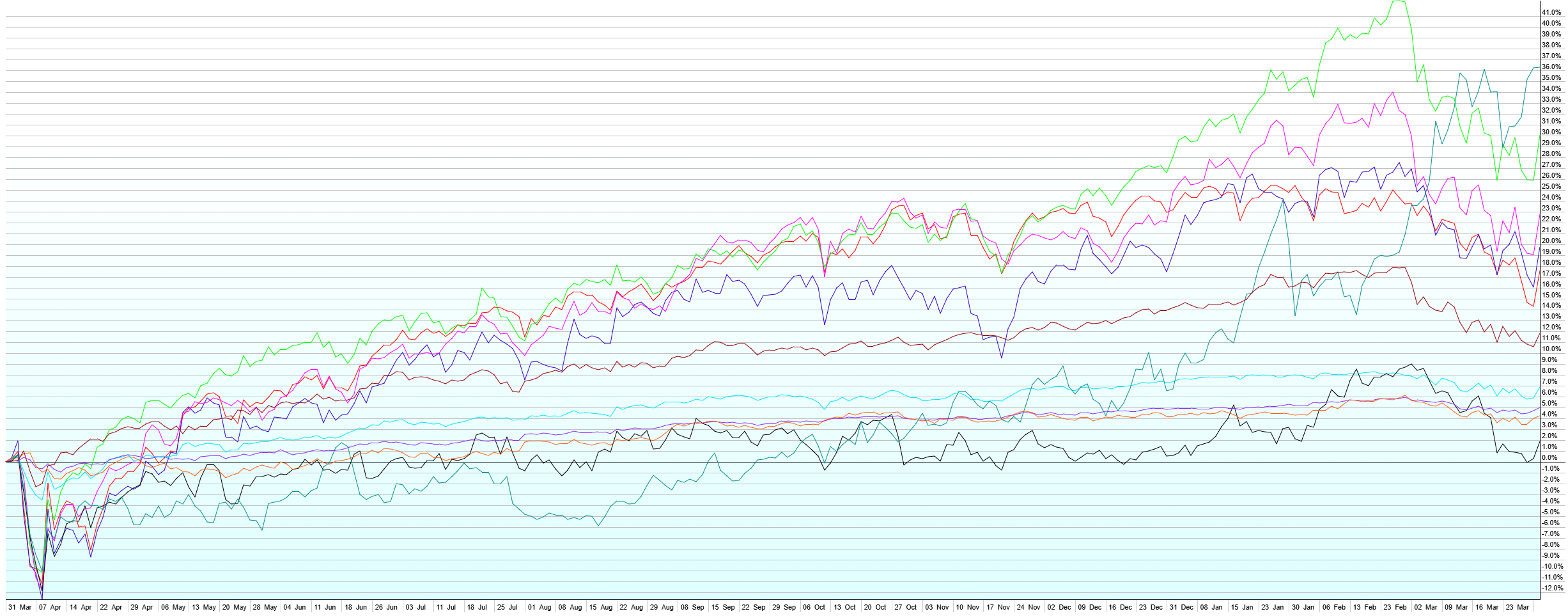
Last Quarter (1/1/2026 – 3/31/2026)
Last 12 Months (4/1/2025 – 3/31/2026)
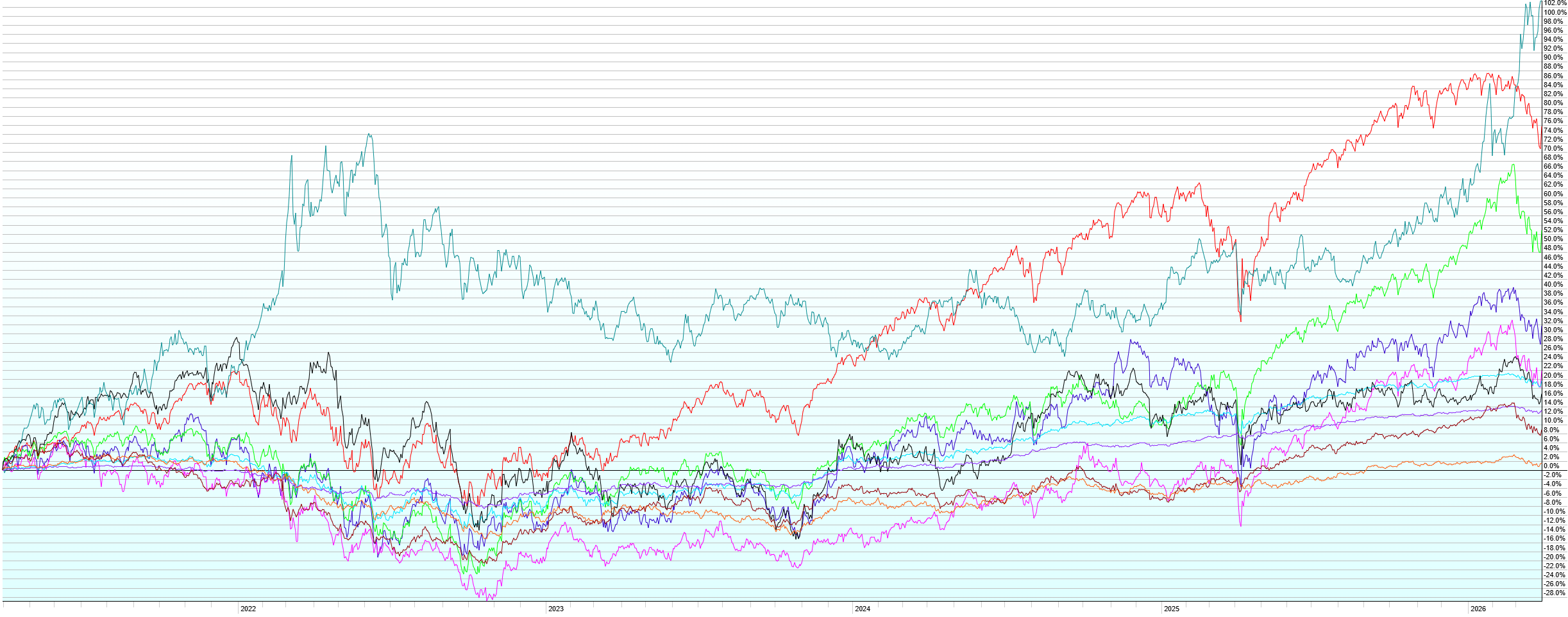
Last 5 Years (4/1/2021 – 3/31/2026)
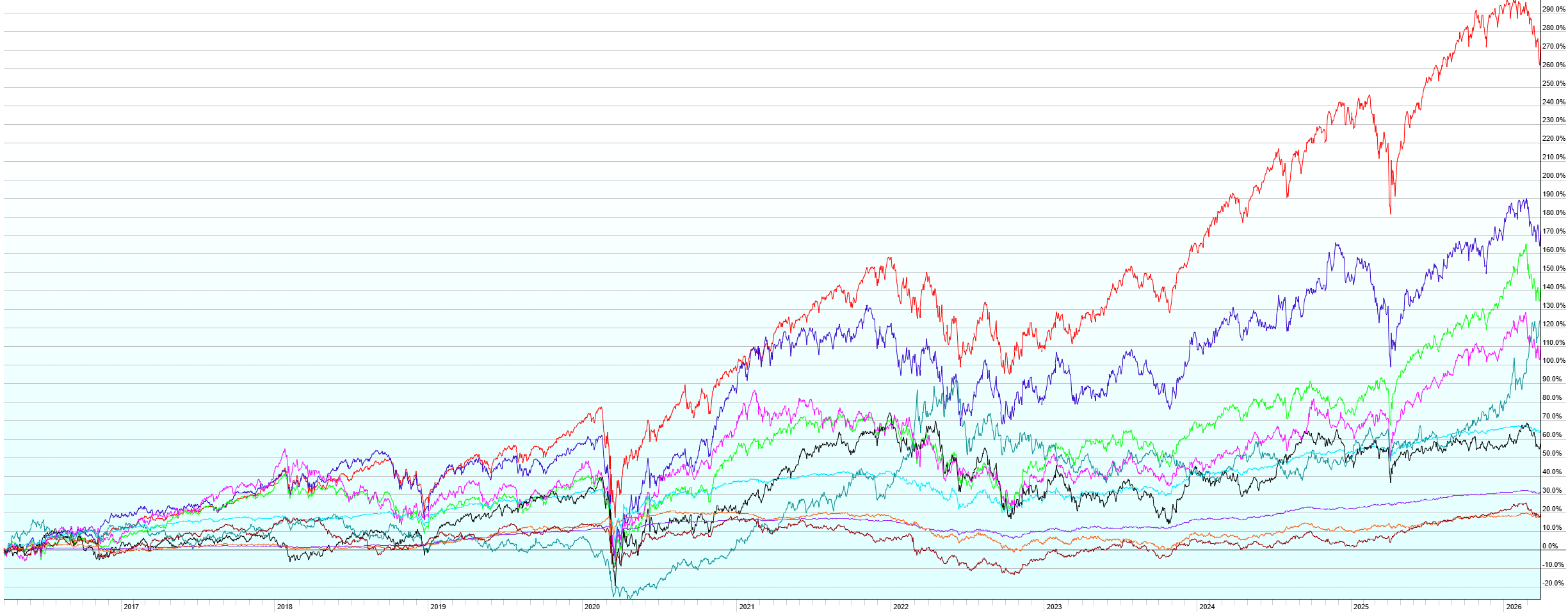
Last 10 Years (4/1/2016 – 3/312026)

A few notes:

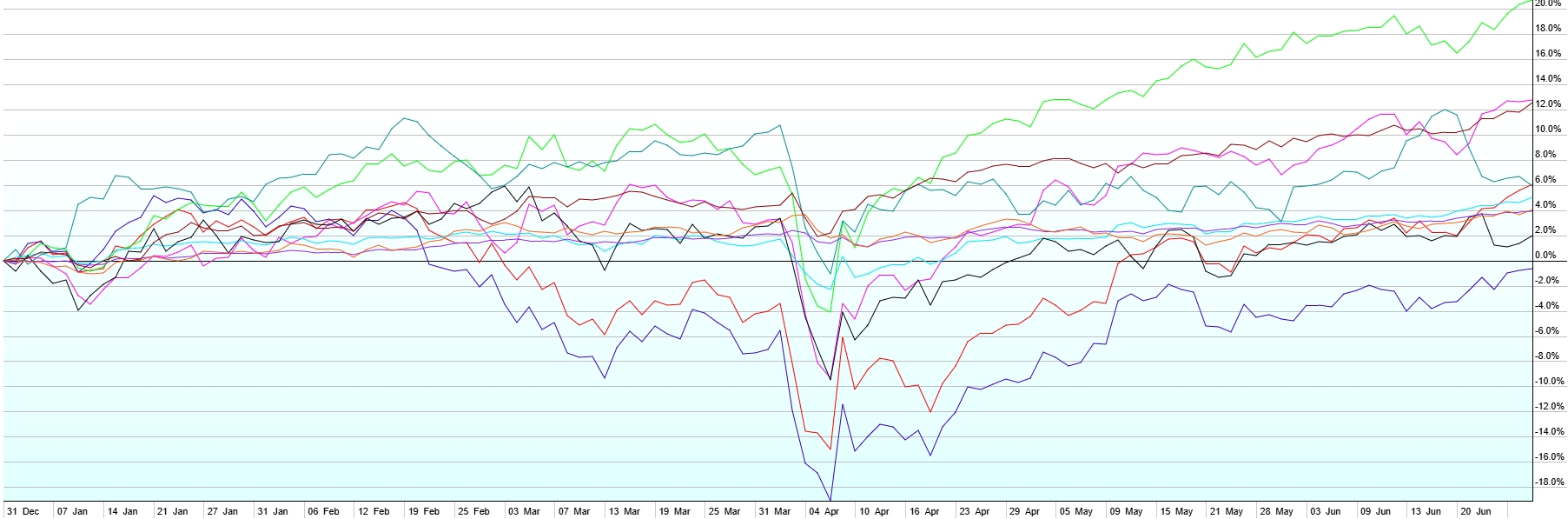
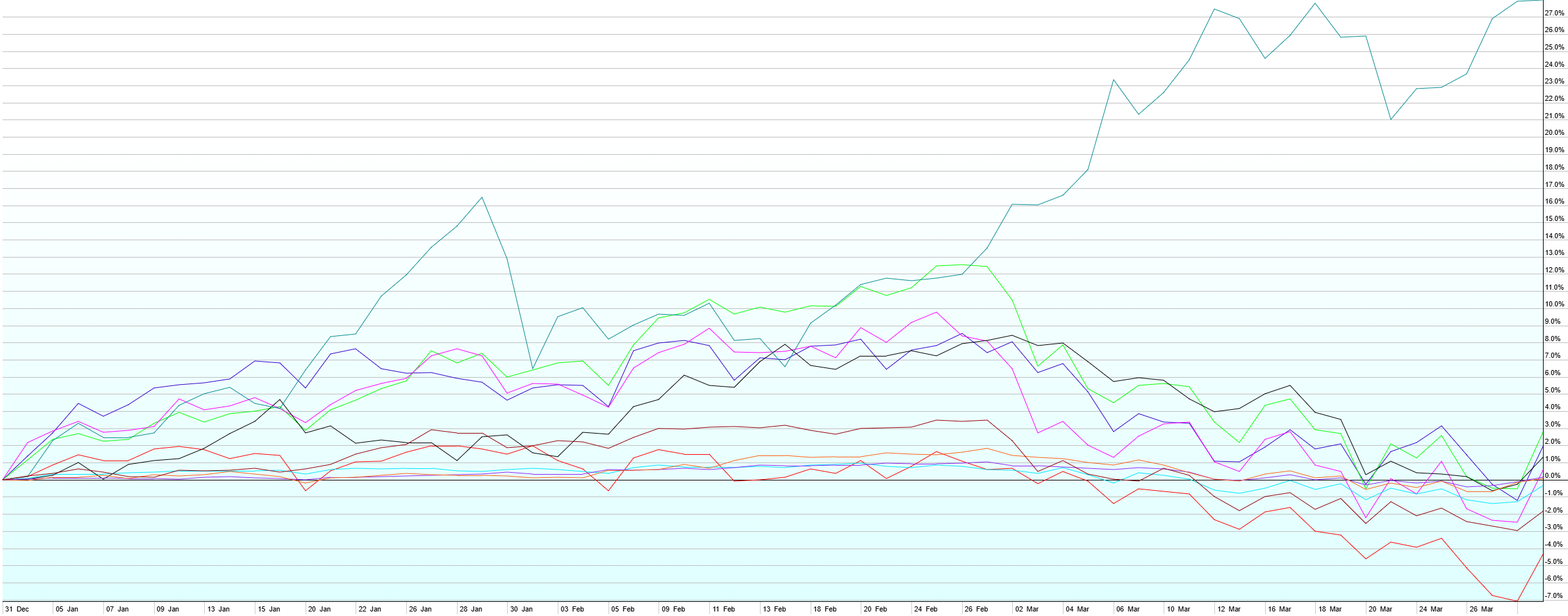
Higher energy prices resulting from the “military action” in Iran ground the stock rally to a halt in Q1. While there hasn’t been too much damage overall, at least not yet, stocks around the world are off their highs on the order 5-15%. Diversification paid off once again in Q1 with Commodities leading the way, up 28%. International Developed Stocks finished Q1 up 2.8%, mostly due to their stellar performance in Jan and Feb (they were up 12% at one point). US Small Caps (+1.9%) fared significantly better than Large Caps (-4.4%), which were the worst performer of the quarter. In the middle of the pack were US REITs (+1.4%), Emerging Market Stocks (+0.5%), US Aggregate Bonds (+0.1%), US Short-Term Corporate Bonds (+0.1%), US High-Yield Bonds (-0.4%), and Emerging Market Bonds (-1.9%). The market pulled back the odds more Fed cuts in 2026 substantially, going from 1-3 more cuts expected this year at the start of Q1 to 0-1 more cuts at the end of Q1. This is the result of higher energy prices, which could put pressure on broader inflation and cause the Fed to be more restrictive with policy. Much of the damage already done in the Middle East will have a lasting effect on energy prices, even if tensions ease immediately. It remains to be seen whether those higher energy prices restrict the global economy enough to decrease demand (recession) or if the economy continues to chug along with higher prices and even higher expectations of higher prices passing through to goods and services (inflation). The Fed, along with it’s incoming new chairman, is in a tough spot trying to price rates for a very uncertain future.

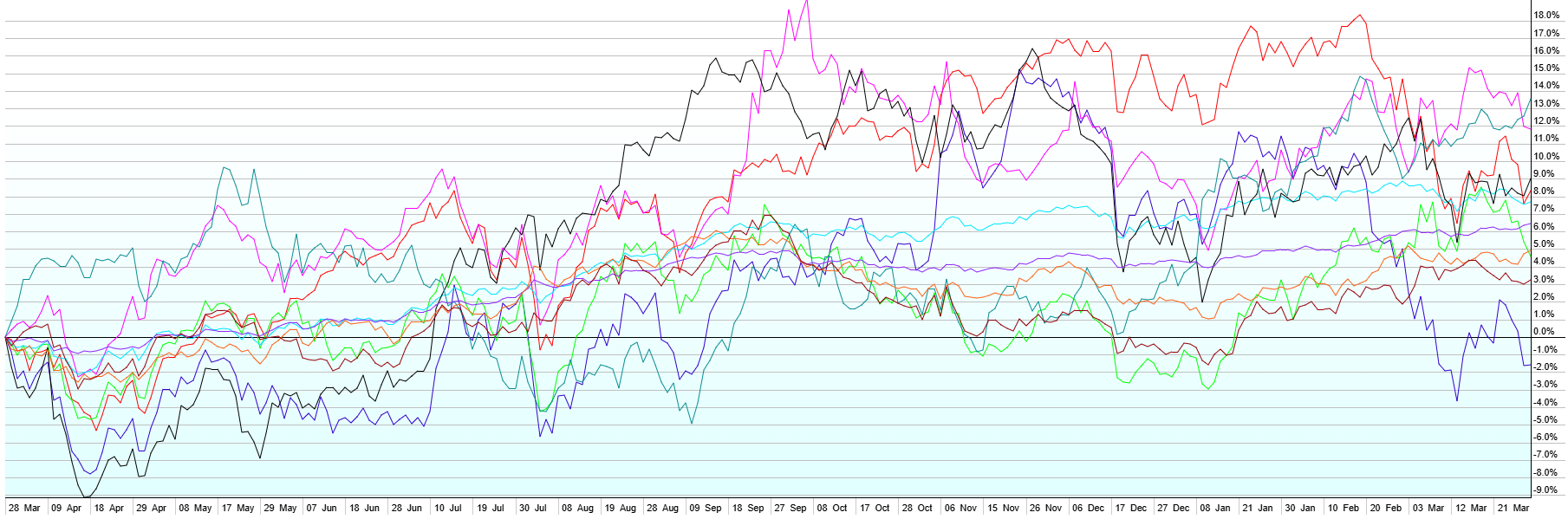
Note also the other charts as we’re now approaching the one-year anniversary of the “Liberation Day” selloff around the world. Despite tariffs, war in the Middle East, war in Ukraine, spiking energy prices, Trump, Biden, a global pandemic, US debt downgrades, natural disasters, and a host of other imperfect world issues most of us can’t even remember over the last decade, all major market segments are up over the last one, five, and ten years. There’s a lesson in there somewhere.

Q4 2025 Returns By Asset Class

This post contains the usual returns by asset class for this past quarter (by representative ETF), last 12 months, last five years, and last ten years. While there is still no predictive power in this data, I’ll continue to post this quarterly for those of you that are interested. 
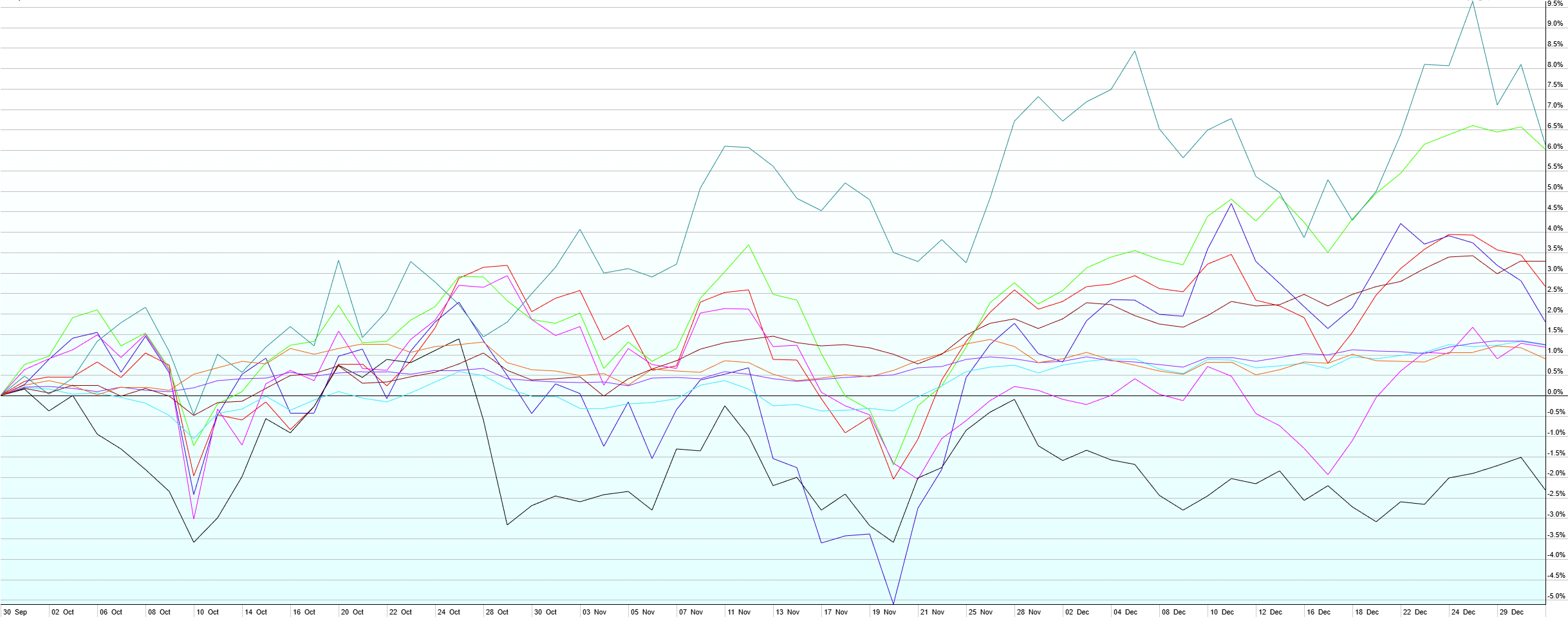
Last Quarter (10/1/2025 – 12/31/2025)
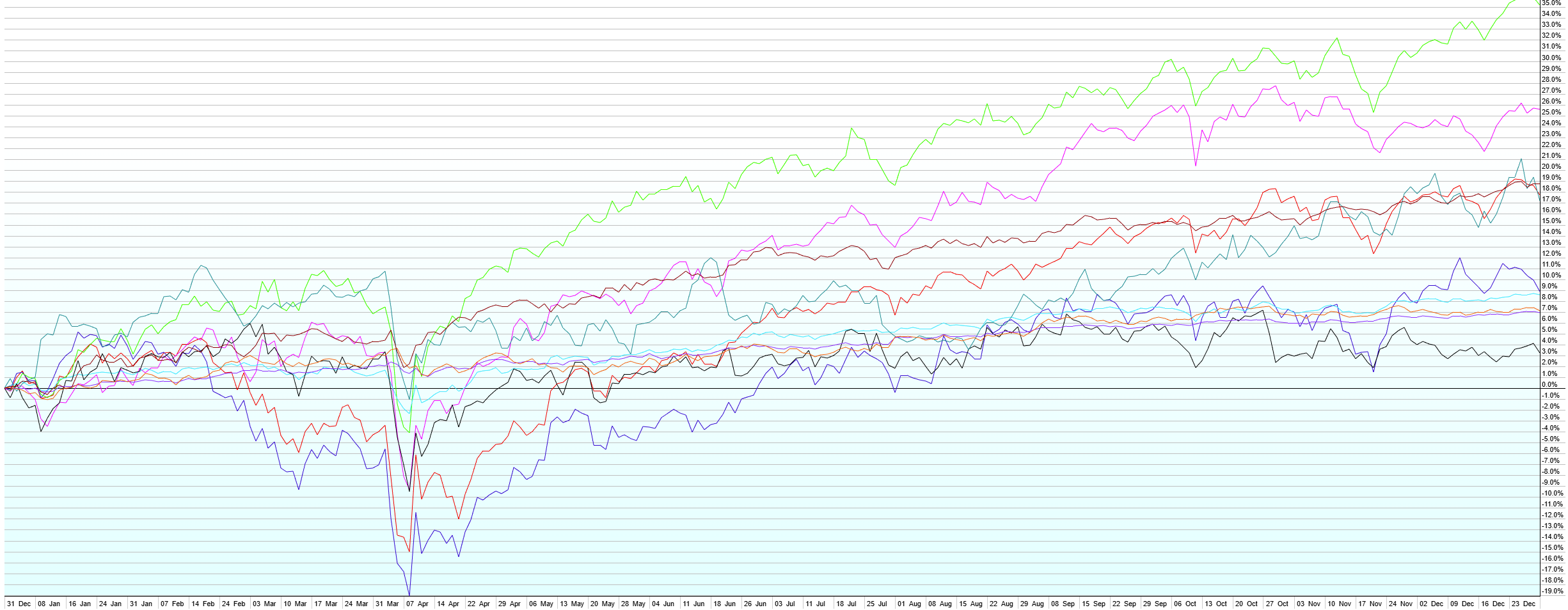
Last Year (1/1/2025 – 12/31/2025)
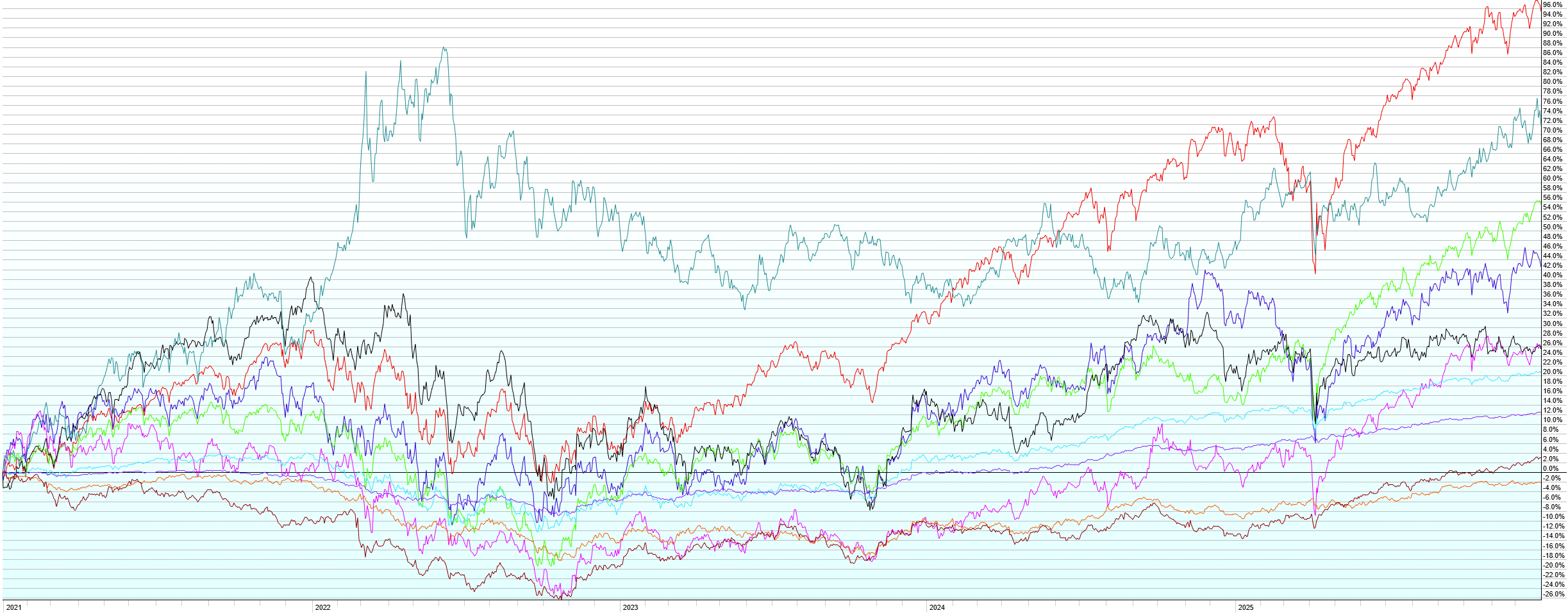
Last 5 Years (1/1/2021 – 12/31/2025)
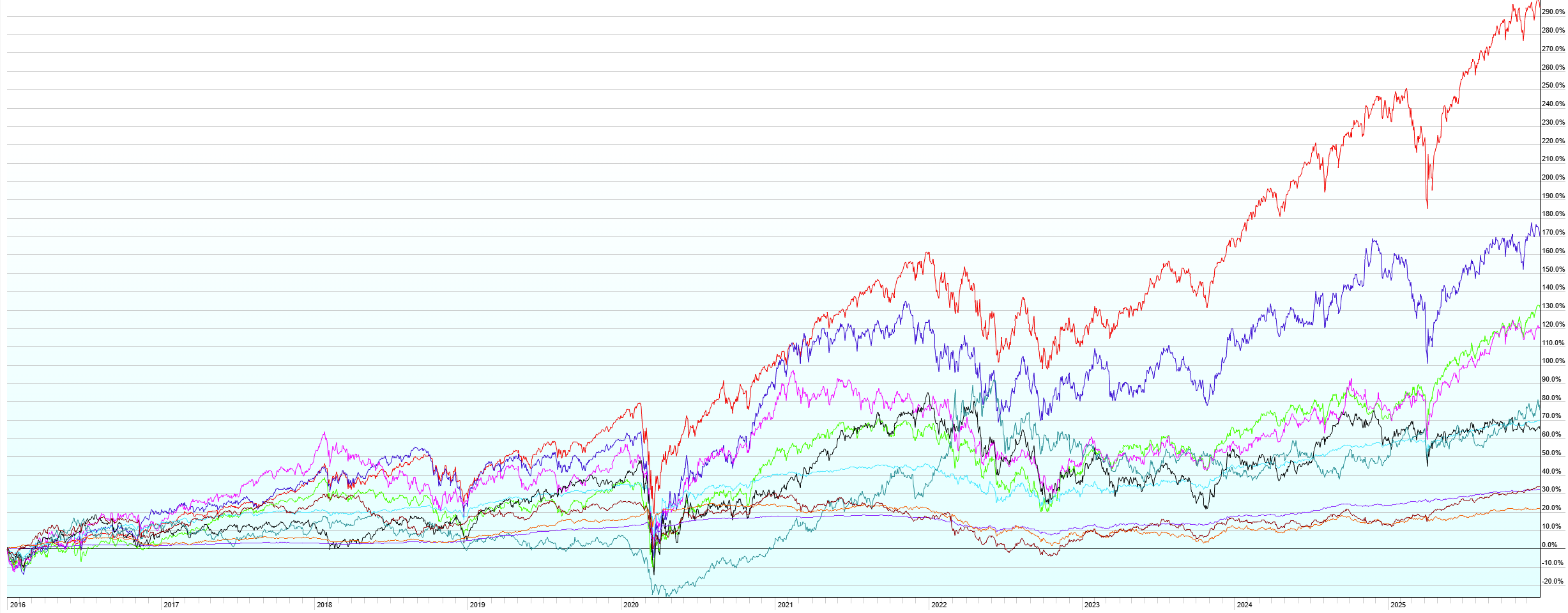
Last 10 Years (1/1/2016 – 12/31/2025)

A few notes:

Financial markets continued with another quarter for good returns across all major asset classes with the exception of real estate. The quarter was led by Commodities (+6.1%) and Foreign Developed Stocks (+6.0%), followed by Emerging Market Bonds (+3.3%), US Large Caps (+2.7%), US Small Caps (+1.8%), US Short Term Corporate Bonds (+1.2%), US High-Yield Bonds (+1.2%), Emerging Market Stocks (+1.2%), and US Aggregate Bonds (+0.9%). US Real Estate Investment Trusts (REITs) were the laggards (-2.4%). All major asset classes were up for 2025 as a whole, despite the post-“Liberation Day” plunge. During Q4, as expected, the Fed cut overnight interest rates two more times (now 3.5-3.75%) as inflation continues to ease and job growth has mostly stalled. The market expects another one-to-three quarter-point cuts in 2026.

Q3 2025 Returns By Asset Class

This post contains the usual returns by asset class for this past quarter (by representative ETF), year-to-date, last 12 months, last five years, and last ten years. While there is still no predictive power in this data, I’ll continue to post this quarterly for those of you that are interested. 
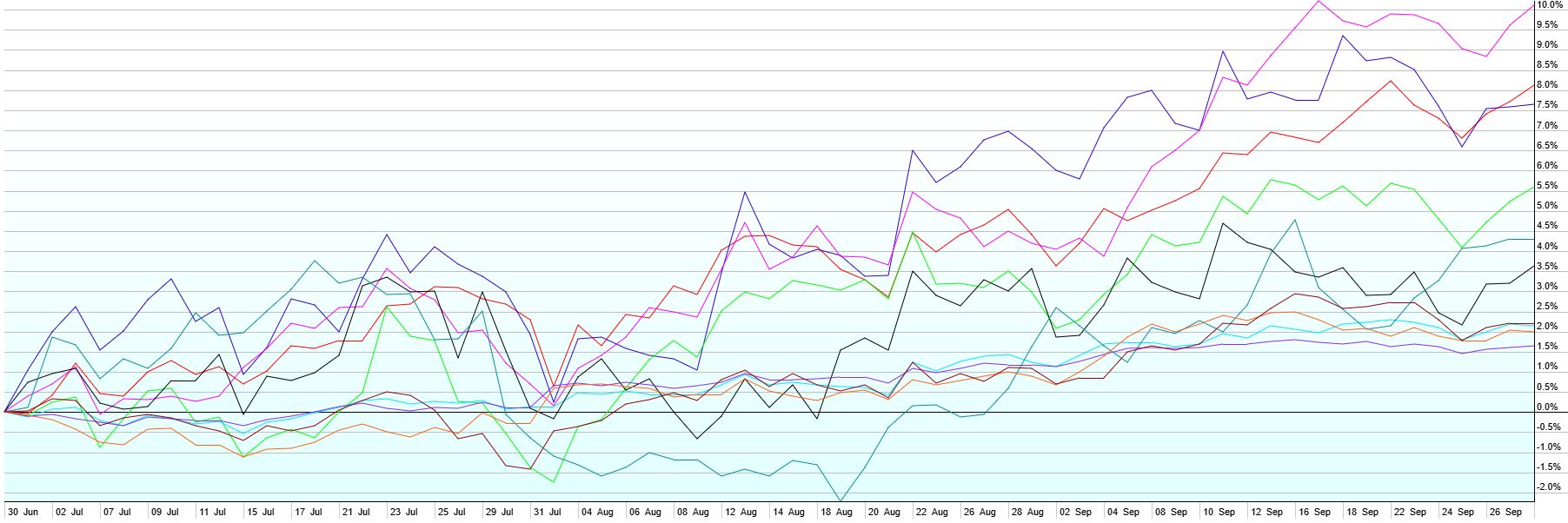
Last Quarter (7/1/2025 – 9/30/2025)
Year-To-Date (1/1/2025 – 9/30/2025)
Last 12 months (10/1/2024 – 9/30/2025)
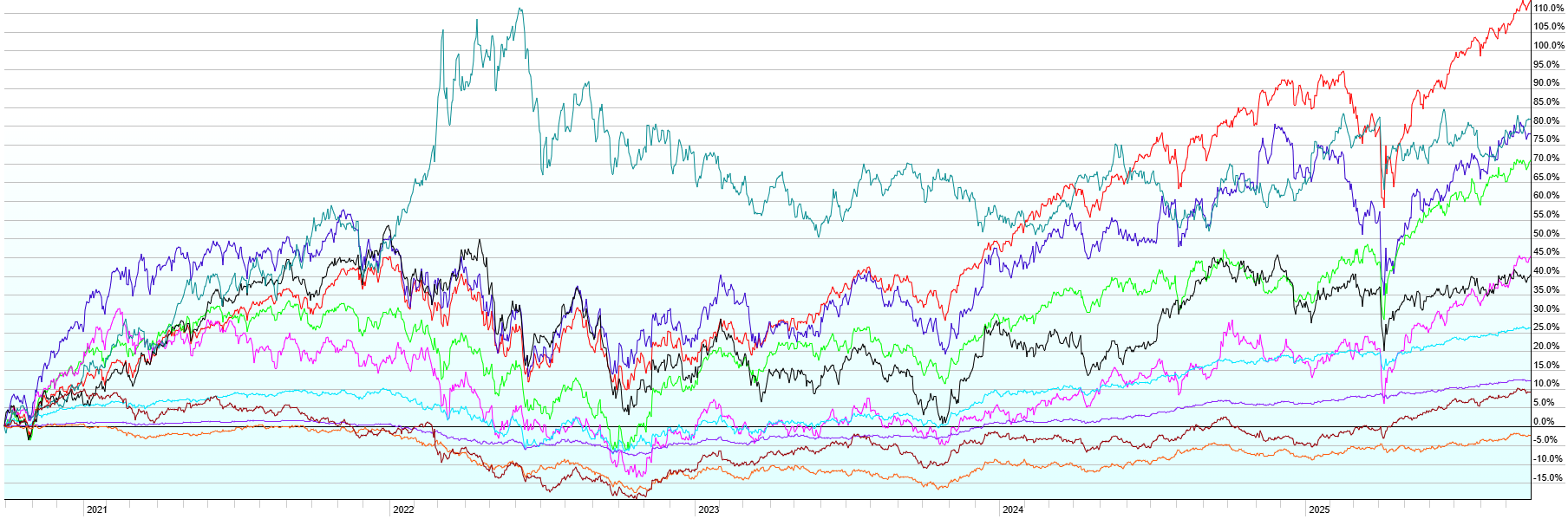
Last 5 Years (10/1/2020 – 9/30/2025)
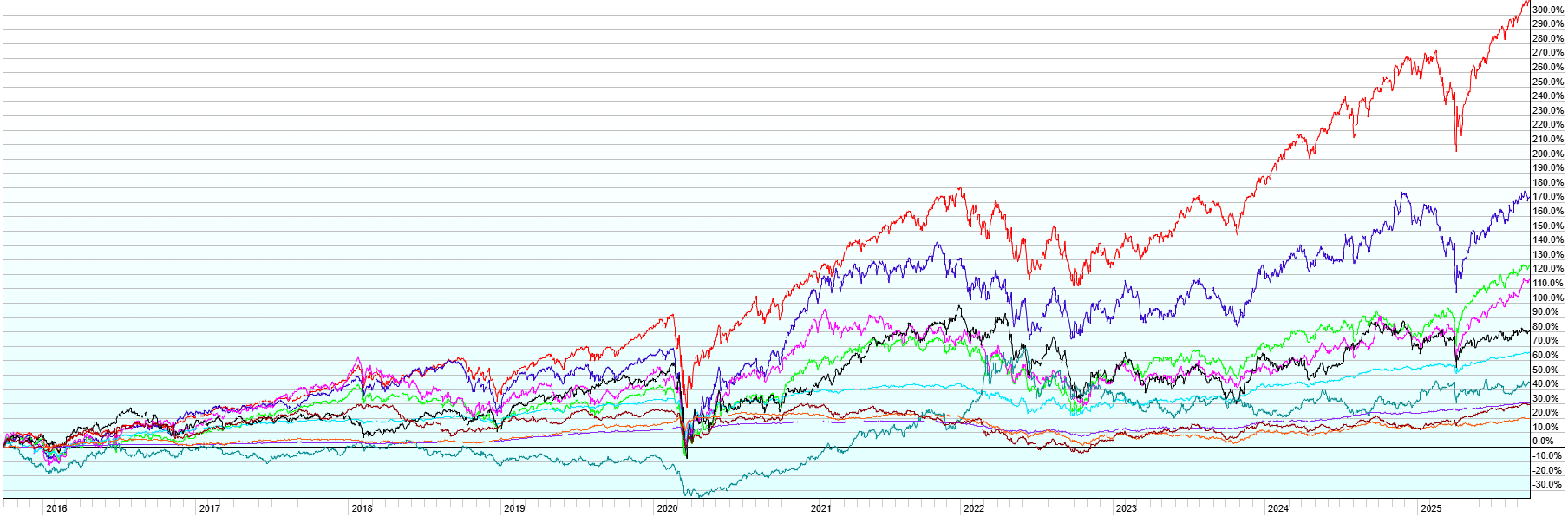
Last 10 Years (10/1/2015 – 9/30/2025)

A few notes:

Q3 2025 was another solid quarter for investment returns, with all major asset classes finishing in the green. The quarter was led by Emerging Market Stocks (+10.1%), followed by US Large Caps (+8.1%), US Small Caps (+7.6%), Foreign Developed (+5.6%), Commodities (+4% after a mid-quarter dip), US Real Estate Investment Trusts (REITs) (+3.6%), Emerging Market Bonds (+2.2%), US High-Yield Bonds (+2.1%), US Aggregate Bonds (+2%), and US Short Term Corporate Bonds (+1.7%). During Q3, Congress passed and the president signed the One Big Beautiful Bill (OBBB) Act. More on that here. The Fed also started a new rate cutting cycle with a quarter point cut to 4-4.25% as inflation has eased while the job market has softened a bit. They insist this isn’t a sign of bad things to come, but is instead moving rates back toward neutral from their current, somewhat restrictive level. Markets expect another two quarter-point cuts before the end of the year.

Q2 2025 Returns By Asset Class

This post contains the usual returns by asset class for this past quarter (by representative ETF), year-to-date, last 12 months, last five years, and last ten years. While there is still no predictive power in this data, I’ll continue to post this quarterly for those of you that are interested. 
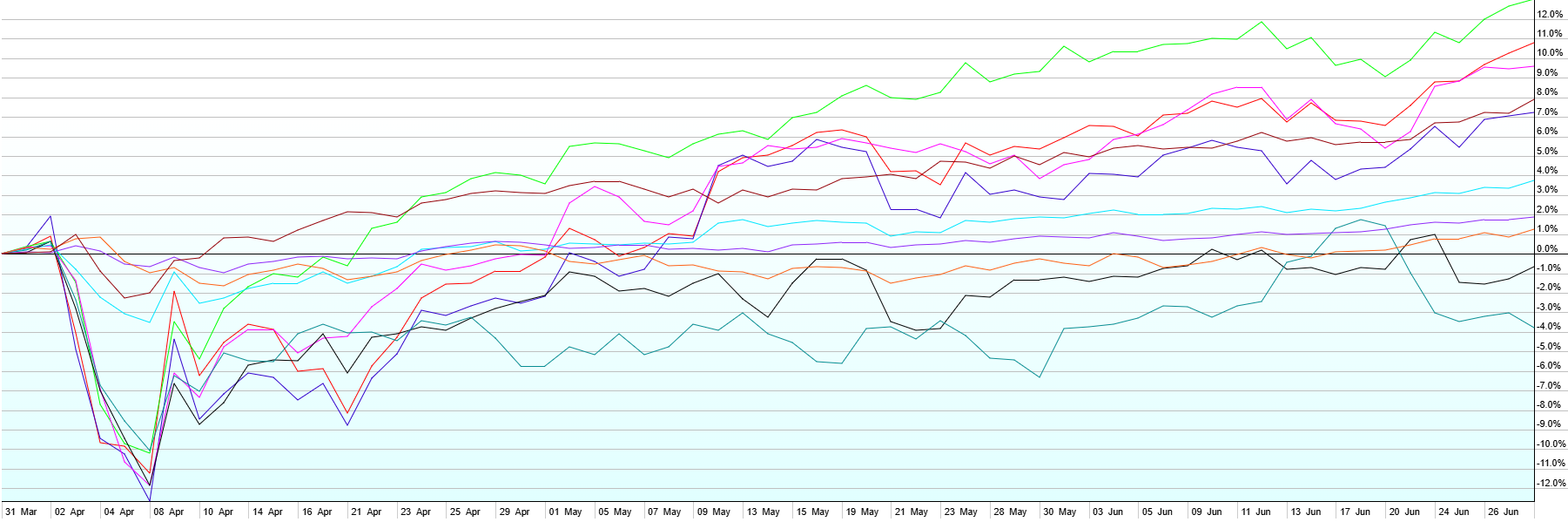
Last Quarter (4/1/2025 – 6/30/2025)
Year-To-Date (1/1/2025 – 6/30/2025)
Last 12 Months (7/1/2024 – 6/30/2025)
Last 5 Years (7/1/2020 – 6/30/2025)
Last 10 Years (7/1/2015 – 6/30/2025)

A few notes:

Q2 2025 experienced a lot of volatility on its way to solid overall returns. The quarter started with President Trump announcing “reciprocal tariffs” on virtually all countries on “Liberation Day”, April 2nd. Markets reacted very poorly, especially US Stocks. My thoughts from early April are here and here. Markets (US Stocks down 11-13% over that first week of April and lots of stress in the US Treasury market) seemed to force the administration’s hand toward de-escalation. A new openness toward negotiation of new trade deals sent markets into recovery mode. Foreign Stocks maintained the outperformance they showed in Q1, but all asset classes rallied, at least somewhat, for the last 12 weeks of the quarter. From best to worst: Foreign Developed Stocks (+13%) as the dollar plunged to a 3+ year low, US Large Caps (+11%), Emerging Market Stocks (+10%), Emerging Market Bonds (+8%), US Small Caps (+7%), High-Yield Bonds (+4%), Short-term Corporate Bonds (+2%), Aggregate US Bonds (+1%), Real Estate Investment Trusts (REITs) (-1%), and Commodities (-4%). REITs struggled toward the end of the quarter on concerns over office REITs in NYC after a self-proclaimed Socialist won the Democratic Primary for mayor. Commodities struggled after a cease-fire between Israel & Iran erased the premium that had settled into energy prices over the previous few weeks. These lower commodity prices, though, helped other assets to rally into the end of the quarter given possibly lower future inflation as a result. Lower inflation gives the Federal Reserve more cover to cut interest rates, which would provide a tailwind for asset prices. Markets are now pricing in about 2 1/2 quarter point cuts (63 basis points) between now and December, which would take Fed Funds down to ~3.75% and savings interest rates down to the low 3% range. Unfortunately for the housing market, this may not translate into lower long-term rates (a requirement for lower mortgage rates) if the Fed follows the forecasted path for the short-term. Q3 will be interesting as we could get our first Fed rate cut of the year and need to follow the progress of the One Big Beautiful Bill through Congress. If it passes, higher deficits are a near certainty and with that will come pressure on long-term interest rates to move higher. There will be lots of tax implications as well, some retroactively effective in 2025. I will post a summary of the key tax provisions if/when the Bill nears passage.

Q1 2025 Returns By Asset Class

This post contains the usual returns by asset class for this past quarter (by representative ETF), last 12 months, last five years, and last ten years. While there is still no predictive power in this data, I’ll continue to post this quarterly for those of you that are interested. 

Last Qtr (1/1/2025 – 3/31/2025)
Last 12 Months (4/1/2024 – 3/31/2025)
Last 5 Years (4/1/2020 – 3/31/2025)
Last 10 Years (4/1/2015 – 3/31/2025

A few notes:

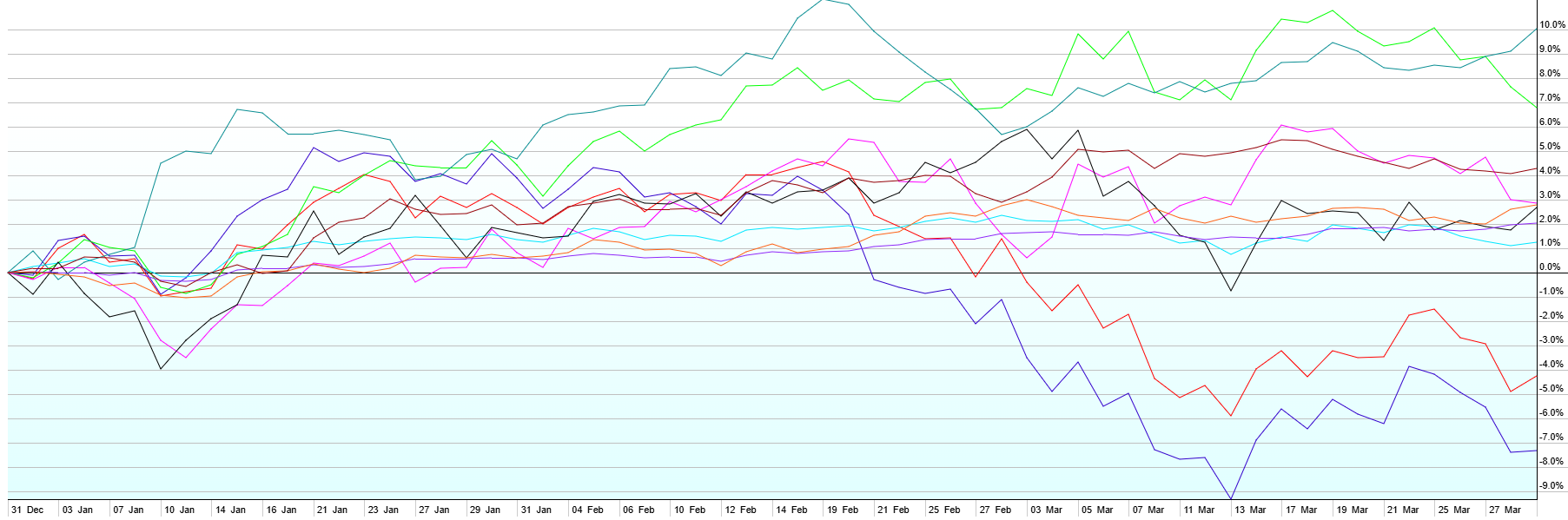
Q1 2025 was a flat-to-slightly-up quarter for most diversified portfolios despite all the news of a slowing US economy and the unknown (but almost definitely negative short-term) impact of tariffs. Diversification really paid off for the US investor. US stocks suffered over the quarter (Large Caps -4.3%, Small Caps -7.3%), but Foreign Stocks, Bonds, and Commodities performed well, offsetting those losses. Commodities (+10%) led the asset classes that we track in this quarterly message, with Foreign Developed Stocks (+6.8%) not far behind. Emerging Markets faired well too, with Emerging Market Local Currency Bonds up 4.3% and Emerging Market Stocks up 2.8%. The Federal Reserve held the Fed Funds rate steady at 4.25-4.5% during Q1, but long-term rates fell on fears of a coming recession and lower rates mean relatively strong performance for bonds. US Aggregate Bonds were up 2.8%, with Short-Term Corporate Bonds up 2% and US High Yield Bonds up 1.2%.