This is part two of a two-part post on recent market declines. Part one contained what I call “The What”, defining the declines and trying to give some historical perspective. Part two contains “The Why” by trying to summarize, in layman’s terms, what is causing the market angst at the moment and what to do about it.
Trying to understand the stock market is like trying to understand a baby. Everything tends to be perfectly fine until suddenly, it’s not. Even when you can pinpoint the immediate cause of a meltdown, it’s often underlying issues that have been building (tired, hungry, getting sick… in the case of the baby) that are the root cause of the meltdown. There is little to no communication about the why… you just know it’s not good. I’m going to give you my opinion on what has caused the stock market to act like a baby over the past couple of months. Like the baby, the stock market hasn’t told me precisely what’s wrong… I just pay close attention to things that could be root causes so I know what’s going on when a triggering event occurs and causes a meltdown. While we can’t do anything about the meltdown, and we know it’s not abnormal (see Part one of this post), it’s reassuring to know the potential causes. I see six of these, with the last two being the most important:
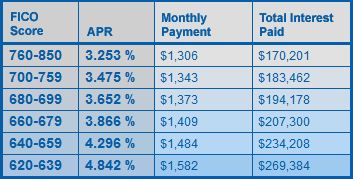
1) Rising interest rates – the Federal Reserve has been raising the overnight lending rate by 25 basis points per quarter for about two years. It now targets 2-2.25% with markets expecting another quarter-point hike later this month. 2.5% is historically low and the Fed still considers it to be stimulative to growth. However, after nearly a decade of ZIRP (zero interest-rate policy) there is an anchoring effect that must be considered. Suddenly, investors can earn 2% (which is still just barely the rate of inflation) in a savings account or 3-4% in a fairly safe bond fund and it feels like a huge win vs. a decade of zero. On the margin, more may be choosing conservative investments over stocks. Mortgage rates climbing back to near 5% (historically very low) suddenly makes home purchases a lot more expensive when everyone was used to paying 3.5%. We’re seeing home sales decline and price increases halt as a result. Corporations borrowed massive amounts of money at low rates over the past decade and used it to invest in growth, pay dividends, and buy back stock. As those loans become due, where will the money come from to pay it all back? New loans at higher rates? That’s going to hurt the income statement. Secondary equity offerings? Not good for the stock. Then there’s the massive debt that governments, including ours, have taken on. At low rates, that debt is affordable. But as rates rise, the interest payments start to swamp the tax collections (especially after “mandatory spending”). This is how debt spirals to a point where it can’t be paid back. If the Fed stays on its current course to return rates to historically normal levels before the economy can anchor to non-zero levels, it will act as an economic shock and stop growth in its tracks. Last week, Fed chief Jay Powell indicated that the Fed isn’t on a pre-determined course, is close to “neutral”, and will be data dependent. This eased some market concerns, but a Fed policy mistake is still a big market risk.
2) Global trade issues – I think this one is pretty easy to understand. If the US and China are entering a long, drawn-out trade war with tariffs and other impediments to global trade issued on both sides, then there will ultimately be less global trade. Less trade means less growth and less growth means corporations make less money (or grow more slowly) while debt issues are exacerbated. Tariffs as negotiating weapons are ok to the market, especially for long-term gains like protection of intellectual property across borders. Tariffs as the end game will not be ok with the stock market. Every time it looks like there’s a path to easing of tensions, markets rally. Every time tensions increase, markets fall. Lack of communication as to the plan and inconsistent messages cast doubt on ultimate resolution. The stock market is only going to put up with that for so long before pricing in a higher probability of an extended trade war.
3) Strengthening US Dollar – the dollar has been on the rise vs. most other currencies as the US has been doing better economically than most other countries. As the dollar strengthens, US exports seem more expensive to foreign consumers, hurting US demand. US multi-national corporations lose on currency exchange when repatriating foreign profits (weak currency) into US dollars at home (strong currency), thereby hurting profits. Foreign debt issued in US Dollars becomes bigger to the foreign country that owes the money. This weakens the foreign currency further and can spiral into a currency crisis. All of these things are bad for US stocks.
4) European Union Issues – I’ll lump Brexit and the overall fiscal fiasco of the EU into one major issue. If a Brexit deal can’t be reached with the EU and there is a “hard Brexit”, Great Brittan and the European Union essentially stop doing business with each other, resulting in massive job losses and other economic dislocations. The possibility of that happening has ramped up recently as deadlines approach. In the rest of the EU, budget issues continue to challenge the southern countries who need ongoing support from Germany and the wealthier, less debt-riddled countries. The threat of Italy losing its borrowing lifeline, potentially ditching the Euro, and maybe setting off a chain reaction with other countries doing the same is like the Greek issues of a few years ago times 100. It’s becoming more and more apparent that the European Union experiment, in its current form, has failed and it’s now just a matter of stretching out the unraveling for a long enough period so that it can be creatively redesigned or unwound in the least shocking way possible. If Europe can fix itself over the next decade, even if it involves some up-front pain, that would be a massive lift for the global economy. If it can’t and there is a financial shock as a result of unraveling, it certainly won’t be good for stocks.
5) Too much government debt – the world simply has taken on too much debt over time. Governments have promised too much to their people in return for votes (low taxes, high spending). Either defaults are going to happen or inflation is going to spike, thereby making those fixed rate debts seem smaller in future dollars. Either one is going to hurt. The more time that passes with already bloated debts growing faster than the economies they rely on, while interest rates rise, the closer the world gets to a point of no return. We don’t know where that point is, when the debt markets will turn on borrowers that can’t repay, or if / when governments would start the inflationary printing presses to avoid default. This risk moves in slow motion but is probably the biggest one for the long-term.
6) The self-fulfilling prophesy – we’re pretty far from this happening in my opinion, but this is the biggest short-term risk. If the stock market volatility goes on for too long or if the market falls too far, then consumer and business confidence will wane. Our economy is built on confidence. If companies stop hiring, expanding, and investing, and/or consumers stop spending, recession is right around the corner. Similarly, you may have heard about the inverting yield curve lately. Generally, long-term interest rates are higher than short-term rates (positive, upward sloping yield curve if you plot rates on the y-axis and term on the x-axis of a graph). This positive yield curve is an indicator of expected future growth. Lately, short-term rates (specifically the two-year treasury) have been approaching long-term rates (specifically the 10-year treasury). That 2-10 spread is closely watched as an indicator of future growth and it’s dangerously close to inverting. The last several times that happened after a period of normal rates, a recession has been on the horizon. Higher short-term rates than long-term rates are deadly for banks who borrow short (pay on deposits) and lend long (loans and mortgages). If banks can’t make money on that spread (“net interest margin”, their profits dry up and they may wind up with less money to lend or be unwilling to lend. Less lending can impact the ability for businesses and consumers to borrow, potentially leading to recession. This means that an inverted yield curve that predicts recession could actually lead to it… another self-fulfilling prophecy. Keep in mind though that even if recession happens, the typical one is a pause that refreshes, that brings valuations back in line, that scares off the weak hands, that kills the companies that took on too much leverage, that leads to the birth of the next growth cycle. A recession in a world with too much debt though could intensify and accelerate the debt issues described in #5.
Here’s the good news… when there are reasons for concern in the stock market, the eventual elimination of those concerns often leads to new growth. This is frequently called “climbing the wall of worry”. When the worries are all gone and everything is perfect, then perfection is priced into the market and there’s often no more room for prices to increase. No more wall of worry means nothing to climb. So, it’s highly possible that these worries will provide the legs for the next bull market to stand on. I have to admit, when the tax cuts went through, unemployment dropped near 4%, corporate profit margins hit all-time highs, inflation remained low despite low interest rates, I started to worry that there wasn’t much to worry about. Now there’s a real wall of worry to potentially climb.
If you’ve read this far, I know what you’re probably thinking… This is all well and good and thanks for explaining all that but… is this an opportunity to buy cheap, or a last chance opportunity to get out before a big fall? No one ever knows that answer in advance. What we do know for certain is that there are going to be big falls at some points in the future. I tell clients to expect a 50% decline in stocks at some point in life (we had two of them in one decade in the 2000’s). This of course doesn’t mean your portfolio will fall 50% because not all of your money is in stocks. Young clients with decades until retirement and only a small percentage of what they’ll ultimately need to retire have retirement money primarily invested in stocks. But, they actually benefit from a decline in prices because they have much more to contribute to their retirement portfolios (at lower prices if prices fall) than would be lost from a temporary decline in the value of existing assets. On the other extreme, clients who are well into retirement, or those with shorter-term goals where money is needed over the next few years, are not primarily invested in stocks. A portfolio that is 30% stocks / 70% bonds will experience about a 15% loss if the stock market falls 50% (generally less than 15% because bonds tend to do well when stocks fall dramatically). It’s essential to get the mix right, but once you do, it doesn’t matter what happens with stocks over the short-term. You’re either in stocks for the long-term or you’re not primarily in stocks.
We know declines will happen. We just don’t know when they’re going to happen. When you invest, you accept that stocks are going to fall, and create a plan that works despite the stock market’s short-term swings. If a stock market decline scares you off your plan, you’re doing yourself an injustice by allowing that to happen. As I pointed out in Part one of this update, stocks are down at least 5% from recent highs almost half the time. So, should you buy, or should you sell? If your plan calls for adding money to your portfolio to target a future goal and you have free cash flow to do that, then add money (buy). If your plan calls for liquidation to support retirement expenses or to buy that next house, then withdraw money (sell). React to life events, not stock market events. Avoid the temptation to put your emergency fund in stocks during the good times or to pull your retirement money out of stocks in the bad times. In the meantime, we will be using the volatility, where appropriate, to rebalance portfolios back to target (sell what’s up, buy what’s down) and tax-loss harvest (sell securities with unrealized losses and repurchase similar securities to unlock the loss for tax purposes). Volatility fees bad, but without it, stocks would be risk-free. If they were risk-free, they’d be paying 2% like savings accounts. The risk has to be there in order to justify the long-term returns. I will continue to remind you that when the market is smiling, a tantrum is around the corner. When the market is throwing a tantrum, happier times and then more tantrums are ahead. It is the nature of being a parent… er umm… an investor 🙂

 PWA Financial Tastings Blog